



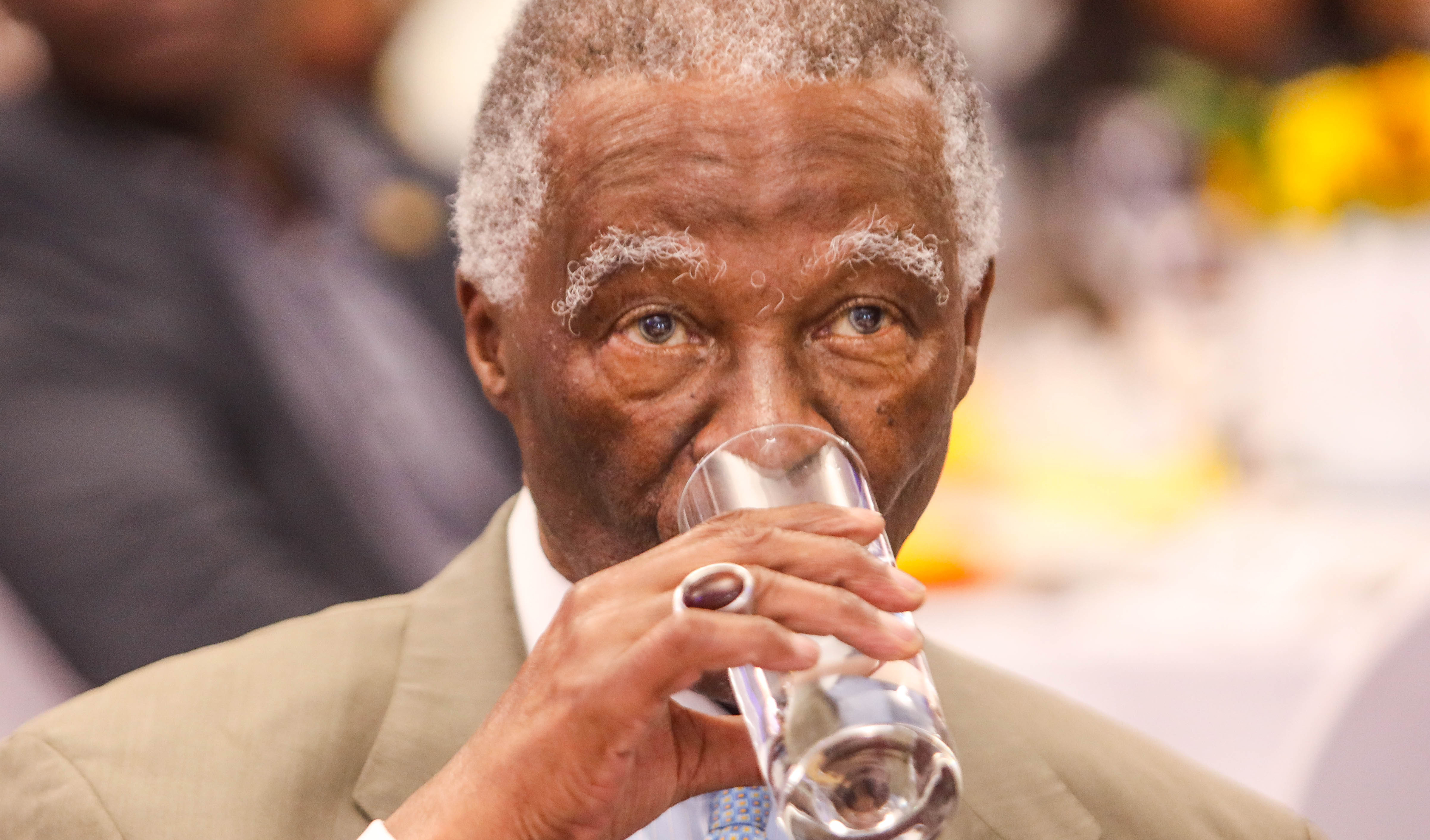
 Former president Thabo Mbeki. (Photo: Gallo Images / Sharon Seretlo)
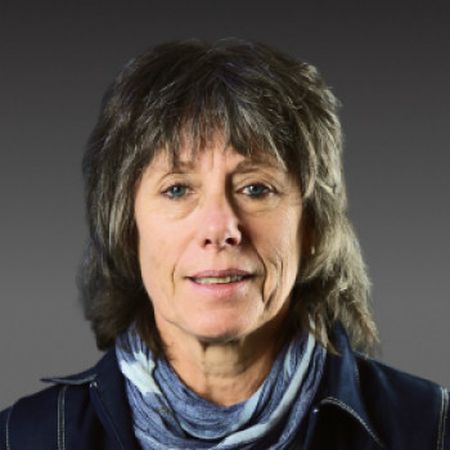
 Prosecutor Anton Ackermann, who is recovering from a recent heart attack, testified virtually from Cape Town at the Khampepe inquiry into Truth and Reconciliation Commission (TRC) prosecution delays on Wednesday, telling commissioners that the seeds for decades-long delays were sown by former president Thabo Mbeki in a “landmark” speech he delivered on 15 April 2003.
While during the first half of the speech, Ackermann said, Mbeki had “masterfully asserted that there would be no general amnesty and that the NPA would continue its duty to prosecute”, later, in the same speech, he created the subsequent “means” to achieve his goals – specifically the 2005 amendments to the prosecuting policy – effectively creating a “backdoor amnesty”.
Ackermann, the first head of the National Prosecuting Authority’s (NPA’s) Priority Crimes Litigation Unit (PCLU), said that while Mbeki had maintained the public persona of a “statesman” and “intellectual leader”, his administration had worked behind the scenes to orchestrate a “deeply unlawful” moratorium on TRC prosecutions.
This interference, Ackermann said, was driven by a desperate search for a “political solution” to protect security forces from facing the law.
‘Forgiveness cannot be demanded’
In a statement to the inquiry, Ackermann said it was important to note that the TRC “was created and formed part of a political settlement amongst the political parties”.
“The TRC was to bring about reconciliation and a peaceful democracy. I accept that they have been successful in bringing reconciliation. The TRC Act has run its course and is now part of the history of South Africa”.
He said he was “a prosecutor representing the people of South Africa as I believe in truth and justice”, adding that there was “a fundamental difference between reconciliation and justice”. In a just society, he said, victims of human rights abuses were entitled to “justice, not reconciliation”.
“Victims don’t forgive and forget. Forgiveness cannot be demanded.”
The fundamental principles he had applied in deciding TRC prosecutions were to hold perpetrators to account, he told the inquiry.
Dr Death
Ackermann was the senior prosecutor in several high-profile cases, including that of Dr Wouter Basson, the man who headed the apartheid government’s biological warfare programme and who stands accused of supplying and producing pharmaceuticals aimed at killing those who had been exposed to them. Basson is still alive and works as a much sought-after cardiologist.
/file/dailymaverick/wp-content/uploads/2021/09/MC-Book-Herwitz_1.jpg "Wouter Basson, ‘Dr Death’ of the apartheid state, is now happily practising medicine in the Western Cape. (Photo: Gallo Images / Foto24 / Lisa Hnatowicz)")
Another killer Ackermann brought to book early was Eugene de Kock, leader of the Security Police C1 Death Squad Unit based at Vlakplaas, near Pretoria.
/file/attachments/orphans/000078281_383924.jpg "Former police colonel and apartheid arch-assassin Eugene de Kock. (Photo: Media 24 / Gallo Images)")
The intellectual and the prince
Ackermann’s appearance at the inquiry showed a former lawman, now in his 70s, who was deeply committed to his work and whose initial high regard for Mbeki was “dented” by the realisation that the former president “was operating from a playbook inspired by Niccolò Machiavelli’s The Prince”.
“President Mbeki knew that general amnesty was out of the question,” Ackermann testified, noting that a second formal amnesty process, as was being proposed, would have been unconstitutional.
Instead, Mbeki allegedly adopted a strategy where “the end justifies the means”– the “end” being the accommodation of those who did not participate in the TRC, and the “means” being the subversion of the NPA’s independence, he said.
/file/dailymaverick/wp-content/uploads/2021/11/Brooks-FW-ComplexLegacy-inset-1.jpg "Former presidents (from left) Thabo Mbeki, Nelson Mandela and FW de Klerk in 2003. (Photo: Harry How / Getty Images)<br>")
The secret ‘political solution’
Ackermann’s testimony was that the push for impunity was not accidental, but the result of “high-level negotiations”.
The advocate recalled for the commission a long meeting with Jan Wagenaar, an attorney representing several security force members and generals. Wagenaar had informed Ackermann during this meeting that he was “wasting his time” trying to prosecute TRC cases.
“Wagenaar told me he was meeting with ANC leaders. President [FW] De Klerk and Mbeki took part in these meetings and they all agreed to a political solution to avoid prosecutions,” Ackermann stated.
This secret agreement allegedly involved the drafting of indemnity bills as early as 2002 to provide a “rerun” of the TRC amnesty process.
To facilitate this, Mbeki’s administration established the Amnesty Task Team (ATT) in February 2004.
Mandated to address “unfinished business” from the TRC, the ATT was composed of Deon Rudman of the Department of Justice, who was the chair, Yvonne Mabule and Vincent Mogotloane, from the National Intelligence Agency (NIA), Gerrie Nel and Lungisa Dyosi, from the NPA, and Ray Laila from the South African Police Service (SAPS). Crucially, the PCLU – the unit actually tasked with the prosecutions – was excluded from these deliberations.
The ATT’s secret reports proposed a “Supervisory Task Team” that would include the Presidency and Intelligence. This body would review the “advisability” of criminal proceedings based on “political criteria” before any charges were filed, effectively subordinating the independent NPA to political oversight.
Mbeki has in the past denied that he interfered in NPA work during his presidency.
/file/dailymaverick/wp-content/uploads/2023/07/0000118970.jpg "Former South African police chief Jackie Selebi. (Photo: Gallo Images / Foto24 / Felix Dlangamandla)")
A state in paralysis
Ackermann detailed how this high-level policy of avoidance trickled down to paralyse the daily work of investigators. When the PCLU sought help from the Directorate of Special Operations (DSO) and the SAPS to investigate 16 “ripe” cases in 2003, they were met with a wall of resistance.
Advocate Geoph Ledwaba of the DSO refused to investigate TRC matters “in no uncertain terms”, while SAPS Commissioner Johannes de Beer – after consulting with National Commissioner Jackie Selebi – issued a chilling directive that the SAPS would not provide investigators unless there was a written instruction from the president.

Selebi, said Ackermann, had been under the impression that he was about to prosecute ANC leaders, when this had not been the case.
De Beer, the commission heard, had instructed Ackermann to approach President Mbeki for a written instruction to involve the SAPS. This stalling tactic created a “dead end” for victims’ families. Ackermann’s “heartfelt pleas” to reverse these decisions were ignored, he said, leaving the PCLU “powerless to deliver on its mandate”.
/file/dailymaverick/wp-content/uploads/2025/09/Gaza-2.jpg "Reverend Frank Chikane. (Photo: Matthew Hirsch)")
The Chikane tipping point
The most direct evidence of political interference involved the 1989 poisoning of Reverend Frank Chikane.
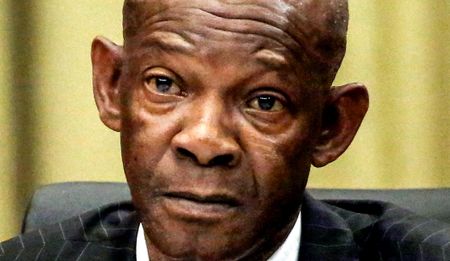
In November 2004, as the PCLU was preparing to arrest Security Branch members for the attempted murder, Ackermann was ordered by Acting National Director of Public Prosecutions (NDPP) Silas Ramaite to halt the arrests. This order, Ackermann testified, followed “political instructions” to stop all work on TRC cases.
Ramaite testified earlier to the commission that he had received a “directive” from then Minister of Justice and Constitutional Development Bridget Mabandla to place TRC prosecutions on ice.
This period marked the beginning of what Ackermann described as a “deeply unlawful” effective moratorium on TRC cases that lasted from late 2004 until 2007. During this time, the administration moved to codify this impunity through the 2005 Prosecution Policy amendments.
Ackermann was a vocal opponent of these amendments, viewing them as an unconstitutional attempt to allow perpetrators to escape justice without fulfilling the TRC’s original requirement of full disclosure. These amendments were later struck down by the high court in 2008 for creating an impermissible “backdoor amnesty”.
/file/dailymaverick/wp-content/uploads/grootes-mpshe-subbedm.jpg "Advocate Mokotedi Mpshe. (Photo: Supplied)")
Removal and legacy of injustice
This all culminated in the 2007 removal of Ackermann from his duties on TRC cases after the suspension of NDPP Vusi Pikoli. Ackermann testified he had “no doubt” that Pikoli’s successor, Acting NDPP Mokotedi Mpshe, received a “political instruction” to remove him from these sensitive files.
“I am an African,” Mbeki famously declared in 1996, a speech Ackermann cited as a reason for his initial respect for the leader. However, the reality of Mbeki’s tenure, as testified by the man tasked with prosecuting apartheid’s worst crimes, was one of “machinations that took place at a level above that of the NPA”.
Ackermann’s testimony, supported by his 2015 affidavit, which the state notably failed to dispute, remains a cornerstone of current legal challenges by families of victims such as the Cradock Four and Nokuthula Simelane.
For these families, the “Machiavellian” strategy of the Mbeki era resulted in a “deep injustice” that persisted decades after “the promise of the TRC”.
Ackermann concluded that this high-level interference was “deeply offensive to the rule of law,” leaving a legacy where the pursuit of truth “was sacrificed on the altar of political convenience”. DM