



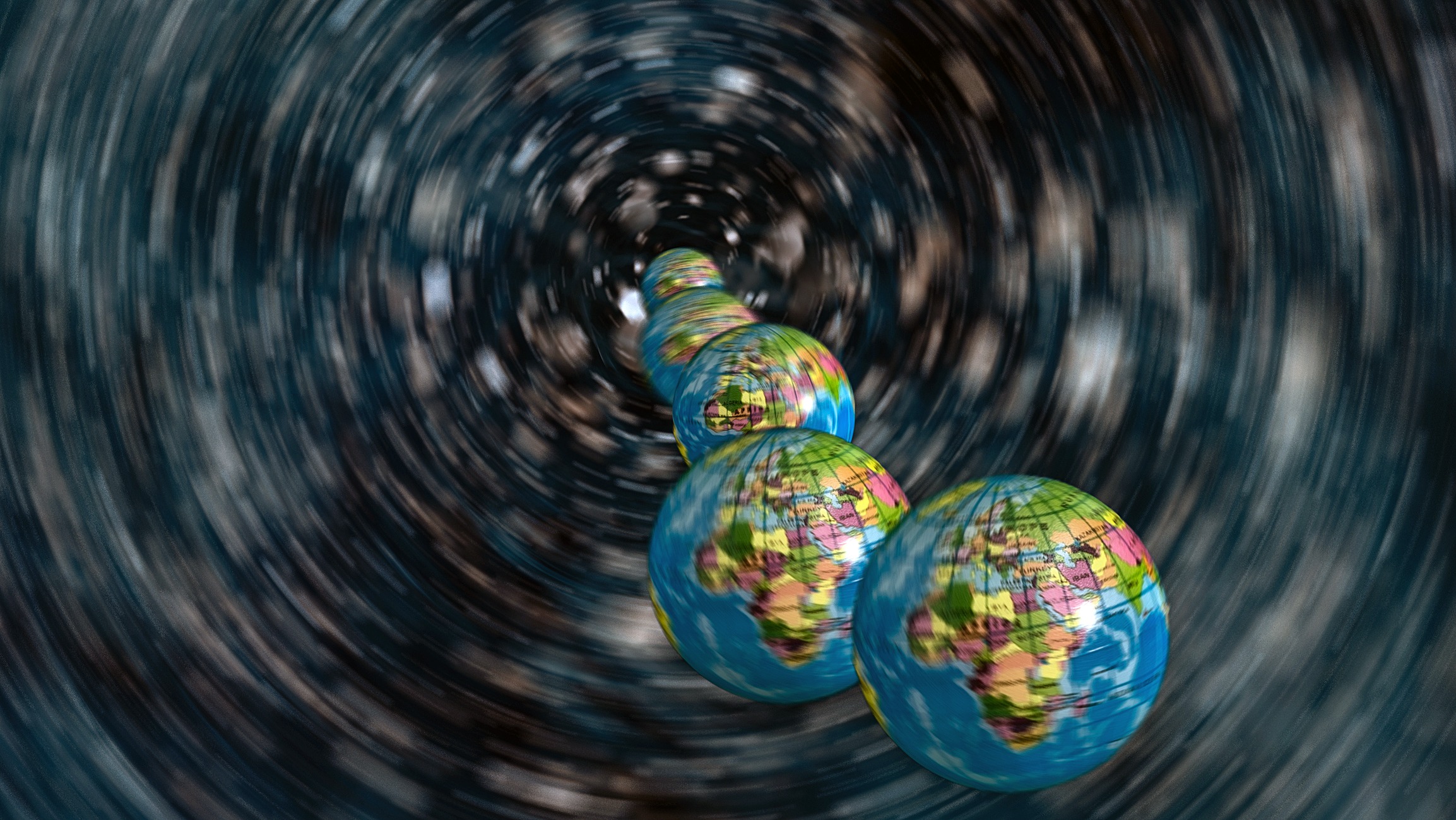
 A number of global developments in the past decade have generated intellectual assertions claiming that we now live in a multipolar world.
(Image: iStock)
A number of global developments in the past decade have generated intellectual assertions claiming that we now live in a multipolar world.
(Image: iStock) Global power dynamics are today characterised by a combination of geo-strategic, economic, political, social, technological and environmental forces which have given rise to the volatility that we are experiencing today (Heintz: 2024).
Let us in this context examine the debate about unipolarity and multipolarity. I wish to preface observations in this regard by quoting a lament in an Open Letter to the World from ‘an ordinary Cuban woman’.
I write this with a broken heart and trembling hands, because what my people are experiencing today is not a crisis. It is a slow, calculated, coldly executed murder, orchestrated from Washington.
…in Cuba, elderly people are dying prematurely because the blockade prevents the arrival of medications for heart conditions, high blood pressure, and diabetes...
…incubators in Cuba have had to be shut down due to a lack of fuel… [N]ewborns are fighting for their lives while the United States government decides which countries can sell us oil and which cannot.
…our doctors, the same ones who saved lives during the pandemic… now lack syringes, anaesthesia, and X-ray equipment. Not because we don’t know how to produce them. Not because we lack talent. But because the blockade prevents us from accessing supplies, spare parts, and technology. (Cuban Woman: 2026).
I think we would not be human if a situation, such as described in this letter, did not generate a profound sense of moral outrage. Conceptually, this feeling of abandonment among the Cuban people, in the face of what is akin to a so-called neutron bomb, capable of preserving material assets and wiping out human beings (Castro: 1978), raises profound questions about the concepts of unipolarity and multipolarity.
A number of global developments in the past decade have generated intellectual assertions claiming that we now live in a multipolar world. Primary among these developments is the re-emergence of China as a “great power”. One uses the word “re-emergence” guardedly; because for most of the last millennium, China was among the top two largest world economies, and it was the largest for part of the 19th century.
After its colonial “humiliations from abroad” (Maréchal: 2007), it constituted about 2 percent share of the global economy in 1980, and then 18 percent in 2016 – using purchasing power parity. On the other hand, the United States accounted for about 50 percent of the global economy immediately after the Second World War, then 22 percent in 1980 and 16 percent in 2016 – what Allison describes as a rapid and tectonic shift in the global balance of power never seen in world history (Allison: 2017).
Many point to the rise of east Asia generally, the emergence of BRICS+ which accounts for about 40 percent of the global economy compared with the G7 which is at 28 percent, as affirming the existence of multipolarity (Souto: 2025).
/file/attachments/orphans/GettyImages-2220455880_472262.jpg "The skyline of China’s southwestern megacity Chongqing reveals a dense cluster of residential and commercial high-rise buildings with the domed roof of the Chongqing People’s Auditorium in the foreground. (Photo: Cheng Xin / Getty Images)")
It is clear that the US cannot stop the rise of China. For instance, despite its interventions to slow China’s technological advancement, China is succeeding in forging self-reliance. In relation to microchips and chipmaking technology, for instance, it has moved with surprising speed in developing AI tools for domestic use; and through open access, it is starting to dominate global adoption, showing that America’s attempts to hobble China’s ambitions are failing (Chitnis: 2025).
Great power transition
The relay-race of great power transition is indeed under way. But a sense of balance and realism is necessary.
Firstly, the question of whether China will be able to sustain its high rates of growth and preserve its export-led model depends on too many variables. The Chinese government has acknowledged that it needs to expand domestic consumption, which will be “arduous” and require a wide variety of interventions, including social security and consumer cultural change (CPC Party School: 2023).
Secondly, the global economic system is to all intents and purposes capitalist, with neo-liberalism the dominant paradigm. In spite of efforts at reshoring, near-shoring and friend-shoring, global trade continues to grow, cementing interdependencies. This extends to the financial system, reflected not only in the dominance of the US dollar; but also, in the fact that China holds more than US$500-billion in US Treasury holdings (Trading Economics: 2025).
Thirdly, an assessment of geo-strategic balances has to reckon with the fact that, in terms of military strength, the US is a hyperpower, commanding the widest network of military bases across the globe, and with military expenditure that is larger than that of the next 10 military powers combined (Tian, N., et al: 2024).
The fourth consideration calling for balance and realism on the notion of multipolarity is about coherence and self-assertion among what are meant to be alternative poles in global power dynamics. Take BRICS+ for instance: it is not underpinned by any cohesive geopolitical or ideological foundations; and each of its members pursues self-centred approaches to relations with the US.
The US and internal decline
All these elements have resulted in a situation in which, in the words of Indian academic Raja Mohan (2026) in The Economist recently:
The weak international response to Washington’s aggressive trade policies, its interventions in Latin America and the Middle East, and its threats to take new territory have exposed how difficult it is for any coalition to mount effective resistance to the United States.
He also opines that: China and Russia have resisted Washington on select issues, but they have been unable to mount a comprehensive challenge to the United States’ effort to restructure global rules. Washington’s European allies have proved even less able to stand up to the United States...
Some have even said that, if you believe that there currently is multipolarity in global power balances, ask the people of Venezuela, Iran and Cuba, and you will be rightfully laughed out of court.
It is on account of all these realities, that the assertion by the ANC some 20 years ago remains true: that the dominant feature of global power dynamics is one of primary unipolarity, with “secondary multi-polar features” (ANC: 2007).
/file/attachments/orphans/GettyImages-2229724930_166785.jpg "The national flag of China flutters at a container terminal on the Yangtze River, with shipping containers including those of China Shipping visible in the background in Chongqing, China. (Photo: Cheng Xin / Getty Images)")
However, as history has shown, the relay race of global power transitions cannot be stopped. In some instances, it is a protracted process; and yet in others it can happen suddenly. A sudden decline is usually occasioned by unguided drift, hubris and decay within the incumbent great power.
This consideration has been exercising the mind of many Chinese scholars, with Kang and Ma (2018) asserting that internal decline is often more damaging to hegemons than are external challengers. In this regard, the following trends in US policy and conduct bear relevance:
- There is a tendency towards overreach in trade policy – with negative consequences for the US population and conscious efforts by trade partners to derisk. The temptation to overreach is also reflected in military adventures such as in Latin America and the Middle East.
- Technological embargoes are forcing targeted countries such as China to pursue self-reliance and forge new alliances. For instance, China’s advanced Artificial Intelligence DeepSeek and other ventures with lower prices and open access have enhanced their global reach and popularity, with China now leading in the manufacturing and deployment of humanoid robots (Butts and Chin: 2026).
- Social inequality, plutocracy (or rule by the rich), corruption and a ham-fisted approach to issues such as migration and race have widened the fault-lines in American society and, indeed, among many developed countries. The attempt to misdirect society away from issues of class and social inequality, may temporarily muddy the waters; but social anomie is bound to intensify. Tragically, the political centre-left does not seem to have any answers, having been co-opted into the extremes of neo-liberal economics, “classless” identity politics and military adventures.
- Many commentators in the US have expressed concern at the undermining of free speech including the idea that journalism, the bearing of witness, the documenting of facts is seen as a political act to be selectively targeted (Chazan: 2026), the assault on intellectual freedom and brow-beating of universities, attacks against statisticians and even economists at the Federal Reserve, and weaponisation of law-enforcement agencies.
(On a lighter note, for those who are interested in conspiracy theories and some light relief about the timing of some wars, you may want to watch a film from the 1990s, titled Wag the Dog, about an American president facing a sex scandal deciding to attack some obscure country, in order to distract from the scandal.)
It is this unguided drift, hubris and decay that have not only undermined America’s global soft power; but also undergird the conclusion of Kang and Ma, cited earlier, that internal decline is often more damaging to hegemons than are external challengers.
United States’ trajectory unlikely to change
Now, the question that has engaged the minds of intellectuals and politicians alike, is whether the current administration of President Donald Trump is an aberration. The fact of the matter is that it is a product of majority electoral support; and it is largely reflective of the interests of the country’s economic and security establishment. Whether there may be tweaks and changes in tone beyond the mandate period of the current administration, is a matter of conjecture; but the substance is unlikely to change.
In this regard, Canadian Prime Minister Mark Carney (2026) is right about the permanence of the current rupture in geopolitics: We knew the story of the international rules-based order was partially false… We know the old order is not coming back. We shouldn’t mourn it. Nostalgia is not a strategy. Of course, questions have been posed, for instance, about Canada’s support for the attacks against Iran by the United States and Israel (Steven: 2026) and about even more strange statements by the E3 made up of the UK, France & Germany (E3: 2026) with many wondering what “rapture” actually means; but this is a discussion for another day.
These objective conditions and subjective factors relating to great power transitions have spawned the possibility of what has been referred to as the Thucydides Trap of kinetic war between a rising power and the incumbent. But is this a given? Is an orderly multipolar world a pipedream? Or are we going to experience predatory co-operation among the great powers characterised by the subtle carving out of spheres of influence: the so-called Donroe Doctrine in relation to Latin America, combined with Russia’s dominance in its so-called “near-abroad”, Chinese self-assertion in its neighbourhood, and Israel’s untrammelled domination in the Middle East?
All these matters are addressed in a book that the Mapungubwe Institute is publishing, entitled, Africa and the Thucydides Trap: Strategies for a world in transition.
Intensifying great power tensions
The fact of the matter is that, whatever the trajectory of global power dynamics, tensions and intense competition among the great powers are bound to intensify.
And so, Africa, and South Africa in particular, have to develop strategies practically to exercise their collective agency. In this regard, we need to be very clear: primary unipolarity in the context of a hyperpower sensing decline, is now being asserted without the velvet glove of pretence.
The neo-imperialist underpinning to this was clearly articulated by US Secretary of State Marco Rubio (2026) recently at the Munich Security Conference. To quote him: For five centuries, before the end of the Second World War, the West had been expanding – its missionaries, its pilgrims, its soldiers, its explorers pouring out from its shores to cross oceans, settle new continents, build vast empires extending out across the globe. In the post-1945 period, he laments, Western empires experienced a terminal decline, accelerated among others by anti-colonial uprisings. In other words, from his perspective, our freedom from colonial rule across countries of the South, is a negative development to be decried.
Whither South Africa?
What then needs to be done? Whither Africa and South Africa in particular?
What is required is, firstly, that we should fully appreciate the objective position of our country and the rest of the continent in evolving global dynamics. The endowments that we have are our key competitive and comparative advantages: be it minerals for old and new technologies, arable land, the sun and wind for a low-carbon transition, or the demographic dividend.
Secondly, intense competition among global powers creates the possibility for us, tactically, to take advantage of the situation. As these powers pursue their interests on the continent, we need to disabuse ourselves of the notion that Africa is a passive theatre of great power competition. China’s Belt and Road Initiative and the partnerships that the US and its allies pursue on the continent should be used as a platform for us to benefit as much as we can. Critical to this is that, as they develop and implement their Africa strategies, African countries should, individually and collectively, themselves devise strategic approaches to all the great powers and other regions of the world.
Thirdly, the various possibilities we referred to earlier – a Thucydides Trap, an orderly multipolar world or predatory co-operation – or even a combination or temporal manifestation among them, are not immutable realities devoid of human agency. A united African voice can influence the direction of global human endeavours, including the promotion of peace, sovereignty, equitable trade relations, social development, a just low-carbon transition and pandemic-readiness. In other words, it is possible for us to contribute to the shaping of global power dynamics.
Lastly, this can only succeed if we consciously build concentric circles of broad fronts around issues pertinent to the global commons. We should proceed from the understanding that some among the global players will agree with us on specific issues; while others may embrace all the ideals we have, such as the restructuring of global multilateral institutions, Agenda 2063, Africa Mining Vision, Africa’s Green Minerals Strategy, the African Continental Free Trade Area and, closer to home, the National Development Plan.
Most of these issues were unanimously agreed to at the recent G20 Summit. This is in addition to other continental propositions on global financial reform, reducing the cost of capital, a debtors’ club, methodological transparency and counter-balances in relation to credit rating agencies, resolving conflicts, improving governance and eliminating corruption.
Now, this kind of strategic posture is equally demanded of South Africa. We command over 70 percent of global reserves of Platinum Group Metals, chrome and manganese; and among the largest reserves of vanadium, zirconium and titanium: with 16 commodities ranked in the Top 10 internationally (DMRE: 2025). Besides its relatively advanced level of industrialisation, South Africa’s geo-strategic location – including the sea lanes – also counts in our favour.
Blessings, curses
But, as we all know, blessings can, at once, be a curse. They do attract both wanted and unwanted attention. It is not by accident that South African territory was among the first to suffer the rapacious licence of Rubio’s vast empires extending out across the globe.
And so, as the velvet glove is removed, and attempts are made to resuscitate the status quo ante in whatever form, we need to reflect on the profound meaning of all this. Critically, we have faced systematic targeting as South Africa because, besides sovereign foreign policy decisions, we dare, as a post-colonial democracy, to honour the injunction of our basic law to heal the divisions of the past and establish a society based on democratic values, social justice and fundamental human rights (RSA Constitution: 1996).
Of course, we cannot auction our freedom and sovereignty to satisfy the appetites of modern-day neo-imperialist marauders. At the core of our national mission is social transformation, proceeding from the premise that, like the people of the United States and others across the world, We the People have a right to promote the general Welfare, and secure the Blessings of Liberty to ourselves and our Posterity, in the words of the American Constitution (US Constitution).
South Africans need keenly to appreciate that building broad fronts across the globe in pursuit of social justice and an equitable world order, can only succeed if we are united as a nation; if we persevere in building a state that is not only capable, developmental and ethical, but also one that enjoys popular legitimacy; and if we persist with a national dialogue to forge a social compact among all South Africans: black and white, worker and employer, young and old, men and women and all other sections of our society.
It is therefore of utmost concern that, at precisely the moment when empires of yore are striking back, there are those among us who behave like Trojan Horses, to sap our strength and resolve by promoting the notion that we should behave as an outpost of these erstwhile colonial empires; and by encouraging the very demon of tribalism that was, in significant measure, responsible for our defeat during the colonial incursions of past centuries.
/file/dailymaverick/wp-content/uploads/2022/12/Velani-eskomArmy.jpg "South Africa needs, more than ever before, to accelerate the strengthening of its security services, including military and intelligence agencies. (Photo: Gallo Images / Brenton Geach)")
The imperatives of statecraft dictate that we cannot afford the luxury of discounting the possibility of overt and covert external interventions to undermine our democracy: from soft electoral meddling to acts of sabotage. Therefore, in addition to the civil, political and diplomatic efforts to build global broad fronts, South Africa needs, more than ever before, to accelerate the strengthening of our security services, including military and intelligence agencies. DM
Joel Netshitenzhe is Executive Director: Mapungubwe Institute (Mistra).