




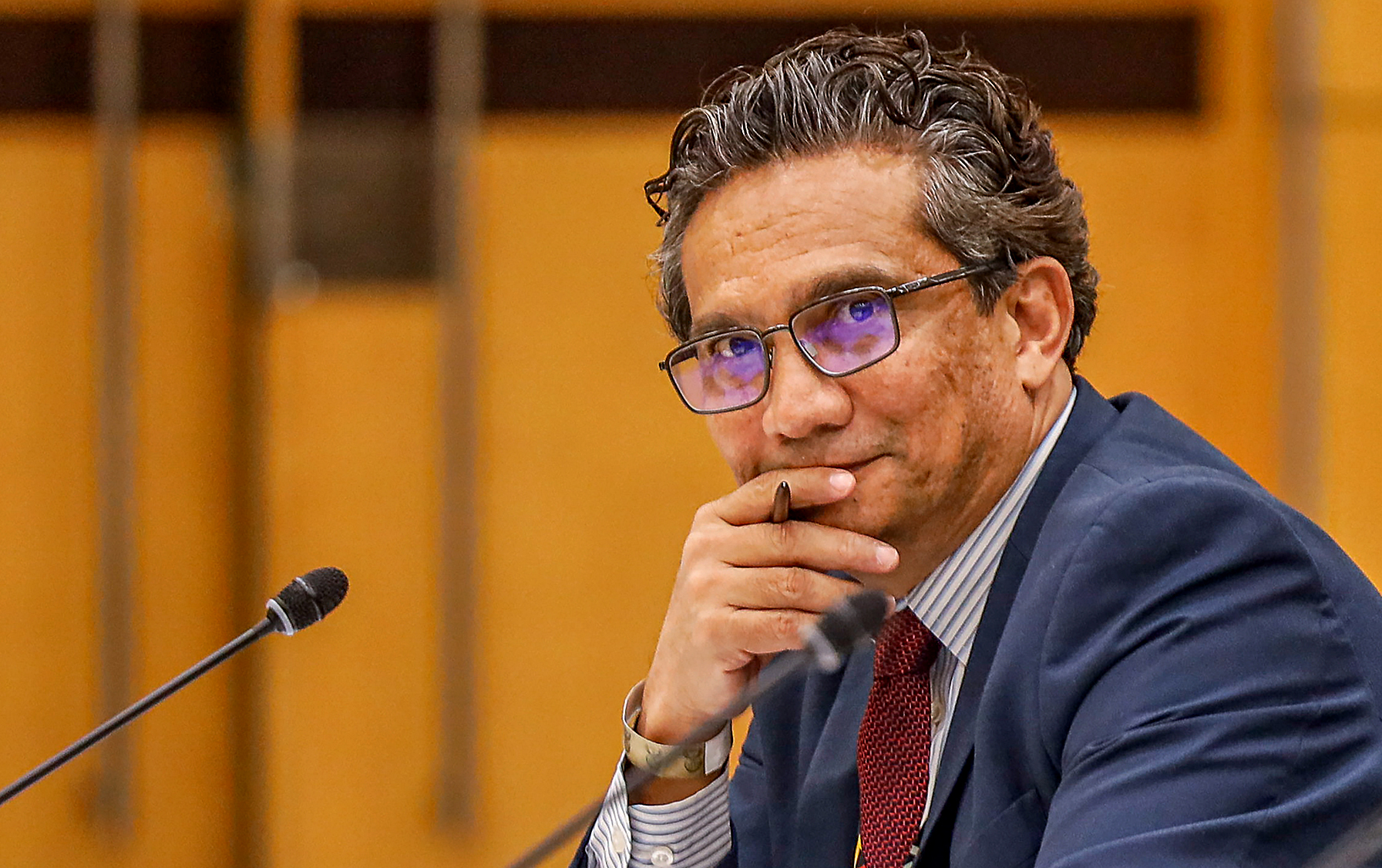
 Department of International Relations and Cooperation Director-General Zane Dangor. (Photo: Gallo Images / Sharon Seretlo)
 Question: President Cyril Ramaphosa has pointed out that ‘anticipatory self-defence’ is not permitted under international law. Does South Africa believe the US-Israeli attacks on Iran are illegal?
Answer: It’s not just a question of belief. I think belief is in the realm of politics… Article 2(4) of the United Nations (UN) Charter, firstly, is very clear and it’s very deliberate that all states shall refrain from the threat [or] use of force against the territorial integrity of another state. So, that lays the basis for what is permissible.
The same Charter then says that only the UN Security Council has the capacity… to authorise the use of force. So, if another state believes that they are under threat or that there’s a duty [or] responsibility to protect civilians, the only way they can attack another state is with the go-ahead of the Security Council. That is if another state has not attacked them.
That brings us to what the President was talking about, which is Article 51 [of the UN Charter]. Article 51 then deals with self-defence. The only other time, other than [a] Security Council go-ahead, that a country can attack another one is through Article 51, and that basically says that if an armed attack occurs against a member of the UN, the state that has been attacked can then respond. That response must also be proportionate, but there’s been a huge debate about pre-emptive self-defence.
And this is what Israel and the US [have] used – they used the term pre-emptive self-defence or anticipatory self-defence… That does not exist under Article 51. There’s case law around this; the so-called Congo case made it very clear that Article 51 only allows for self-defence when there is an actual armed attack.
[Dangor refers to the case brought by the Democratic Republic of Congo (DRC) before the International Court of Justice in 1999, against Uganda’s acts of armed aggression against it. The court found that Uganda’s military intervention in DRC constituted an illegal use of force under Article 2(4) of the Charter, as the “preconditions for self-defence did not exist”.]
The reason for this is, if you use anticipation of pre-emption, the abuse that can happen with that is immense.
Q: How do you view Iran’s retaliatory strikes on neighbouring Gulf states? Do you consider these attacks to be legally justifiable under Article 51 of the UN Charter?
A: No. So, again, Article 51 gives you the right to self-defence, but your defence must be proportionate and directed at those who have attacked you. So, if there is direct proof and evidence that a US base in Qatar, for example, was the place from which the attack emanated, then, legally, they can attack that particular base in response. But there’s no evidence for that. So, in essence, their response is disproportionate and it’s not directed at where the attacks emanated from, which at this stage indicates that it was solely from Israel.
So the attacks on the GCC (Gulf Cooperation Council) states, even though they’re [Iran] arguing that it’s directed at army bases, is not proportionate, and because you don’t have direct links, between where the attack originated and those bases, one can argue that too is a breach of Article 51 and the proportionality component of it.
/file/attachments/orphans/13797238_176990.jpg "Smoke rises in central Tehran after an airstrike on 2 March 2026. A joint Israeli and US military operation continues to target multiple locations across Iran since the early hours of 28 February 2026. (Photo: EPA / Abedin Taherkenareh)")
Q: Could this situation have been prevented, in your view? How?
A: The situation was about to be prevented. But there was no military threat from Iran. In fact, if one looks at what the foreign minister of Oman was saying, that, in the negotiations that Oman was facilitating, Iran had gone beyond what they had gone to with the agreement they made under President Barack Obama on what is called the JCPOA (Joint Comprehensive Plan of Action) nuclear agreement.
They had, in the negotiations with Oman, agreed that they would not enrich uranium at all for military purposes. So they had gone beyond what was already an agreement that was negotiated over two years with President Obama, and then, the same agreement was essentially torn up by President Donald Trump in his first term. But, in the negotiations with Oman on the nuclear issues, they had agreed that they would not, under any circumstances, enrich – except for non-military purposes. And they have gone quite far if one reads into what the Omani foreign minister was saying a day before the attacks.
I met Vice President JD Vance today and shared details of the ongoing negotiation between the United States and Iran and the progress achieved so far. I am grateful for their engagement and look forward to further and decisive progress in the coming days. Peace is within our… pic.twitter.com/fMHxWV0jgl
— Badr Albusaidi - بدر البوسعيدي (@badralbusaidi) February 27, 2026
Q: How is Dirco balancing its relationship with Iran against the risk of a diplomatic fallout from Washington?
A: So this is not about balancing our relationship with the US or with Iran. This is about what is right and what is wrong. And in this case, it’s wrong.
Just as we say that Russia’s use of force against Ukraine, irrespective of their concerns [about] Nato, is unlawful. It’s unlawful. That’s why we basically also very clearly stated that, irrespective of our engagements with Russia, the territorial integrity and sovereignty of Ukraine remain sacrosanct. And that’s why we opposed the US’ challenge in the last resolution, developed by Ukraine, where the US wanted to vote out the protections from the Charter on territorial integrity and sovereignty. This was merely a week ago. The only reason we did not vote for that resolution is because they did not want to include, in that resolution, that there [are] various actors in the peace-playing process.
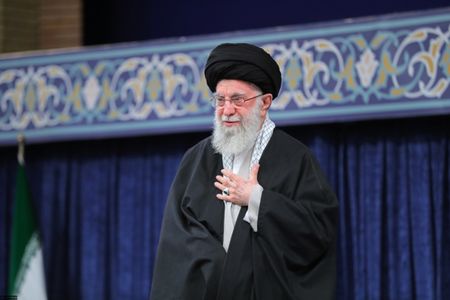
It’s not about relationships with the US or with Iran. It’s about: there’s a set of norms and laws, and we are all either protected by the set of norms and laws or we are all at risk. If you watched the press conference [on Monday, 2 March] by Secretary Pete Hegseth, he basically said this is not going to be a “politically correct” war, which means it’s not gonna be a war governed by norms…
So again, for us, it’s not about the politics of relations between states. It’s about what is right [and] what is wrong, what we accept. If we accept that certain states can breach international law because of what they perceive to be their political preference, then we are all at risk. If there were concerns about the Iranian government and its treatment of its own people, the UN was the place to go to.
Q: South Africa was criticised for not condemning the Iranian government’s crackdown on protesters earlier this year in Tehran. Critics have accused us of being selective in our foreign policy – being, for example, vocal about human rights in Palestine but silent when Tehran suppresses its own people. What is the government’s response to this?
A: So a week into the protests, we put out a statement saying that we promote and respect the fundamental freedoms of Iranians and they have to have the right to respond, they have the right to protest and for freedom of association, and we were really concerned about reports of abuses of protesters by the Iranians.
There was a resolution of the UN, which we would have supported, but critically … we abstained because we asked for, together with many other countries, that in that resolution, they should mention the fact there is a geopolitical context in which the protests were taking place and the responses thereto, and we asked for an independent investigation, cognisant of the geopolitical context and claims that some of the protesters were armed with weapons, and this was based on video and other evidence that showed that police personnel from Iran were killed…
So we were asking for an independent investigation and, one, to look at the human rights abuses by the Iranian government, and two, to look at if there was outside interference and arming of elements of the protesters. Because that would have given us a fuller view, with an independent UN-led panel as to what was happening. So it’s not that we didn’t say anything, we did put out a press release criticising the Iranian government.
/file/attachments/orphans/13797878_734051.jpg "Iranians inspect damaged buildings in a residential area near Niloufar Square after an air strike in Tehran on 2 March 2026. Niloufar Square was struck on 1 March during a joint US-Israeli military operation, which began with strikes across Iran in the early hours of 28 February. (Photo: EPA / Abedin Taherkenareh)")
Q: Have South Africans asked to be repatriated from the region, and is Dirco assisting in evacuating anyone?
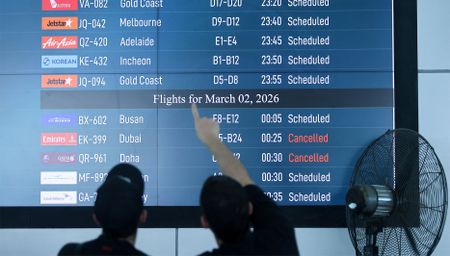
A: At the moment, because the airspace is closed, there’s no means of evacuating via air… We’ve got about 2,000 South Africans from across the region who are seeking assistance and information. There may be more, but hopefully they’ll also then use the app and the phone numbers and emails that we’ve sent through.
Over the weekend, the system was so overwhelmed that we had to reboot it. So we are going to have to look at what else is possible, depending on how long this takes. We hope that a solution is found quicker, that there is a ceasefire, and that there are negotiations in good faith… But if it takes any longer and this serious situation becomes more dangerous, we’re going to have to look at other means of evacuating people, via road if possible.
Q: You’ve previously said that the international legal system is being hollowed out by ‘exceptionalism’. Is international law redundant when countries such as the US and Israel disregard such authority?
A: So that’s the biggest danger. Already, there have been criticisms of exceptionalism and that the skewed implementation of international law weakens it. But we’re now in a space where it’s not just skewed implementation, it’s beginning to [reach] the point of total disregard. And that will lead to a dangerous place.
If the might-is-right approach gains credence and international law is destroyed, what you will find is more and more countries arming themselves, seeking deterrence through strength. Deterrence through strength without the guardrails of how you use force is just going to lead to lots more conflicts and wars, and those without the necessary strength will be at the mercy of others.

Q: Do you believe that the UN Security Council, International Criminal Court and International Court of Justice can actually stop this escalation?
A: I think we should continue to use these institutions, we should continue to get others to respect them, because if we don’t – if we allow them to become redundant – the only other avenue is for all states to arm themselves as the primary source of deterrence. Already, there’s a sense that deterrence is only through strength.
/file/attachments/2989/13796008_234567.jpg "Israel’s Iron Dome air defence system intercepts projectiles over Tel Aviv, on 1 March 2026. The Israeli military said it detected missiles launched from Iran following earlier US and Israeli strikes. (Photo: EPA / Atef Safadi)")
[As tensions in the Middle East escalate, French President Emmanuel Macron on Monday announced that France would increase the size of its nuclear arsenal for the first time in decades and boost its nuclear weapons cooperation with several European allies, reported The Guardian. According to the publication, Macron cited Russia’s continuing war against Ukraine, China’s expanding military power and changes in US defence strategy as reasons why Europe had to take more direct responsibility for its security.]
Q: Will SA take up the US-Israeli attack on Iran at the UN Security Council — and how will we vote?
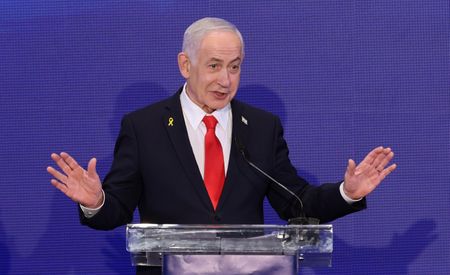
A: So we’re not on the Security Council. On Saturday, there was a debate at the Security Council where there was a mix of states clearly saying that what Israel and the US did was a breach of international law, and the response by Iran was a breach too, in terms of what is permissible under Article 51… A few states on the Security Council sought to defend what the US and Israel had done.
There is going to be a bigger debate in the Security Council in the next couple of weeks, and also at the General Assembly. For us, it depends on how these resolutions are formulated. If they stick to the principle, we will always vote for them, like we did with the last two Ukrainian resolutions, except the [most recent] one… For us, it’s about the principle – if we neglect the principle as Middle Powers, we will make ourselves vulnerable in the future.
/file/attachments/orphans/GettyImages-2263711844_780799.jpg "In this handout photograph released by the US Navy, Arleigh Burke-class guided-missile destroyer USS Thomas Hudner fires a Tomahawk land attack missile in support of Operation Epic Fury, on 1 March 2026. (Photo: US Navy via Getty Images)")
Q: What does this mean for South Africa’s relations with the broader Middle East region and countries such as the United Arab Emirates, which is a BRICS+ partner?
A: For us, the response by Iran – [it has] a right to defend [itself], but [it] doesn’t have the right to attack states where there’s no evidence that the attack emanated from those states – and we’re making that clear to the countries that we have very good relationships with, Qatar, Saudi Arabia, UAE, Bahrain [and] Oman. DM
This interview, which took place on Monday, 2 March 2026, has been edited for length and clarity.
/file/attachments/orphans/WhatsAppImage2026-03-03at193056_104137.jpeg "Illustrative image | Emergency Contacts for South Africans in the Middle East. (Photo: ChatGPT)")