




 Image: supplied
 On most summer days in South Africa, water is a part of life.
Families gather at beaches. Children play in tidal pools. Anglers launch small boats before sunrise. Inland, dams and rivers offer respite from the heat. These moments are ordinary and familiar, woven into daily routines and holiday traditions.
But occasionally, something changes.
A boat engine fails offshore. A swimmer is pulled beyond their depth. A child slips beneath the surface of a dam.
When that happens, the response often comes from volunteers.
Between 15 December and 15 January this past festive season, National Sea Rescue Institute (NSRI) crews rescued 201 people across South Africa. This was a 26% increase on the same period the previous year. National callouts rose by more than 30%. Most concerning was the sharp rise in drowning incidents, where immediate intervention is often the only difference between life and loss.
These figures reflect a broader national reality. South Africa has one of the highest drowning rates in the world, with more than 1,000 lives lost each year. Many who survive do so because trained rescue crews, excellent equipment, and systems are already in place before an emergency unfolds.
Maintaining readiness requires planning, resources and sustained public support.
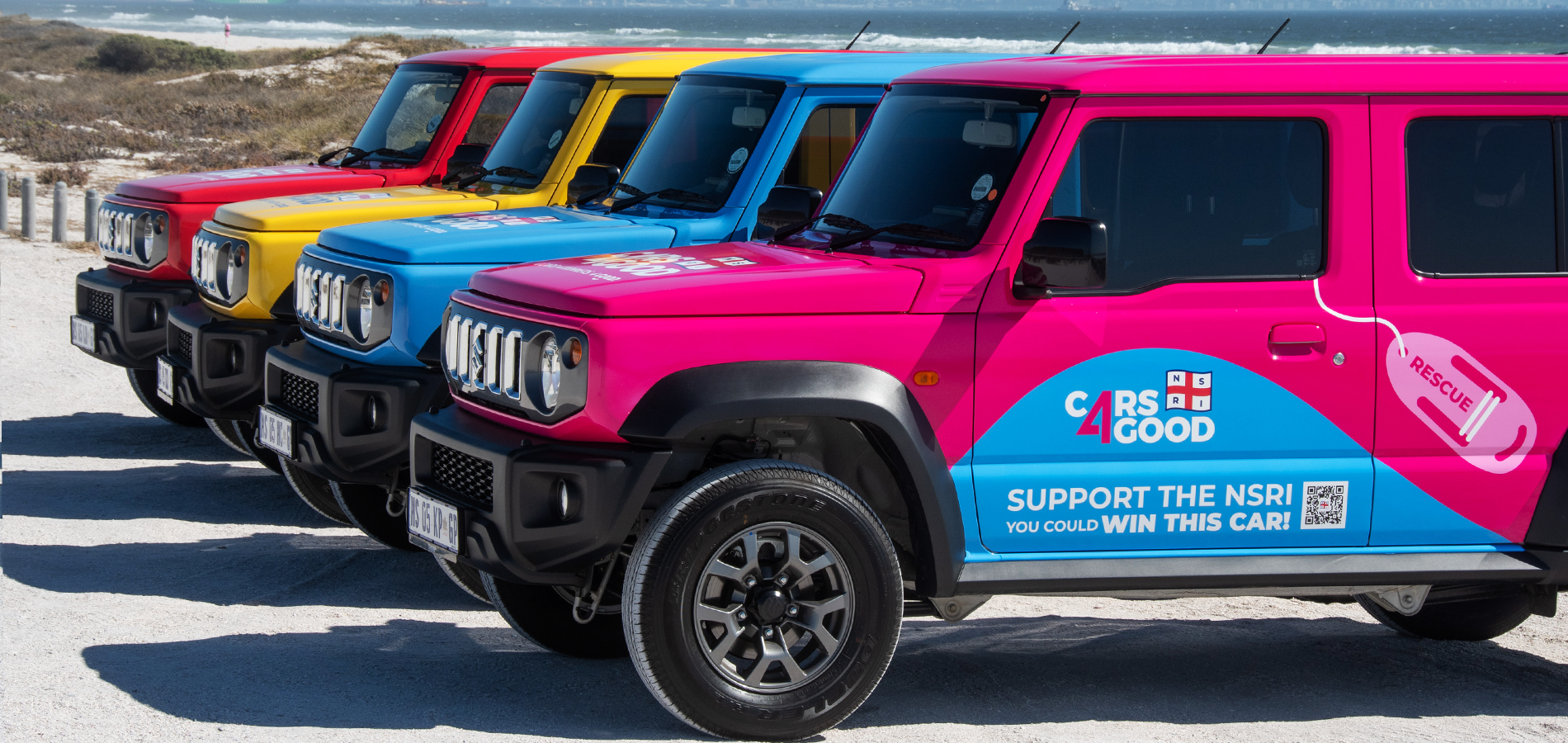
With this in mind, the NSRI has launched Cars4Good 2026, a nationwide fundraising campaign in partnership with Suzuki Auto South Africa. At the heart of the campaign are four Suzuki Jimnys travelling across the country to highlight different aspects of the organisation’s work.
Each vehicle tells a story about what it takes to save lives on and around water.
One represents rescue operations. In 2025 alone, NSRI crews responded to more than 1,000 incidents, assisting vessels in distress, conducting medical evacuations, and assisting swimmers and boaters in difficulty.
Another focuses on prevention, including NSRI lifeguards stationed at beaches around the country. Their work is often quiet and watchful. Many interventions happen early, long before situations escalate into emergencies.
A third vehicle highlights the Pink Rescue Buoy programme. These flotation devices are installed at beaches and waterways for public use in an emergency. Since their introduction in 2017, they have helped save more than 253 lives. In many cases, they allow immediate assistance from bystanders while trained rescuers are responding.
The fourth vehicle reflects the NSRI’s animal rescue work. Specialised teams respond to marine animals in distress, including whales entangled in fishing gear, helping protect South Africa’s marine environment while also reducing risks to vessels and coastal communities.
Together, the four vehicles offer a simple but important reminder. Rescue is not a single moment. It is a system built on preparation, people and public participation.
For many South Africans, the NSRI is most visible during emergencies. Rescue craft launching through surf or arriving alongside vessels in distress are powerful images. But much of the organisation’s work takes place long before any call for help is made.
Volunteers train regularly to maintain readiness. Rescue equipment must be maintained and replaced. Communication systems must remain reliable. Safety education programmes teach children how to recognise danger and respond safely in water.
In 2025 alone, the NSRI delivered more than 900,000 water safety education lessons and trained over 25,000 children in survival swimming. These programmes are especially important in communities where access to swimming instruction is limited and where drowning risk remains high.
Mike Vonk, Chief Executive Officer of the NSRI, says the Cars4Good campaign reflects the practical reality behind rescue readiness.
“Every ticket sold helps put a trained rescuer on the water, a safety educator in a classroom, or a survival swimming instructor in a pool,” he says. “That preparation is what allows us to respond when emergencies happen.”
The organisation’s operational model relies entirely on volunteers. Across South Africa, more than 1,500 volunteer crew members respond to callouts, often leaving their workplaces or homes at short notice. They train in their own time, developing the skills needed to operate rescue vessels, conduct searches and assist casualties safely.
Their work is supported by rescue craft, vehicles, specialised equipment and infrastructure. Maintaining that capability requires ongoing investment.
Cars4Good is one way to help sustain this work.
Supporters who purchase a ticket are entered into four draws during the year, with the opportunity to win one of four Suzuki Jimny five-door vehicles. Only 45,000 tickets are available.
Each Jimny travelling across the country carries a QR code that links directly to the campaign. The vehicles serve as visible reminders of the partnership between public support and rescue readiness.
Suzuki Auto South Africa’s involvement reflects a shared commitment to practical impact.
“As a vehicle partner, we are committed not only to supporting the Cars4Good competition but also to engaging in projects where we can contribute to life-saving efforts,” says Brendon Carpenter, Brand Marketing Manager at Suzuki Auto South Africa.
Partnerships like this help sustain services that operate continuously, often without public attention, but which become essential when emergencies occur.
For those who have needed assistance, the importance of readiness is clear. For many others, the presence of rescue services remains largely unseen. Yet the systems, volunteers and infrastructure remain in place, ready to respond when needed.
Prevention is an equally important part of that effort. Teaching children basic survival skills, providing safety education, and ensuring lifeguards and rescue crews remain prepared all contribute to reducing risk over time.
Cars4Good provides a practical way for the public to be part of that effort.
Participation helps support volunteers, maintain rescue equipment and expand prevention programmes. It helps ensure that when emergencies happen, trained responders and reliable systems are already in place.
More information about the Cars4Good campaign, including how the competition works and how to enter, is available at the NSRI website.
For most people, time spent near water will remain safe and uneventful. That is how it should be.
Behind that ordinary experience is a network of volunteers, training, equipment and preparation working quietly to ensure it stays that way. DM