




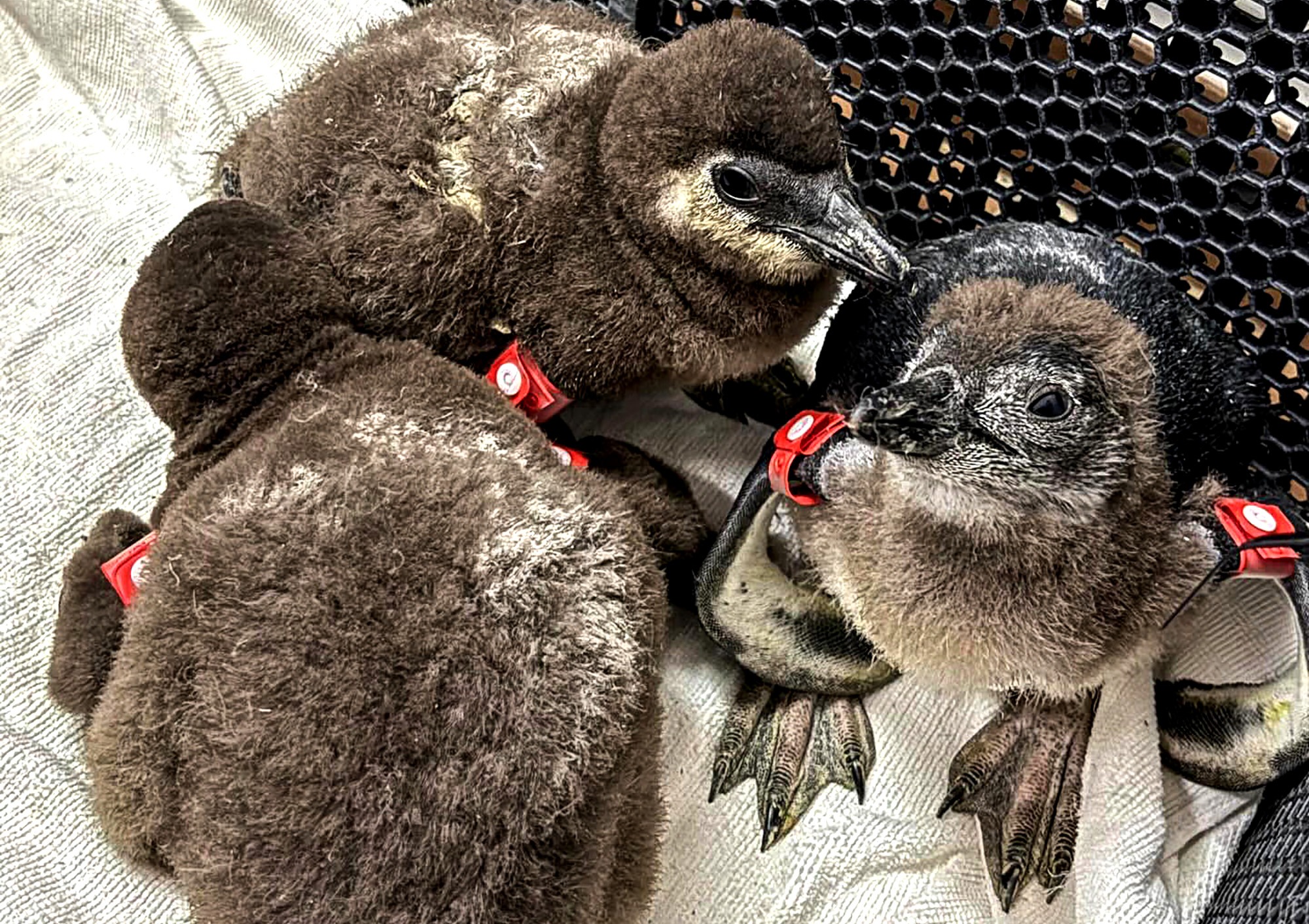
 Staff at the Sanccob facility in Gqeberha say penguin chicks rescued from flooding after heavy rainfall at Bird Island are healthy and recovering well. (Photo: Facebook / Sanccob saves seabirds)
 Close to 50 African penguin chicks rescued from flooding on Bird Island last month are “healthy”, “very noisy” and thriving under round-the-clock care at the Southern African Foundation for the Conservation of Coastal Birds (Sanccob) centre in Gqeberha.
“They are putting on weight and very healthy,” said CJ Havemann, Sanccob’s centre manager in Gqeberha. “They are very noisy because they’re situated outside my office, so you can just hear them chirping all the time.”
The 46 African penguin chicks were evacuated from the island after heavy rains on 24 February flooded low-lying nesting areas on Bird Island in Algoa Bay, washing away nests and leaving dozens of young birds without shelter or parents.
/file/attachments/orphans/Photo1_389101.jpg "A low-lying section of Bird Island off the coast of Gqeberha was flooded in February, resulting in several African penguins needing to be rescued. (Photo: Facebook / Sanccob saves seabirds)</p>
<p>")
A critical seabird stronghold
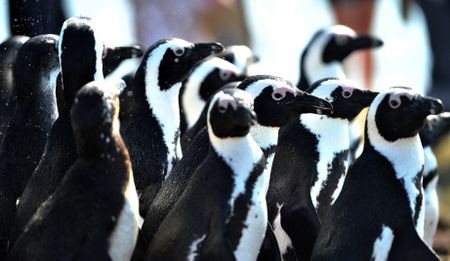
Bird Island forms part of the Addo Elephant National Park off the coast of Gqeberha. The bay contains two island groups: the St Croix cluster near the Port of Coega and the more remote Bird Island cluster.
The island hosts the second-largest colony of African penguins in South Africa, with roughly 700 breeding pairs. It is also home to the world’s largest colony of Cape gannet.
“It’s a key component in seabird breeding and seabird conservation,” Havemann said.
Sanccob works closely with South African National Parks (SANParks), the managing authority for the islands in Algoa Bay.
Flooded nests and rapid response
The rescue unfolded during peak breeding season, when adult African penguins are incubating eggs or raising small chicks.
“Sadly, with the heavy rainfall we had last week in February, these severe weather events are becoming an increasing threat to seabird colonies, mainly due to the intensity and the amount of rain falling over a short period of time,” Havemann said.
After torrential downpours flooded nests in the low-lying part of the island, the adult penguins abandoned their eggs or chicks.
“During this situation, the parents will abandon the egg or the nest or the chicks,” Havemann said.
/file/attachments/orphans/Photo5_394033.jpg "Only a handful of chicks did not survive after the low-lying part of the island was flooded in February. (Photo: Facebook / Sanccob saves seabirds)</p>
<p>")
Sanccob has two dedicated seabird monitors who are permanently stationed on Bird Island.
“They monitor all the nests and monitor for any injured penguins or seabirds. They will capture them, stabilise them on the island, and if necessary, send them off to us for further treatment,” Havemann said.
After the flooding subsided, monitors attempted to reunite displaced chicks with their parents. When that proved impossible, the birds were transported to Sanccob’s rehabilitation facility.
“They only lost a handful of chicks on the island. SANParks’ preventative measures were really good. I think they rescued more than 95% of the birds in that particular area,” he said. “Thankfully, all the other areas on the island are fine. It was just the one particular area.”
/file/attachments/orphans/Photo6_753010.jpg "Highly skilled and qualified staff at Sanccob’s Gqeberha facility are providing specialised care and treatment to the penguin chicks rescued from Bird Island in February after flooding destroyed their nests. (Photo: Facebook / Sanccob saves seabirds)")
Around-the-clock care
At Sanccob’s Gqeberha facility, the rescued chicks are undergoing an intensive rehabilitation programme.
“The good thing with African penguins is they’re very hardy, and they want to live,” Havemann said.
The chicks are housed in a specialised chick-rearing unit and receive 24-hour care from trained staff and interns.
“They get around-the-clock treatment. They get fed every two hours. We’ve got a proper rehabilitation regime that they follow,” he said.
If all goes according to plan, the birds will spend three to four months in care before being released.
“They’ll be with us for about three to four months before they reach fledgling age. Once they meet all the criteria, the rehab team is happy with them, the vets are happy with them, they’ve got the correct weight, no infections, and they’re healthy, they’ll be released back,” Havemann said.
/file/attachments/orphans/Photo2_369577.jpg "Flooding on Bird Island has reportedly increased over the past few years, according to staff at Sanccob’s facility in Gqeberha. The rescued penguins will remain at the facility for up to four months before being released back into the wild. (Photo: Facebook / Sanccob saves seabirds)")
Climate pressures and prevention
While Bird Island is well protected, climate change does play a major factor.
“SANParks has a proper management plan, so they plan for adverse events,” Havemann said. “With climate change happening, it’s very difficult to predict what’s going to happen, because we get severe weather events that we’re not always prepared for.”
Preventative measures on the island include digging drainage channels and installing barriers to divert floodwater.
“The channels work phenomenally,” he said. “They will look at the new area that flooded and implement measures.”
However, nests cannot simply be relocated.
“They can’t move the nests because the sites are occupied and pretty much used throughout the year by the birds,” Havemann explained.
Artificial nesting structures have also been introduced to compensate for habitat loss. Decades ago, extensive guano harvesting stripped much of the island’s natural nesting substrate.
“The island is made up of natural nests that the penguins make themselves, and then there’s also the artificial nest project, where SANParks places artificial nests throughout the island, giving them cover to nest under,” he said. “The artificial nest project was implemented to give them nest-like sites on the island.”
/file/attachments/orphans/Photo3_494043.jpg "Forty-six African penguins were rescued after their nesting area on Bird Island off the coast of Gqeberha was flooded in February. (Photo: Facebook / Sanccob saves seabirds)")
Noise, low fish stocks threaten African penguins in Algoa Bay
African penguins in Algoa Bay face the same threats as colonies across South Africa, says Nelson Mandela University marine biologist Professor Lorien Pichegru, who has studied penguins on the islands for well over 18 years.
“There are multiple threats. It’s about food availability. The food stocks are very low. They eat sardines and anchovies; the food stocks have been very low or are lower than the earlier 2000s,” Pichegru said.
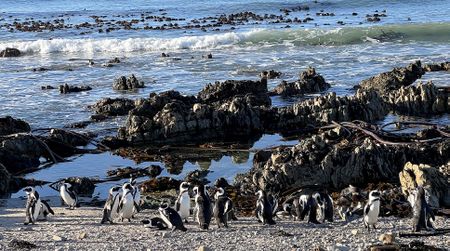
She said there was a sudden decline on St Croix Island, where penguin populations began to plummet around 2016. At the time, there were up to 8,000 breeding pairs on the island, Now, there are only 700.
“We lost 95% of the population there, which coincided with the implementation of ship-to-ship bunkering in Algoa Bay. We think noise pollution chased penguins away … so penguins, when the start breeding they do not go somewhere else. These birds did not go somewhere else; they died. We think they are trying to avoid the noise due to a lot of maritime traffic in the bay,” Pichegru said. DM