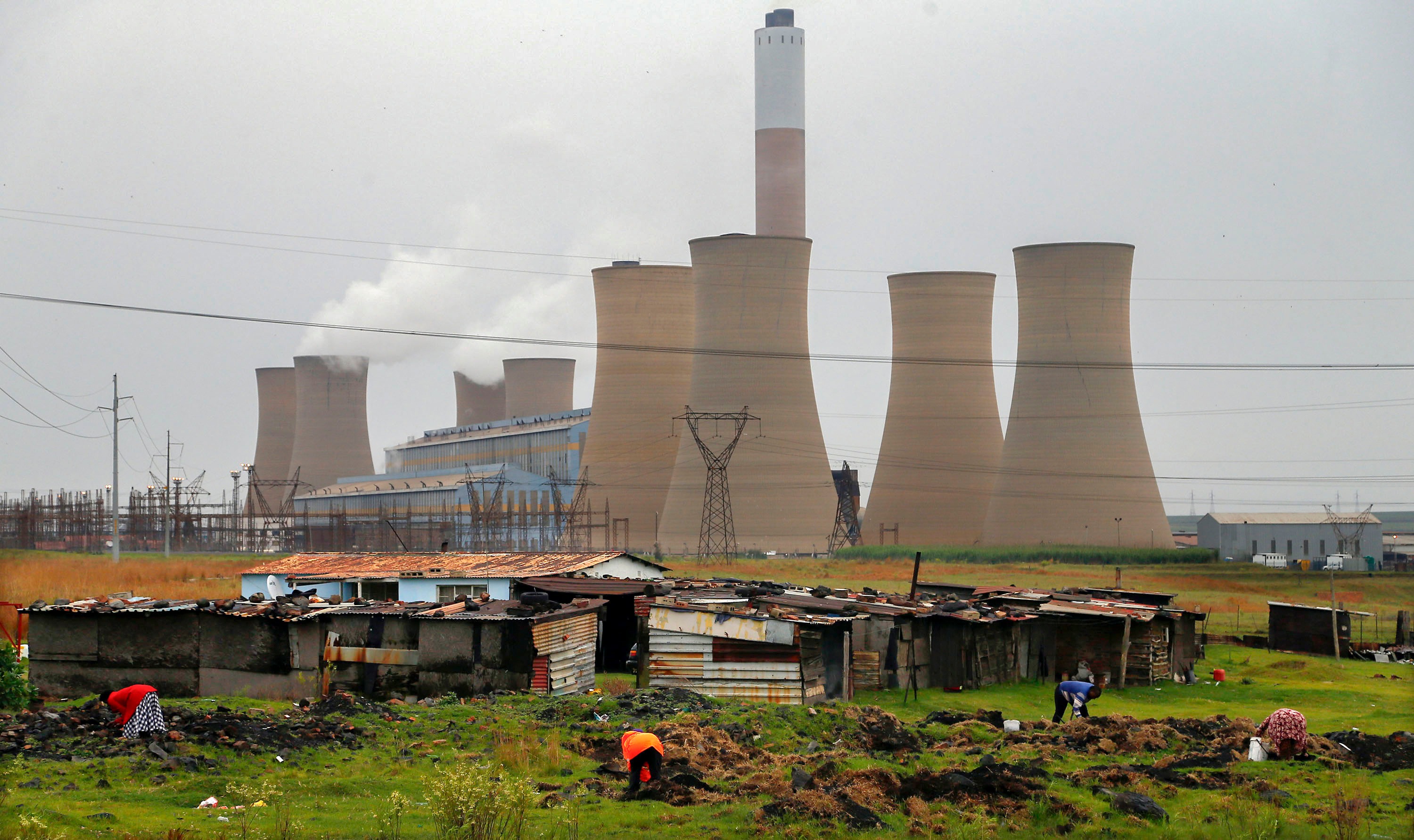
 People near the Komati Power Station in Mpumalanga search for coal on 8 November 2021. (Photo: Felix Dlangamandla / Daily Maverick)
 South Africa’s carbon tax survived the 2026 Budget intact. But those appalled by reports that the energy minister was pushing to scrap it are not celebrating. For them, a bullet dodged is not a battle won.
For others, the real question was never “scrap or keep”, but whether the tax is properly sequenced against South Africa’s pressing economic realities. And for others still, the debate, however alarming it looks, shows a contested policy space doing exactly what it should.
News24 reported in early February that Energy and Electricity Minister Kgosientsho Ramokgopa was developing a proposal to pause or suspend the carbon tax, and that Treasury had been asked to motivate for keeping it.
/file/dailymaverick/wp-content/uploads/2025/08/ED_547381.jpg "Dr Kgosientsho Ramokgopa. (Photo: Gallo Images / Volksblad / Mlungisi Louw)")
Civil society groups had written to the Presidency just before, urging it to resist rollback, alleging the pressure was driven by backroom lobbying by large polluters. There was no official response.
Finance Minister Enoch Godongwana delivered his Budget speech to Parliament last Wednesday, without mentioning the carbon tax at all. The fuller 2026 Budget review confirmed the tax had increased from R236 to R308 per tonne of carbon dioxide equivalent from 1 January 2026, describing it as playing “an integral role in South Africa’s climate change mitigation efforts”.
There was no mention of suspension or review.
Robyn Hugo, who leads climate work for the nonprofit Just Share, said the Budget brought relief, but not reassurance.
“Whilst it is a big relief not to see any threat in the Budget speech of the carbon tax’s suspension, this does not mean that there is no longer any risk. Vested fossil fuel interests will undoubtedly keep trying to delay and weaken the tax and civil society must remain vigilant.”
For Just Share, the Budget cannot be read without understanding a long-standing pattern of corporate lobbying, documented in a report last year.
They found that between December 2024 and January 2025, Sasol held three private meetings with Treasury, each attended by between five and seven senior executives, after which, Hugo said, important proposals for strengthening the tax were abandoned in the March 2025 Budget.
James Mackay, CEO of the Energy Council of South Africa, said the news of Ramokgopa’s proposal on the carbon tax raised “an important and necessary conversation” about South Africa’s reform readiness, but stressed that the Energy Council stands behind the country’s climate commitments and is not calling for the tax to be abandoned.
The council, founded by Sasol, Exxaro, Eskom, TotalEnergies and others, says it represents “the collective, unified voice of the energy sector”.
“South Africa is undoubtedly still navigating a fragile economic recovery, with growth and job creation under pressure and electricity affordability a growing concern,” MacKay said.
The carbon tax question is not whether but how, he said. Timing and pace of implementation needs to be “optimally aligned with current economic and power system realities”, with risks to growth and affordability rigorously weighed “against the externality costs of ongoing emissions”.
He also flagged “policy overlap”. The carbon tax, company carbon budgets under the Climate Change Act, and tightening sector regulations advancing simultaneously risk layered compliance costs and mixed signals to investors, he said.
The Presidency, the Ministry of Finance and the Ministry of Energy and Electricity had not responded to questions by the time of publication.
Peter Attard Montalto, an emerging markets-focused economist, agreed that there has been continued lobbying against the carbon tax from South Africa’s biggest polluters. “Some of that has watered down technical aspects around the tax, but that does not mean there has been a shift in the country’s climate pathway or its commitment to the tax.”
/file/dailymaverick/wp-content/uploads/2023/10/Ray-Transnet-Eskom-9.jpg "Peter Attard Montalto. (Photo: Supplied)")
Attard Montalto, who works with consulting firm Krutham, predicted that, because of rapidly improving battery and renewable energy pricing, South Africa’s decarbonisation will soon be argued on purely economic terms, with the carbon tax as an “outer envelope” mitigation tool. This was because, he argued, clean, reliable power would be that much less expensive than dirtier options.
Climate policy analyst Emily Tyler said the “scrap vs retain” debate was a major regression from just six months ago, when she and advisory firm Meridian Economics had proposed to Treasury how to improve the tax. Scrapping it wasn’t on the menu.
Their argument was that, as designed, the carbon tax hardly impacts South Africa’s electricity sector, the country’s biggest source of emissions. Tyler welcomed its survival in the Budget, but said the relief was only relative to the shock of nearly losing it.
Responding to the jobs-first argument, Tyler said: “I have sympathy with that view. Except that decarbonisation is not opposed to addressing poverty and unemployment; it works towards it. We can’t do this sequentially. Growth, jobs, inequality and decarbonisation are mutually dependent. We need to solve for them simultaneously, or we risk locking one or more out of the future we want.”
Just Share’s Hugo also disagreed with arguments that climate action threatens jobs and growth. “The persistent lobbying by vested fossil fuel interests is often, and will continue to be, deployed as a justification to avoid ambition, move slowly and protect major polluters at the expense of the rest of the economy.
“The false narratives around fossil fuels beg greater scrutiny; claims that reducing emissions will have dire socioeconomic consequences should be interrogated. Industry should substantiate these claims to avoid the financial interests of big industry continuing to be allowed to trump constitutional rights and harm human health.”
For Attard Montalto, all of these tough debates are good: “For me, this is all very helpful, natural and healthy – it is normal in a contested policy space. Tax policy reviews happen all the time, and yes, a carbon tax review in the coming fiscal year presents a risk point. But credit should be given to National Treasury: it is committed to the carbon tax and it is holding its ground.” DM