




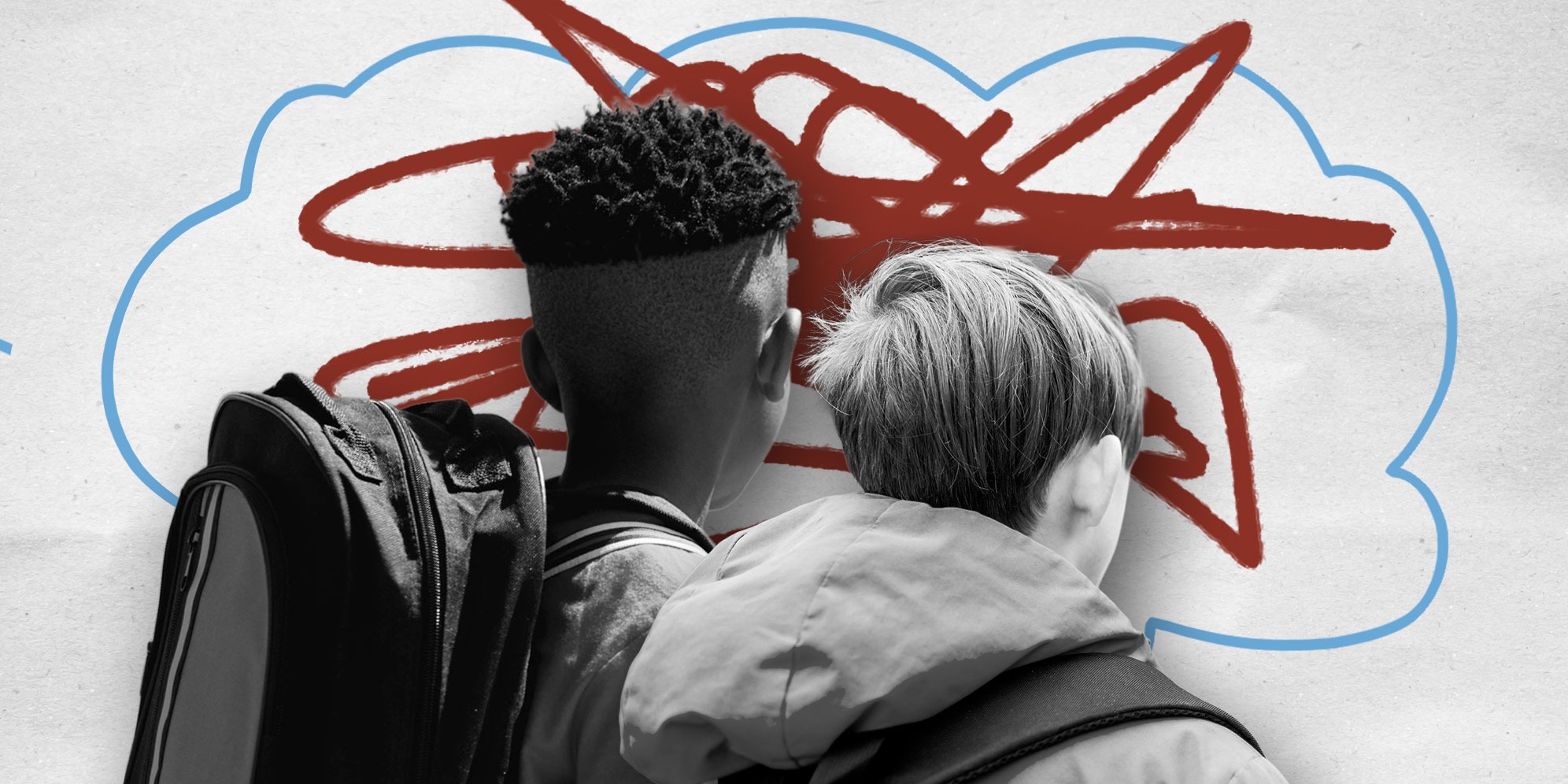
 Illustrative Image: Two young boys. (Image: Istock) | (By Daniella Lee Ming Yesca)
 South Africa is experiencing a rising social discord marked by inequality, violence and deepening mistrust. We are not approaching a crisis; we are already inside one. And unless it is addressed with depth and honesty, it will only worsen.
Why this book, why now
Much of our public response has focused on visibility-billboards, slogans and social media campaigns. While awareness matters, it is increasingly clear that performance without structural change does very little. It does not heal, protect or prevent.
This Country Hates Our Men/Boys by Dr Mzamo Masito arrives at this moment because it dares to do more than name the crisis. It interrogates the conditions that have produced it and asks how it might be interrupted. This is not a book about excusing harm; it is a book about origin, responsibility and prevention. It asks what happens when a society is more invested in condemnation than in development, and what the cost of that imbalance becomes over time.
Perspective
What Masito has observed, researched and articulated at a societal level mirrors what we, as clinicians, encounter daily in consulting rooms and hospital wards. The difference is scale. He observes the crowd; we see individuals, one at a time. He speaks of society; we work with families, one system at a time. Yet the story is the same.
In clinical practice, we attempt to respond to a crisis far larger than the resources allocated to mental healthcare. We stabilise, treat and discharge young people back into environments that often undo the work. This creates a revolving-door phenomenon: patients leave improved, only to return broken again, not because treatment failed, but because the system they returned to remained unchanged.
We are asked to treat symptoms in isolation while the social conditions that generate them persist.
High expressed emotion: A society in hostility towards boys
One useful lens for understanding this pattern is high expressed emotion (HEE): environments characterised by chronic criticism, hostility, blame and emotional overreaction. Decades of research link HEE to poorer outcomes in children and adolescents.
When we look honestly at how Black boys are engaged in South Africa, we see many hallmarks of high expressed emotion. They are surveilled more closely, punished more quickly and afforded less curiosity when they struggle. Anger is interpreted as a threat, silence as defiance and confusion as failure.
HEE does not foster accountability; it fosters shame. And shame does not lead to reflection – it leads to collapse or aggression.
Ignoring boys’ emotional development is no longer neutral – it is an active contributor to long-term social instability.
Masito’s work challenges this emotional posture. He does not call for lowered standards, but for reduced hostility. Boys cannot regulate emotions they were never allowed to safely express.
The Identified Patient: When the system avoids the mirror
Family therapy offers another powerful framework. In dysfunctional systems, there is often an Identified Patient – the person labelled as “the problem” while the broader system remains unexamined. The child acts out; the family points. Yet the symptom belongs to the system.
In many ways, the Black boy has become South Africa’s Identified Patient.
We speak about him as though he exists in isolation – separate from overcrowded classrooms, absent caregivers, violent neighbourhoods, economic exclusion and intergenerational trauma. We punish the symptom while preserving the system.
From this perspective, the rise of gangs begins to make tragic sense. They function as substitute families, offering structure, belonging, identity and a distorted form of love. When legitimate systems are emotionally unavailable, illegitimate ones step in. Boys do not join gangs because they reject society; they join because society has already rejected them.
My clinical take
As a psychiatrist working with adolescents, I see this reality daily. Many boys arrive in therapy not because they sought help, but because a system labelled them a problem. Beneath aggression and defiance is often profound sadness, fear and loneliness.
Understanding the rebellion is crucial. What appears as anger is often hurt. What looks like defiance is frequently grief. Many boys carry a deep sense of helplessness that makes risky behaviours – substance use, dangerous peer affiliations and violence – feel like ways to escape an intolerable emotional reality.
Suicide is not always instantaneous. It is often a slow erosion of hope. A shortening of life through accumulated risk. When boys say, “the world hates me”, they either turn that hatred inward or return it to the world through aggression.
Clinical work can help individuals. It cannot, on its own, correct a crisis being produced at scale.
Real-world implications
For leaders in education, healthcare, faith communities and policy, the implication is clear: prevention requires system-level change.
Schools need trauma-informed approaches, not only disciplinary codes. Families need support in raising emotionally literate boys, not just compliant ones. Mental health services must be accessible and destigmatised early, before crisis points are reached.
Healing requires more than control. It requires mentorship, consistency, emotional safety and visible care – especially from men who model accountability without brutality.
Closing insight
This Country Hates Our Men/Boys is not a defence of harm. It is a challenge to a society that has confused punishment with prevention.
If we want safer communities and healthier masculinity, we must intervene earlier, relationally and systemically. Accountability matters, but so does care.
Where we fail to heal, we must resolve to inflict no more pain. DM
Dr Clementine Chawane (BSc, MBChB, FC Psych- SA) is a registered psychiatrist in Johannesburg.