



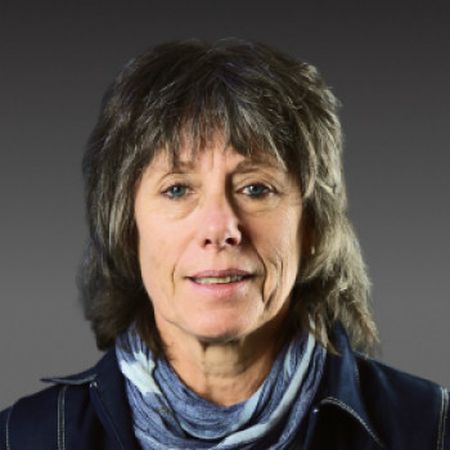
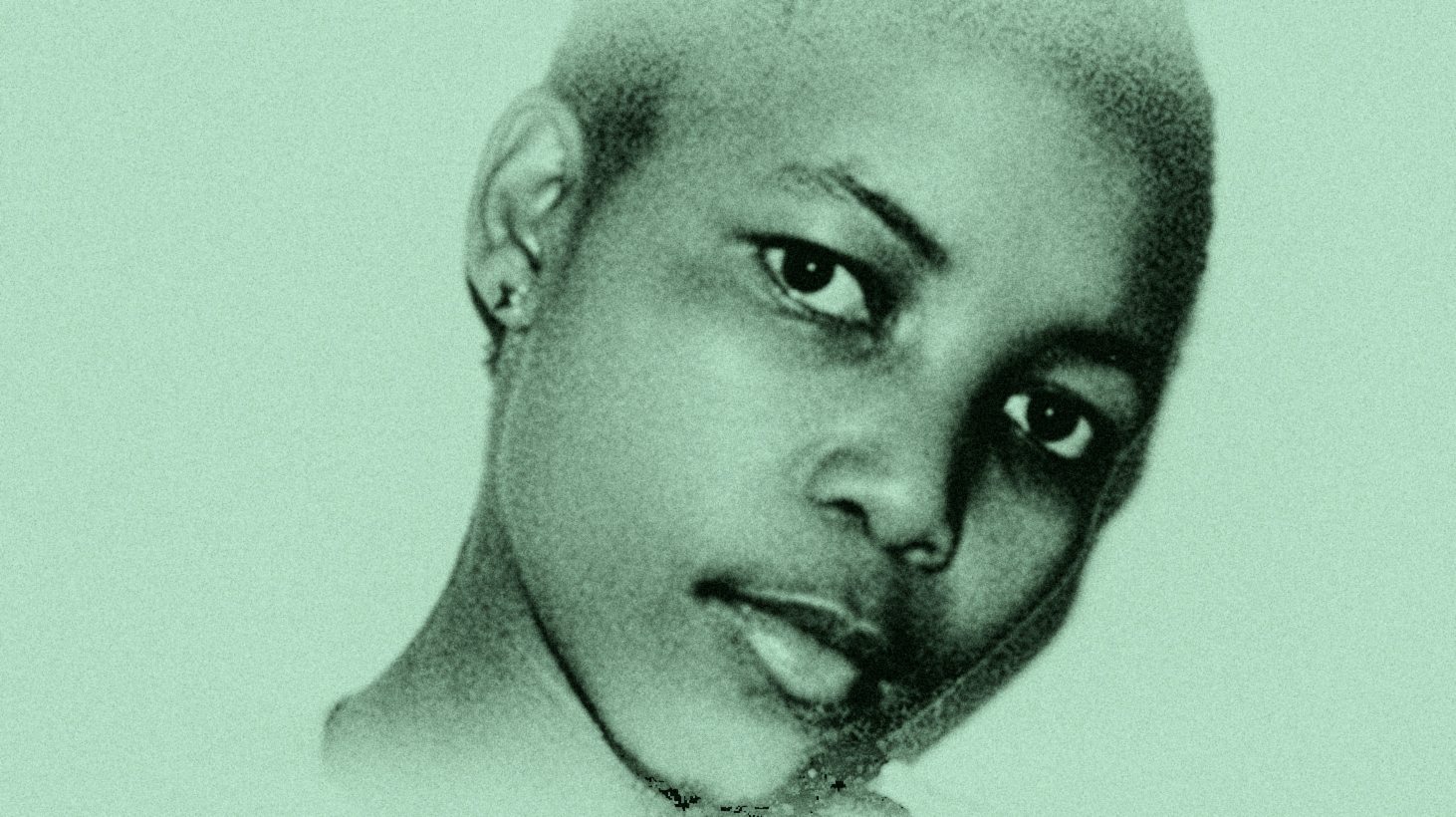
 Student and uMkhonto weSizwe undercover courier, Nokuthula Simelane. (Image: Supplied)
 Nokuthula Simelane, or “Mpho” as she was known in the underground, was only 23 when she was lured by Norman Mkonza “Scotch”, an Askari (a former liberation movement operative, captured and turned), to a meeting at the Juicy Lucy at the Carlton Centre in the Johannesburg CBD on 11 September 1983.
Simelane was then arrested and transported to Norwood, where she was tortured by police officers and forced to reveal the work she was doing for the ANC. She was later moved to a farm, where she was tortured by police operatives until she died.
On Wednesday, Andrew Leask, a lead investigator for the now disbanded Directorate for Special Operations (the Scorpions), told the Khampepe Commission into Truth and Reconciliation Commission (TRC) prosecution delays that the case against Simelane’s kidnappers and killers, Security Branch members Warrant Officer Willem Coetzee and Sergeant Anton Pretorius, had been fully prepared for trial. However, the process was abruptly halted when former justice minister Brigitte Mabandla ordered the National Prosecuting Authority to freeze all TRC-related cases.
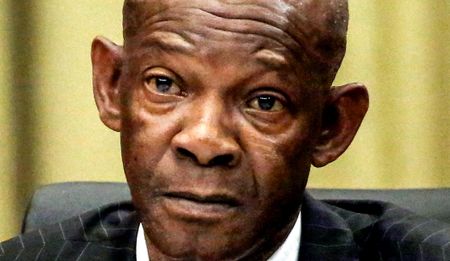
Leask was originally attached to the D’Oliveira Unit established to process thousands of TRC amnesty applications. Later, he was seconded to the Department of Justice, where he helped to set up the Scorpions. Today, he is the chief investigator of AfriForum’s Private Prosecution Unit.
Outside mechanism
On Monday, the Khampepe Commission heard from Dr Silas Ramaite, former Special Director of Prosecutions, that Mabandla had informed him in 2004 that an “outside mechanism”, the “Amnesty Task Team”, had been established “to investigate TRC prosecutions”.
This was made up of senior officials from the Department of Justice, the National Intelligence Agency, the South African Police Service (SAPS) and the South African National Defence Force.
She had ordered all TRC-related prosecutions to be put on hold, said Ramaite, until a “directive” was issued. Ramaite informed the then head of the Priority Crimes Litigation Unit, advocate Anton Ackermann, that he was no longer working on priority TRC cases as a result of Mabandla's order.
The imminent arrest and prosecution of suspects in the poisoning of the Rev Frank Chikane in 1989 as part of “Project Coast” was also stayed.
/file/attachments/orphans/Khampepecopy_552120.jpg "The Rev Frank Chikane (left). (Photo: Gallo Images / Luba Lesolle) | Former Justice Minister Brigitte Mabandla. (Photo: X) Background: Signage for the Khampepe Commission. (Photo: Gallo Images / Luba Lesolle) |")
Ramaite revealed that former national police commissioner, Jackie Selebi, had interfered with the work of the National Prosecuting Authority, accusing it of seeking to target ANC leaders for prosecution, and withdrawing SAPS detectives and investigators working on TRC-related investigations.
On Selebi’s instruction, around 400 TRC-related dockets were suddenly “dumped” at the offices of the Scorpions. These were later transferred to the National Director of Public Prosecutions.
Leask was removed from cases, which were then handed over to the Priority Crimes Unit head, Inspector Neville Thoms.
The ‘Bulldog’
Leask was represented on Wednesday by advocate Gerrie “The Bulldog” Nel, the former Gauteng head of the Scorpions (disbanded in 2009), who led him through his statement.
/file/dailymaverick/wp-content/uploads/2024/07/ED_0144689.jpeg "Advocate Gerrie Nel. (Photo: Alet Pretorius / Gallo Images)")
Regarding his investigation into the disappearance of Simelane, Leask said, “We could follow the trail up until the point where the evidence of where she was last seen was exhausted. She was last seen in the car of Coetzee, still cuffed and badly injured. That is where it stopped. She was in the boot of the car.”
The young woman had been “interrogated” by Coetzee and Pretorius. Other implicated Security Branch police officers were Frederick Mong, Msebenzi Radebe and Sergeant Johannes Pule Lengene.
Leask’s investigation into the kidnapping and murder took him to Swaziland (now Eswatini), where Simelane was a student at the University of Swaziland. Her mother, Sizakele Simelane, and her sister, Thembi Simelane, have tirelessly sought justice for Nokuthula, whose remains have never been found.
Leask reported to advocate Geoffrey Ledwaba, the then investigating director at the Scorpions. Ledwaba had told him to hand the dockets over to the SAPS.
/file/attachments/orphans/ED_531009_689171.jpg "Andrew Leask is now the chief investigating officer of AfriForum’s Private Prosecution Unit. (Photo: Deaan Vivier /Gallo Images / Beeld)")
The slam dunk
Leask said that two reports had recommended the suspension of Coetzee and Pretorius, not for murder, but “only for assault”.
He told the inquiry that a police captain had approached him at the time, making a “limited inquiry” about the progress of the investigation into the Simelane matter. Leask had been transferred to the SAPS head office, where he was a junior officer to Coetzee and Pretorius, who worked in the same building.
“There was an atmosphere, to an extent, of intimidation. In investigations, there was an effort to ensure that people who are involved, possible witnesses or perpetrators, were being approached to ask whether they had talked.”
Leask detailed how Pretorius undermined his case by interviewing Sergeant Peter Lengene, a suspect-turned-witness who confessed to lying in an earlier sworn statement.
Lengene had confessed that the kidnapping of Simelane had been part of “extensive conduct, which had led directly to the planting of bombs, kidnapping and murdering of numerous persons.
“On the day I summoned them to take the affidavit, the main suspect in the matter [Pretorius] brought him. The level of duress the witness was under was evident in that,” Leask told the inquiry.
Lengene had been told by Pretorius that it was up to him and Mkonza (“Scotch”) to “save their skins” and that “Director Thoms, who was my boss, would reveal all that had been confessed,” said Leask.
“When they told him [the witness] ‘Captain Leask would not be able to prove any of the charges’, I thought, ‘Why would anyone say they should not worry with what I am doing, as I had no proof of a body?’ For me, as a detective, it was a slam dunk.”
He was then convinced that this was a murder case and not just “an assault”.
Tireless work
Leask interviewed several witnesses, including members of Simelane’s family, friends and her fellow students in Swaziland.
“You begin with the family. With any cold case, the mothers and fathers and sisters and daughters. Remember, we were dealing with hundreds of cases where you go through it all clinically, professionally.”
After he was relieved of the case docket, which later went “missing”, Leask said he was not contacted again about the case, despite having been the chief investigator.
“Not everything is captured in the docket. I worked with policemen who were smokers and who wrote everything that happened on the back of cigarette boxes and kept them as notes.
“If you read a docket, people might sit with stuff that is so essential that it is not captured in the docket.”
Those who had inherited his files had merely embarked on a “tick-box” exercise about progress and had never taken it further.
“I would have expected that what I testified to would have been so meaningful for anyone who had to deal with that matter, not only establishing what was known, but also other things that had come to the fore. It is my view there was never any engagement with me that I would say was intended to bring the matter forward.”
Full circle
Ironically, Nel, who resigned from the NPA in 2017, was also the target of Selebi, whom he was investigating for corruption. Selebi orchestrated the arrest of the prosecutor in 2008 on trumped-up charges.
Nomgcobo Jiba, the then deputy head of the NPA, was instrumental in securing the warrant of arrest for Nel, who was dramatically arrested outside his home upon returning from a family holiday.
Simelane’s family formally thanked Leask on Wednesday, through advocate Howard Varney, for his dedication and cooperation over the years in an attempt to bring a wide circle of men involved in Nokuthula’s death to justice. DM