




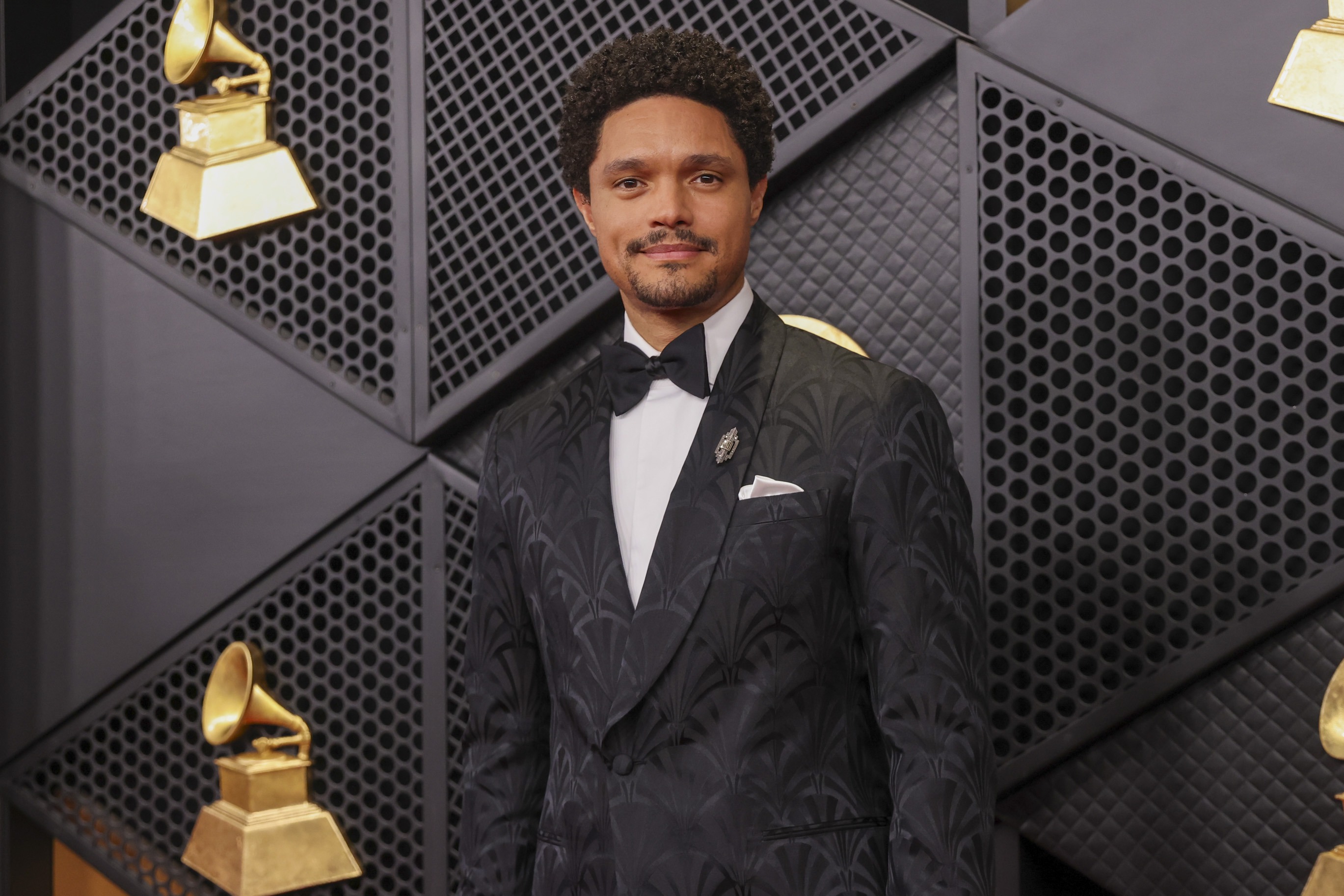
 South African comedian Trevor Noah regaled attendees at the Standard Bank African Markets Conference with his tales of taxinomics. Pic taken at the 2026 Grammy Awards. EPA/JILL CONNELLY
 “I was a taxi driver for like a year and a half of my life in Johannesburg… I was lucky enough I owned my own taxi, so it was a rare privilege to be a taxi driver/owner,” Trevor Noah told a silent audience at the opening cocktail evening at the Standard Bank African Markets Conference 2026.
The Emmy-winning host, comedian and chief questions officer of Microsoft noted: “One of the things that was amazing about being a taxi driver is (that) you very quickly learn the correlations between what you were investing in and where your money was coming from.”
He explained the direct market effects of capex: “I knew if I bought the right sound system, the school kids were going to come into my taxi.”
“The money you would make after school would change dramatically, depending on how many subwoofers you have in the back.”
Taxinomics at scale
It was a lot to take in, especially after the supreme jester gave only one short and sharp quip in response to a power failure that struck as he took the stage: “I’m sorry, I travel with load shedding so that I always feel at home wherever I go.”
In the time that it took for the electricity gremlins to be exorcised, the annoyingly handsome celebrity methodically rearranged the stage furniture and put a water bottle and two glasses between himself and his interviewer Bulelwa Tetyana (Standard Bank’s head of strategy enablement, global markets, corporate and investment banking).
Handsome, charming and helpful.
His stint as a taxi driver came when he was trying to raise funds for university – his mother made him a deal that if he could raise half the funds, she would match that and pay the rest.
“I’ve done every job I can. Taxi driver, extras in TV shows, DJ, you name it.”
And it greatly informed his ideas about directing government spend to the arts as a source of untold future value.
“I think sometimes we can’t see the benefits of something before we know the economic value it may or may not bring to us… artists are the ones who will go where the money does not think there’s any value. They will create there. And what starts to happen is like a flower that’s been planted in a rocky bed.
“People start to see value and beauty. They start coming to it. It’s the arts district... The next thing you know, there’s a burgeoning economy.”
Playing at investing
Some other economic insights were formed in his high school classroom – where he learnt later that play is essential to creating a healthy investment appetite.
“Our business economics teacher would, at the beginning of every year, give us a portfolio of stocks and he said just pick stocks,” Noah recalled.
“Pick stocks based on whatever you want. Sometimes you would read financial statements and try and understand them… Sometimes you didn’t even know what these things meant but we would pick it.”
His point: at the end of the year their hypothetical portfolios would outperform professional traders.
“But if you said it was actual money, I don’t think we would have been as comfortable picking those stocks. So I think, that’s the paradox in life sometimes, right? It’s taking an attitude of play into an area that isn’t play – understanding that play is still the fundamental for what life is.”
Value of the creator economy
He says that he lucked out when his passion became his work, which is something that doesn’t happen often. His mother also thought he was dealing drugs when his day job became working the comedy scene at night – he shared this to illustrate how society doesn’t always see the value of the art/creator economy.
Read more: Trevor Noah’s South Africa tourism promo works — because we’re obviously worth it
Among Noah’s many gripes is the lack of monetary support given to the creator economy. The persistent high cost of data relative to South Africa’s emerging market peers was a particular barrier to entry that he raged against.
But, ultimately, the economic gospel Noah preached was based on revelations from the French.
“One of the things I learned from the French government… they spent so much money paying artists to make; not knowing what it would ever lead to every painting, every sculpture you see in Paris being paid for by the government.”
According to this thesis, “art is the marketing of a culture… [It] gets culture out there into the world that makes people want to consume that culture even if they didn't know it before”.
Viewed through this lens – and in reference to his conversations with Bad Bunny at the Grammys that expanded on the Puerto Rican artist’s contribution to the island’s GDP – culture can be the catalyst for economic growth.
Noah used the rise of Amapiano as the music production costs fell, to underline this point. “The culture brings people in.” DM