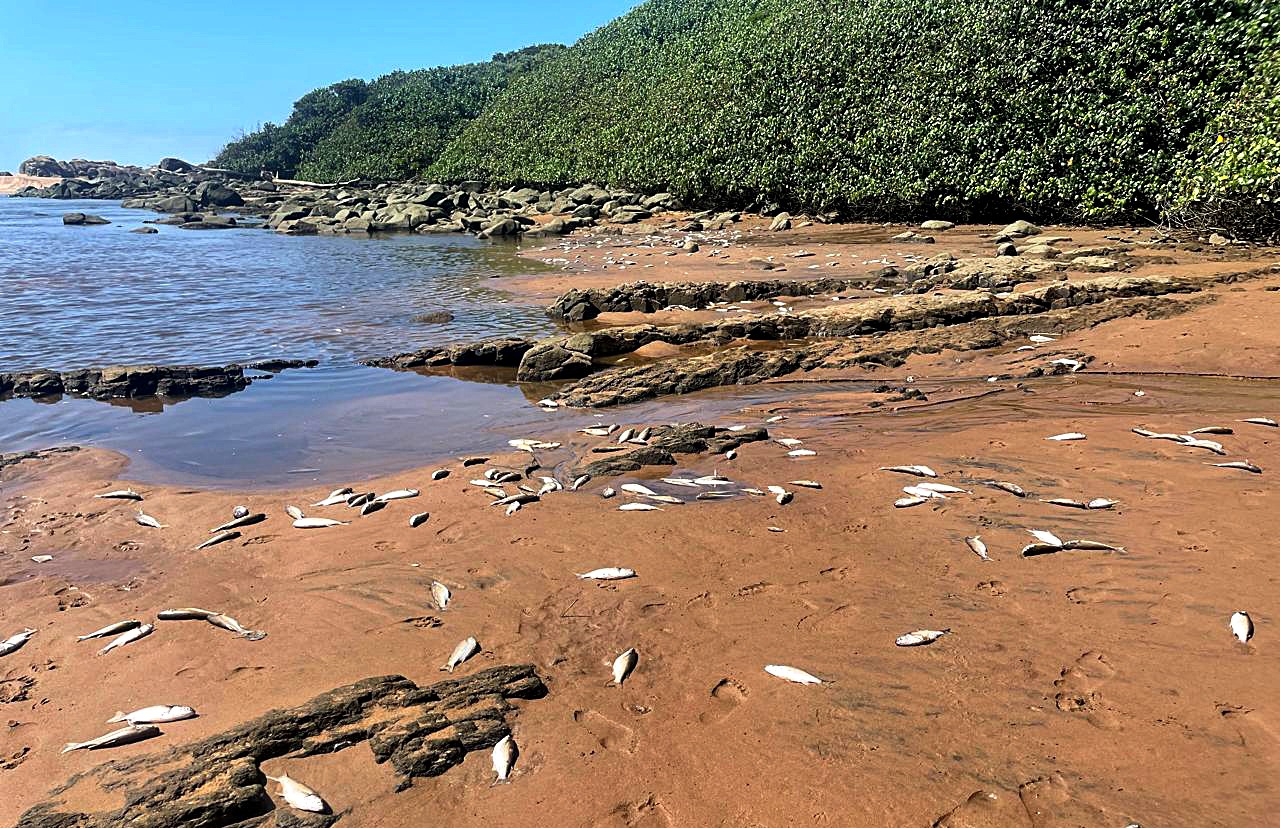
 Dead fish litter the mouth of the Umhlali River, north of Durban, on 12 February 2026. (Photo: Tessa Duane)
 No single, conclusive cause has emerged so far to explain the death of several hundred fish at the mouth of the Umhlali River on the KwaZulu-Natal coast on 12 February.
The KwaDukuza municipality said that its preliminary investigations suggest that a variety of factors were to blame, including high water temperatures, high concentrations of ammonia and “organic pollution”. Notably, the municipality said laboratory samples showed that E.coli bacterial levels (human sewage) were found to be “within acceptable recreational water quality limits at the time of sampling”.
/file/attachments/orphans/tonyfishkillprobe2imageTessaDuane_771202.jpg "A wide variety of fish and other estuarine life was affected. (Photo: Tessa Duane)")
The national Department of Water Affairs (which conducted a separate investigation in conjunction with the KZN provincial department of environmental affairs) said its preliminary examination also pointed to high river water temperatures and resultant oxygen depletion as contributing factors.
However, the national department stressed that it was still waiting for the full analysis of water tests before coming to a conclusion on the cause of the fish kill.
Significantly, the department has confirmed that it also collected treated effluent samples from wastewater treatment works along the Umhlali River and would take enforcement action if any of these samples were found to be non-compliant.
It is understood that Siza Water operates two such facilities on the river, the Sheffield and Shakaskraal wastewater treatment works. Daily Maverick has been trying to contact Siza Water for comment since 13 February, but has not received a formal response.
Some residents have scoffed at suggestions that the recent heatwave in KZN played a role in the devastation, noting that fish in other rivers did not suffer the same fate despite similar high temperatures along the coast.
But local fisherman Barry Wareham, who visited the river shortly beforehand, said he was convinced that heat was a major contributor, along with rotting riverine vegetation that had stained the water to a tannin colour.
In a Facebook post, Wareham said: “The first thing that always comes to mind is that some form of effluent or toxin must have been released into the system, but I believe that this was an entirely natural phenomenon.”
High water temperatures
He said water temperatures had been between 28 and 39°C, and possibly higher in the shallower sections of water further upstream.
Because the river mouth was closed shortly before the kill, the high water levels had encroached on vegetation along the banks, and this, combined with decaying organic matter already in the river, led to accelerated decomposition at high temperatures.
“The most important factor ... is that the algae in the water (which created the cloudy tannin-type colour) thrived in these very warm conditions. Just like plants, they consume carbon dioxide during the day and give off oxygen. Come nightfall, this process is reversed, and they consume large amounts of oxygen, giving off carbon dioxide. By Wednesday (11 February), there was such a big bloom of algae in the system that, come nightfall, they deprived the estuary of oxygen to the point where most fish could no longer survive.”
In response to questions from Daily Maverick, the Department of Water and Sanitation said: “The preliminary outcome of the investigation undertaken on 13 February suggests that high temperatures and resultant oxygen depletion may have contributed to the fish kill. The Department is awaiting water analytical results to reach a conclusion on the cause of [the] incident or what may have contributed to the fish kill.”
It noted that government officials had visited “various facilities on the catchment to determine compliance”.
“Water quality samples were also collected at the wastewater treatment works discharging treated effluent into the uMhlali River, and where non-compliances to the prescribed discharge limits are noted, the necessary enforcement action will be taken against the responsible person/entity.”
Calling for the public release of all official water quality tests, Dolphin Coast Conservancy chair Tessa Duane said she hoped that the scale of the fish kill would galvanise authorities and other interest groups to establish more regular monitoring of all threats to the river, including illegal sand mining and illegal dumping.
“The general public wants more answers and regular monitoring to ensure better protection of life in the river.” DM