




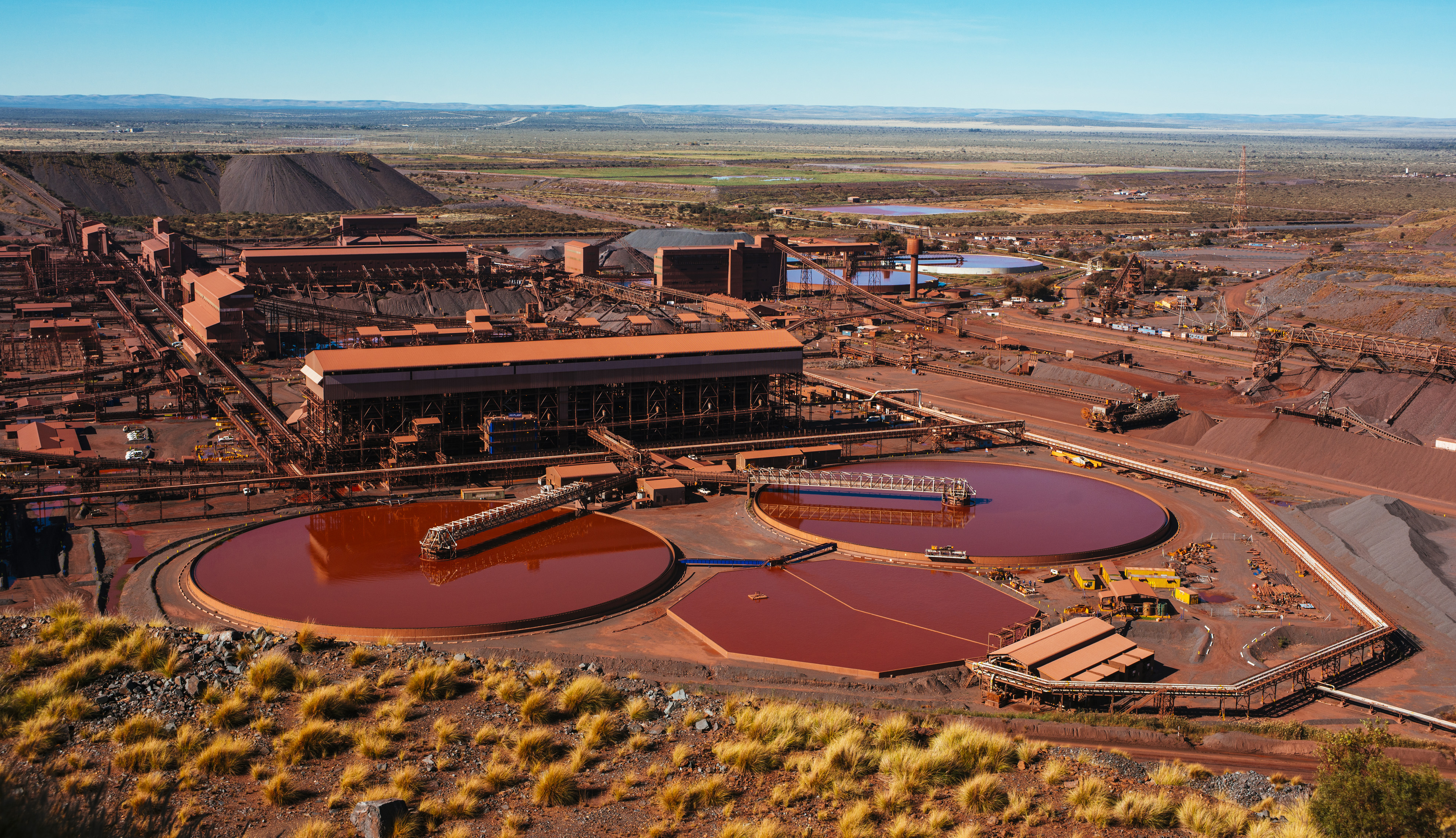
 The iron ore processing plant at the Sishen open-cast mine, operated by Kumba Iron Ore, a unit of Anglo American, in Sishen on 22 May 2018. (Photo: Waldo Swiegers / Bloomberg via Getty Images)
 There are few phrases as heavily loaded as just transition. It’s usually connected to the energy transition and coal power stations being shuttered in favour of acres of solar farms and wind turbines.
But in the arid Northern Cape, a just transition means ensuring a regional economy doesn’t collapse when the iron ore inevitably runs out. For Kumba Iron Ore, that reality is tied to a 2041 life-of-mine horizon for its massive Sishen and Kolomela operations.
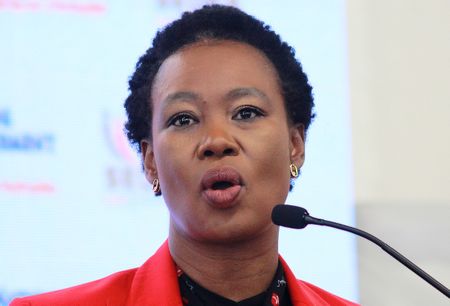
While the clock ticks towards that deadline, Kumba remains a fertile cash cow for its parent company that warranted a shout-out from Anglo CEO Duncan Wanblad on the company results media call: “Premium ore operations in South Africa [are] consistently strong.”
/file/attachments/2988/sishenandkolomelamines_623754.jpg "Source: Kumba Iron Ore annual results 2025")
While Wanblad didn’t explicitly refer to Kumba by name or discuss green steel, he did say that the group has started the process to sell its steelmaking coal business as part of its massive portfolio restructuring.
The money machine
Kumba had a strong financial year in 2025. The company made more money, with profits rising by 14% to R31.9-billion. Earnings per share also grew 18% to R45.97. Even though the rand was stronger and reduced its revenue by R1.6-billion, the ore producer was able to overcome this because it sold higher-quality iron ore at a better price; $95 per ton, which is 12% higher than the usual market rate.
“Looking ahead, Kumba is well positioned to deliver enduring value,” CEO Mpumi Zikalala said during the results presentation. “We have a sustainable life of mine, well-managed operations and a robust and flexible balance sheet to support consistent value delivery.”
However, that financial flex relies entirely on fixing a broken logistics artery. Kumba is currently deep in highly complex negotiations to extend its massive long-term rail and port contract with Transnet, which expires in 2027.
/file/dailymaverick/wp-content/uploads/2023/04/GettyImages-477815377.jpg "Railway workers pass a locomotive operated by Transnet at the company’s rail depot in Ermelo on 10 March 2014. (Photo: Dean Hutton / Bloomberg via Getty Images)")
New rules of engagement
Historically, this was a straightforward agreement covering network access, rolling stock provision and port terminal throughput. But Transnet’s structural unbundling into distinct operational and infrastructure entities has shaken things up.
“The change that’s taken place is that TRIM [Transnet Rail Infrastructure Manager] is now operating slightly outside of the rest of Transnet,” Zikalala said. Kumba now faces an unprecedented multiparty matrix, knowing the counterparty might change as rail liberalisation matures and private train operating companies enter the fray.
Read more: 'Government can't do it alone' - a GNU proverb
To avoid operational fragmentation, Kumba is pushing for an integrated contract architecture that synchronises track access, rolling stock and port capacity as an absolute necessity to secure tariff predictability for the next two decades.
Without a guaranteed route to market, the capital investments required to extend the Sishen mine’s life to 2041 simply cannot be economically justified.
Funding the 2040 horizon
Assuming Kumba gets its logistics deal and mines comfortably until 2041, what happens to its host province between 2040 and 2050?
That existential question birthed the Impact Finance Facility (IFF), a strategic funding vehicle launched by Kumba and the UK’s Foreign, Commonwealth and Development Office.
In interviews with Daily Maverick at the IFF launch event on the sidelines of the Mining Indaba, they detailed a strategy to deliberately stimulate economic diversification and reduce regional dependency on mining operations.
“Kumba will co-fund R51.2-million into this facility from 2026,” Dr Pranill Ramchander, Kumba Iron Ore head of corporate affairs, explained, stressing that “this really deepens our commitment to economic resilience in the Northern Cape”.
The UK is backing the play, which is a structural shift from traditional aid towards strategic capital investment.
British High Commissioner Antony Phillipson confirmed the commitment: “We were very pleased to invest £2-million (about R44-million) in the impact finance facility alongside the investment from Kumba”.
Unlocking capital
The fund’s primary target is unlocking early-growth-stage enterprises constrained by structural barriers in the traditional financial ecosystem.
“What’s lacking is flexible, risk-tolerant capital,” Ramchander explained. “Capital that meets early growth stage businesses... Economic diversification, job creation beyond the life of mine and the vibrant local business ecosystems are essential.”
The IFF is already working with 33 of what he calls “investment-ready deals”, providing mentorship, technical expertise and coaching to ensure these SMEs become sustainable outside the mining value chain.
Phillipson was more talkative about the recyclable nature of the UK’s deployment:
“We want to use it in a catalytic way, we want to use it to crowd in other investment. So as it is invested, as it creates returns on that, we will continue to invest those funds here in South Africa.”
As Kumba races to lock in its rail corridors for the next two decades, success won’t just be measured in tonnes of railed ore. According to the British High Commission, it will also be tracked via a strict matrix monitoring job creation, leveraged investment and the number of women-led businesses supported.
The real legacy of Kumba will ultimately be whether it leaves behind a ghost town or a thriving, diversified economy when the last train pulls out of Sishen. DM