




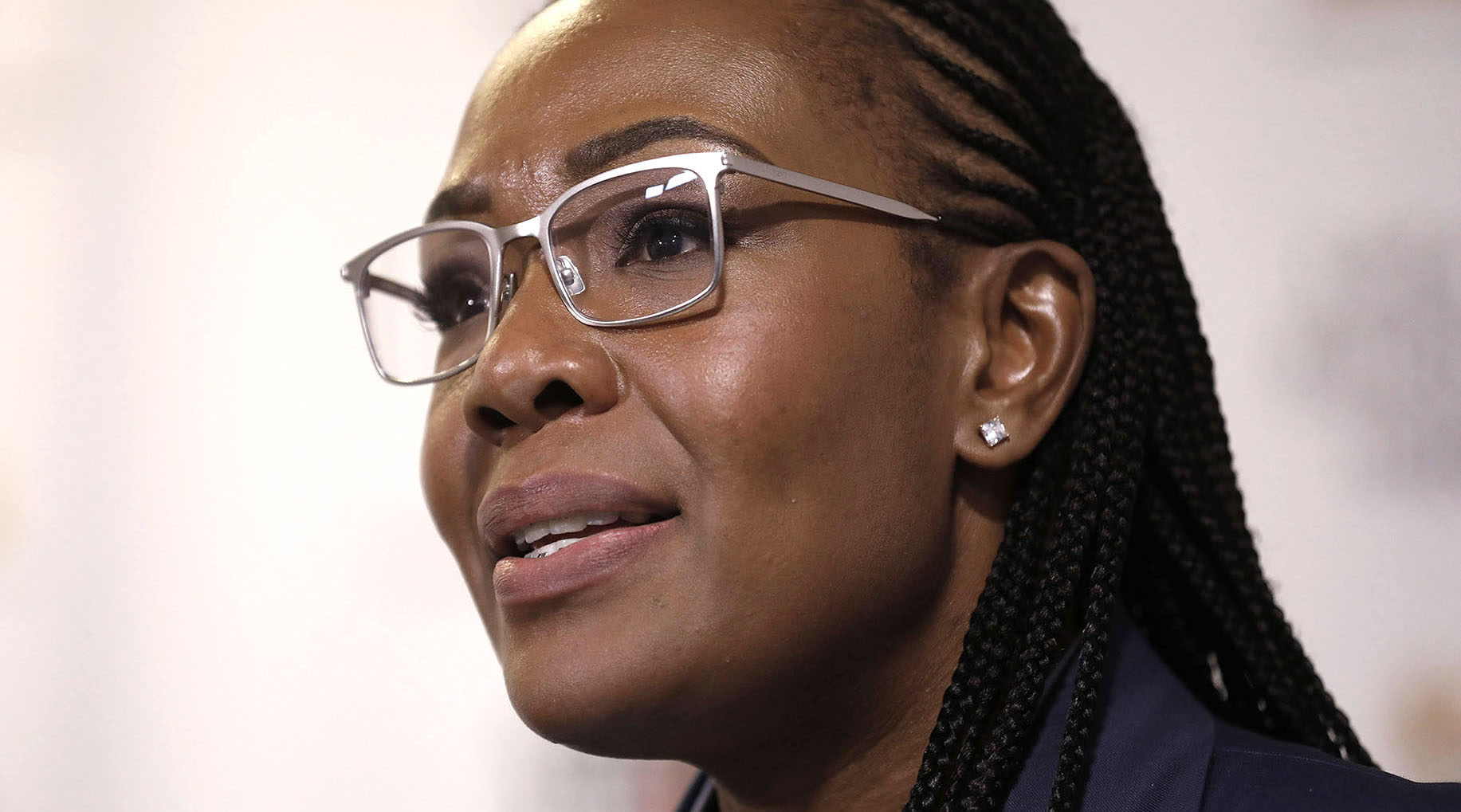
 Three major South African metros – Cape Town, Johannesburg, and Ekurhuleni – are locked in formal disputes, preventing Auditor-General Tsakani Maluleke from signing off on their 2024-25 audit reports. (Photo: Phill Magakoe)
 Auditor-General (AG) Tsakani Maluleke has not signed off on the City of Cape Town’s latest audit report due to a formal dispute declared by the metro, prompting concerns from opposition parties about the status of its audit opinions.
This was confirmed to Daily Maverick this week by Auditor-General of South Africa spokesperson Africa Boso, who also confirmed that the AG had not concluded the City of Johannesburg and City of Ekurhuleni’s audit reports, which are also being held up by formal disputes.
“The Auditor-General of South Africa (AGSA) confirms that it has not signed off on the Cape Town, Ekurhuleni and Johannesburg metros’ 2024-25 audit reports due to disputes, declared by the metros, related to the audits of these municipalities.
“While we will not get into the specifics of the disputes, we can confirm that the respective parties are handling these matters in line with the AGSA’s longstanding audit dispute-resolution processes,” Boso told Daily Maverick.
He declined to comment on whether the audit opinions of these metros had regressed since 2023-24, saying that the Auditor-General (AG) did not comment on audits that had not been finalised and tabled in the respective council or legislature.
The City of Cape Town was the only metro in the country to receive a clean audit opinion in 2023-24, maintaining its clean audit status for a third consecutive year. The City of Johannesburg and the City of Ekurhuleni both received an unqualified audit opinion with findings from the AG in 2023-24.
/file/dailymaverick/wp-content/uploads/tess-CT-budget-vote-option-2.jpg "City of Cape Town councillors debate the budget at a special council meeting. (Photo: Tessa Knight)")
Read more: Financial health of seven of SA’s eight metros ‘a grave concern’
Joburg has received an unqualified audit with findings for the past 10 years. Ekurhuleni lost its clean audit status in 2022-23, after the AG flagged several major financial and governance failings.
AG special report
In terms of section 126(1) and (2) of the Municipal Finance Management Act of 2003, a municipality must submit its annual financial statements to the AG two months after the end of the financial year, by 31 August each year.
The AG, in terms of section 126(3) of the act, is then required to submit an audit report on those financial statements to the accounting officer of the municipality within three months of receipt of the statements, by 30 November each year.
When this is not possible, section 126(4) of the act compels the AG to formally report the reasons for the delay to the municipality.
“If the Auditor-General is unable to complete an audit within three months of receiving the financial statements from an accounting officer, the Auditor-General must promptly submit a report outlining the reasons for the delay to the relevant municipality or municipal entity and to the relevant provincial legislature and Parliament,” the act states.
The City of Cape Town submitted its financials for the 2024-25 financial year to the AG by end-August, but the Auditor-General was unable to finalise its audit within the prescribed three-month timeframe.
A special report by the AGSA to the City’s Speaker and accounting officer, dated 26 January, which Daily Maverick has seen, attributed the delay in the submission of the report to “disputes lodged in line with the AGSA Dispute Resolution Procedures and the time required to conclude on technical matters”.
In the letter, the AGSA indicated its intention to submit its report to the City by 16 February, a deadline that it has since requested to be pushed.
“The City submitted its financial statements and performance scorecards to the Auditor-General on 29 August 2025. This was in line with the legislative requirements of submission of these documents,” said the City of Cape Town’s spokesperson, Luthando Tyhalibongo.
“The AG had previously indicated the audit report submission would be made to the city manager on 16 February 2026, however they indicated late last week that they are now working to a deadline of 26 February 2026. This is for the purpose of ensuring the required diligence and care during the audit process. The City does not control the timelines and process,” added Tyhalibongo.
‘Questions about financial governance’
Good deputy secretary-general and City of Cape Town councillor, Suzette Little, told Daily Maverick that the AG’s special report regarding the delay in the finalisation of Cape Town’s audit report should concern residents.
“A section 126(4) report is not issued because of minor clerical errors. It signals substantive disagreement between the City and the AG on technical accounting or compliance matters. These disputes may relate to revenue recognition, asset valuation, irregular expenditure, compliance findings or other material issues that affect the audit opinion,” said Little.
When an audit could not be finalised within the statutory timeframe, it raised serious questions about financial governance, according to Little.
“Section 65(2)(a) of the Municipal Finance Management Act requires the accounting officer to maintain effective, efficient and transparent systems of financial and risk management and internal control. If technical disputes escalate to the point of delaying the audit cycle, residents are entitled to ask whether those systems are functioning as intended. The implications extend beyond internal administration,” she said.
According to Little, audits and financial reporting integrity were crucial to investor confidence, and delays in the audit’s finalisation could have implications for Cape Town’s credit ratings, bond covenants and lender confidence.
“Residents deserve to know whether any financial instruments are affected,” she said.
Earlier this month, Business Day reported that the JSE had warned the City of Cape Town, Johannesburg and Ekurhuleni that their bonds faced suspension if their audited financial statements were not delivered by the end of February.
/file/dailymaverick/wp-content/uploads/2023/05/ED_359372.jpg "Councillors during a City of Johannesburg council meeting. (Photo: Gallo Images / Papi Morake)")
Cape Town’s three-year clean audit status has earned it the mantle as one of the country’s best-run metros, while Ekurhuleni is often regarded as SA’s industrial heartland, and Joburg as its financial capital. According to Business Day, if the JSE were to suspend their bonds it would undermine their appeal as investment destinations.
Tyhalibongo said it was within the City of Cape Town’s “legislative rights to question certain audit interpretations of legislation” made by the AG. “This is to ensure that the most accurate and holistic audit opinions are applied to the City as an organisation and in the best interest of the City and its residents.
“In late January, the city manager made a decision to declare a dispute to unlock further engagement with the AGSA and to give all parties more time to discuss audit interpretations of legislation. This development was reported to Council as per the requirements of the Municipal Finance Management Act on 29 January 2026,” said Tyhalibongo.
The City declined to elaborate on the nature of its dispute with the AG.
‘Regressing in their audit outcomes’
In a statement on 11 February, ActionSA claimed that the City of Cape Town, Johannesburg and Ekurhuleni had all failed to table the AG’s audit reports for their municipalities to their councils within the seven-month timeframe outlined in section 127(2) of the Municipal Finance Management Act, by 21 January 2026.
“It is believed that in the case of all three of these metros, adverse or regressive audit outcomes have been issued by the Auditor-General, and these municipalities’ failure to meet the legal obligations of tabling these reports arises from their ongoing efforts to engage the Auditor-General to amend the audit outcomes,” ActionSA national chairperson Michael Beaumont alleged in the statement.
“It is of significant concern that three metros of the economic, social and economic importance of Johannesburg, Ekurhuleni and Cape Town are regressing in their audit outcomes, and equally concerning that they are hiding this information from their residents and the South African people more broadly,” he added.
Tyhalibongo denied that the City of Cape Town had regressed in its audit opinion, telling Daily Maverick that the assertion that it had lost its clean audit “is not correct and is speculative. The audit process has not been concluded.”
Read more: It’s turnaround or terminal decline for local government in SA
Both the City of Johannesburg and the City of Ekurhuleni did not comment on whether their audit opinions had regressed from an unqualified audit opinion with findings received in 2023-24.
The spokesperson for the City of Johannesburg, Nthatisi Modingoane, told Daily Maverick that the City had submitted its financial statements to the AG within the prescribed legislative timeframes.
“The audit process with AGSA is at an advanced stage, and the Auditor-General has not yet finalised the audit. The City is actively engaging with AGSA to conclude the audit process,” Modingoane said.
The City of Ekurhuleni’s spokesperson, Zweli Dlamini, declined to comment on the engagements at this stage, saying: “Let us allow for the processes to unfold and the final document signed off so that we [can] communicate on something conclusive.” DM