



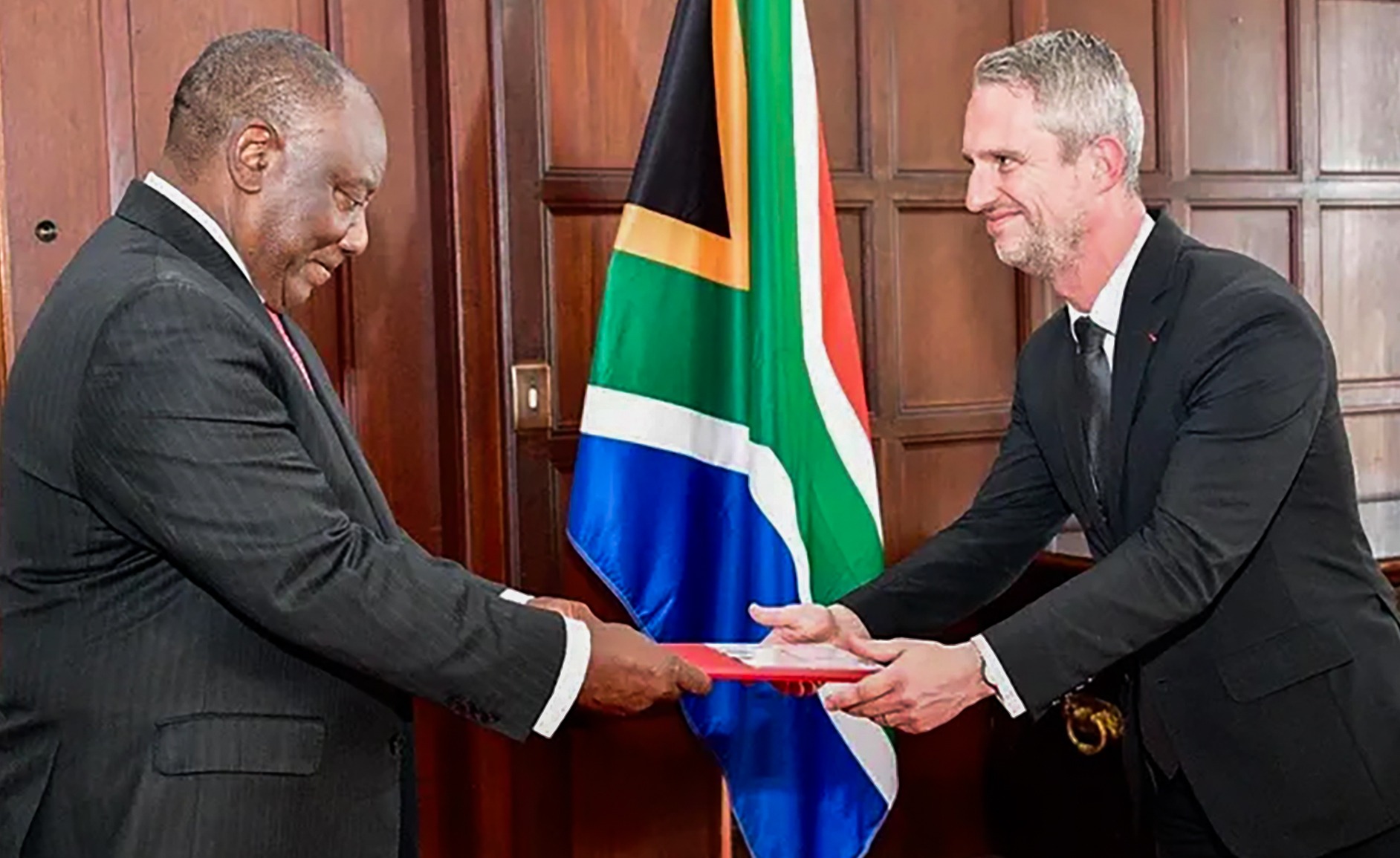
 President Cyril Ramaphosa with France's ambassador to SA, David Martinon. (Photo: GCIS)
 The European Union (EU) put on a strong show of support for South Africa at a State of the Nation Address (Sona) reception hosted by the EU, Germany, Italy and France at the Cape Town residence of Germany’s ambassador to SA, Andreas Peschke, last Friday.
Peschke, speaking largely in isiZulu, which he has mastered, EU ambassador Sandra Kramer, French ambassador David Martinon and Italian ambassador Alberto Vecchi all pledged the support of “Team Europe” as a “reliable partner” to SA in standing up for international law and the respect for sovereignty; for fighting disinformation; for democracy, human rights and multilateralism; and for jobs and sustainable economic growth in SA and shared prosperity in Africa.
Martinon, pointedly, also welcomed some “convergence” between the positions of South Africa and Europe on Ukraine – and hoped for increased convergence on Iran.
It sounded like firm European solidarity with SA in the face of sustained hostility from the Trump administration. Was that the idea?
“I guess that now SA has no doubt about who are its true friends and partners. I would phrase it like that,” Martinon replied, speaking to Daily Maverick over a lunch prepared by the French embassy chef.
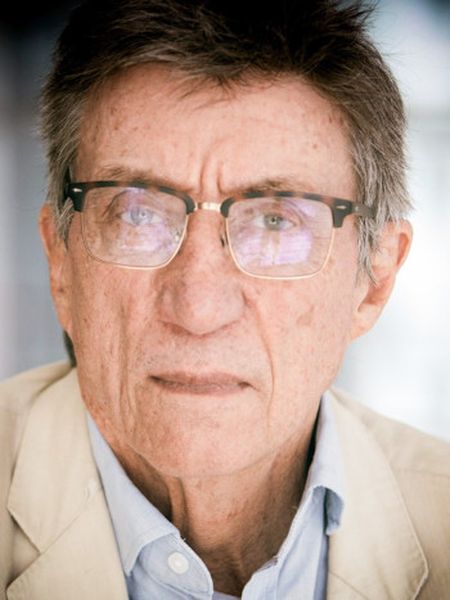
/file/dailymaverick/wp-content/uploads/2025/10/IMG_0950.jpg "David Martinon is currently the French Ambassador to South Africa, Lesotho and Malawi. (Photo: Supplied)")
Much of the EU solidarity stems from a convergence of priorities with SA on sustainable development, while the US boycotted SA’s G20 summit in November – and then barred SA from participating in its own G20 presidency this year.
Martinon said France, like other EU members, felt that SA had produced a good G20 outcome document despite the US being obstructive at the meetings it attended, or absent from others while some US allies, particularly Argentina, had also opposed SA’s agenda.
Despite that, roughly half of the many ministerial meetings ended with ministerial declarations by consensus and about half with chair’s summaries statements, he noted.
For France the G20 outcome document had been “spot on when it came to several of our points of interest, including global warming, climate change, development, etc.”
Martinon revealed that in Macron’s very friendly, hour-long meeting with Ramaphosa on the eve of the G20 summit, Ramaphosa had disclosed the negotiation techniques he would use the next day to get the G20 declaration adopted at the summit (by presenting it for adoption at the start of the summit, thus pre-empting any objections from Argentina).
/file/dailymaverick/wp-content/uploads/2023/10/GettyImages-1763067241.jpg "President Cyril Ramaphosa and President of France Emmanuel Macron walk out to the medal presentation after a Rugby World Cup 2023 match between South Africa and New Zealand, at Stade de France in 2023. The two leaders met before SA’s hosting of the G20 in November 2025. (Photo: Gaspafotos / MB Media / Getty Images)")
“And we, as allies and founding members of the G20, we were very happy that there could be a leaders’ communiqué. And we were very happy that the first African presidency of the G20 eventually managed to lead to a success.”
Martinon added that although the US in its presidency of the G20 this year would probably drop many parts of SA’s agenda, “the legacy of the South African presidency is not gone”.
“And that’s also what President Macron told President Ramaphosa, that he wants to continue the work on those topics in the French G7 presidency, meaning climate change, cost of capital for developing countries, multilateralism; all those topics are absolutely key in President Macron’s mind and intentions.”
Martinon said Macron had already disclosed this to other members of the G7. Macron will host this year’s G7 summit in June.
Ukraine and Iran
Martinon welcomed the recent “convergence” between SA and France’s position on Ukraine, referring particularly to SA supporting a recent resolution in the UN General Assembly demanding that Russia return the thousands of Ukrainian children it has abducted during the war. Pretoria also issued a rare statement last year criticising Russia for a missile attack on Ukrainians collecting their pensions, which killed many people.
He also welcomed SA hosting Ukrainian President Volodymyr Zelensky on a visit to Pretoria last year.
“There is a converging movement,” Martinon said.
Asked what further convergence he hoped for, Martinon said: “If SA would continue its efforts to try and repatriate Ukrainian children, that would make a huge difference.”
On his visit Zelensky gave Ramaphosa a list of 400 Ukrainian children allegedly abducted by Russia, and asked him to try to get them home, but there have been no signs of any success by SA so far.
Martinon said France also hoped for “more converging views” between France and SA on Iran, “Because obviously SA’s foreign policy being defined by its constitutional values and by its democratic principles that are so solidly anchored in its political traditions and practices, any government, any state that does kill its own youth, young boys, young girls, mostly underage, for disagreeing with where the country is going, should be denounced.”
Instead of doing that, on 23 January 2026, SA abstained from a resolution in the UN Human Rights Council in Geneva, which condemned Iran’s “violent crackdown on peaceful protests” that has killed thousands.
SA-France ‘convergence’
“The South African G20 presidency showed that we share the same values,” Martinon said.
“We’re very attached to multilateralism, we’re attached to global challenges such as climate change. We still have nuances, it seems, on Ukraine and obviously a substantial one on Iran, but our positions have been converging notably on Palestine.”
Martinon noted that France had been at the forefront of the promotion of the two-state solution since 1982, when then president François Mitterrand told Israel’s Knesset that the Palestinians should have a state. That speech “required some guts”, Martinon said.
He recalled too that French legionnaires had saved the life of Palestine Liberation Organisation leader Yasser Arafat in 1982 in the streets of Beirut, and 1983 in the streets of Tripoli in northern Lebanon.
France’s and SA’s ways of promoting the two-state solution hadn’t been the same, but he suggested there had been convergence recently, as indicated by the French-Saudi effort and international conference, which led to a very strong collective movement to recognise the state of Palestine unilaterally.
Saudi Arabia played an important diplomatic role towards Arab countries, while Macron helped convince European and like-minded countries, including Canada, Australia and New Zealand.
/file/attachments/2987/13661304_543988.jpg "French President Emmanuel Macron. (Photo: EPA / Gian Ehrenzeller)")
France in Africa
SA and France also disagree, though not very vocally, it seems, on France’s recent decision to approve Morocco’s proposal for autonomy for the Western Sahara, rather than the official UN policy of holding a referendum for the people of the territory to decide if they want complete independence from Morocco. SA is a fierce champion of the right of those people to independence.
Martinon would only say that “France is very supportive of any negotiation initiative that would contribute to the peaceful settlement of the conflict to the benefit of the people and stability in the region.”
SA government and ANC officials have also in the past criticised France’s military presence in Africa. But over the past few years, it has withdrawn most of its forces, particularly those that were helping African armies fight jihadists in the Sahel. Military coups, which brought anti-French and pro-Russia military juntas to power, were the main drivers of this withdrawal.
Martinon noted that in 2013, “France was called to save the regime, the democracy, in Mali. And France came. And it stayed for years to protect regimes that could not manage to protect themselves from terrorists, at the request of the Malian authorities and in the framework of international law.”
The French military did well, but could not help with the political process, Martinon said. “At some point, the new regimes that came after the coup asked us to leave, so we left. But it’s also true that, you know, French soldiers, France contributed in blood and treasure.
“We have lost 58 soldiers in the Sahel since 2013.”
Russian soldiers and mercenaries are now providing much of the military support – and by most accounts are doing much worse than the French at fighting the jihadists.
“And contrary to the Russians, we didn’t steal the mines. We didn’t steal anything,” Martinon added.
Alignment, with ‘nuances’
On bilateral – country-to-country – relations between France and SA, Martinon said: “First of all, the good news is that our two presidents get along very well.”
He cited, in particular, the meeting of Macron and Ramaphosa in Pretoria before the G20 summit, “Which went very well… the mood was very, very positive.”
“Second, we are guided as countries by the same principles, our constitutional values and provisions, the fact that we are two true democracies and SA is a true democracy and a very vibrant one, as we could see on the evening of the results of the 2024 general elections.
“And our attachment to multilateralism, attachment to the UN Charter.
“Also, our desire, our wish to reform multilateralism,” he added, recalling that French had been consistently calling over the last 20 years for the UN Security Council to be reformed to give Africa two permanent seats.
So basically, SA and France were aligned, though still with some “nuances”, such as Ukraine and Iran, “which is absolutely normal”.
Martinon said Macron had told Ramaphosa on the eve of the G20 summit how SA’s G20 agenda and France’s G7 agenda were basically aligned.
/file/attachments/2984/13526182_415735_155eb92e76ec4f607571f9024a4e15da.jpg "President Cyril Ramaphosa speaks alongside Brazil’s President Luiz Inacio Lula da Silva and Chairperson of the African Union Joao Lourenco at a plenary session on the opening day of the G20 Summit at the Nasrec Expo Centre in Johannesburg, South Africa, on 22 November 2025. (Photo: EPA / Thomas Mukoya / Pool)")
Ramaphosa is normally invited to G7 summits but Martinon said he could not comment because it was President Macron’s prerogative to invite guests.
“But what is clear is that he wants SA, Brazil and India to be part of the process.”
Together these three countries were part of the Ibsa forum that was established even before the Brics forum, he noted – “and which has a future because these are three true democracies”.
Martinon also noted that France and SA had made significant progress in mutual legal assistance – cooperating on police and judicial matters such as extraditions of suspects.
And the two countries were making progress in military dialogue.
France also supports SA’s healthcare and so, along with European partners and others, is helping finance the Afrigen Biologics, Biovac and South African Medical Research Council project in Cape Town to manufacture mRNA vaccines.
Martinon was particularly impressed by two announcements made by Ramaphosa in his Sona. One, that it was now possible at last to envisage SA being free of Aids because the government would be undertaking a massive roll-out of the new US drug lenacapavir, which requires just two injections a year to prevent HIV infection.
The other was that SA would vaccinate all girls between the ages of nine and 15 against cervical cancer, using a vaccine developed with the support of the organisation Unitaid, which Martinon said was 60% funded by France.
Standing up to Trump
Globally, Daily Maverick asked Martinon if Macron’s remarks at Davos last month that “France prefers respect to bullies, the rule of law to brutality,” were welcome signs that France and others were now flexing their muscles against Trump’s America.
Martinon said the Europeans had made it very clear at Davos that “Greenland is not for sale… and if Greenland needs to be protected from non-Nato entities, then Nato should take care of it.”
That was why France and other countries had decided to participate in the military operation in Greenland. It is widely believed this joint operation persuaded Trump to back off his intention to annex Greenland.
Martinon declined to elaborate on what exactly Macron had in mind when he told the Munich Security Conference last week that Europe had to learn to become a geopolitical power by providing its own security, including bolstering its nuclear deterrence.
“If I were to answer your question, I would probably be sent as ambassador to Antarctica tomorrow,” he quipped, adding that only the president could talk about nuclear deterrence, because he was the one “who presses the button”.
Macron has said he would elaborate on his statement in another speech.
“Having said that, it’s absolutely true that Europe needs to realise that it has to become a military power,” Martinon said. “And it has to learn to rely on itself. And that’s indeed something that France has been saying for… at least 70 years.”
That has become more urgent now with Trump threatening to withdraw support from Nato and reducing military support to Ukraine. And it does seem that Europe ought to be able to defend Ukraine on its own given that its combined economy far exceeds Russia’s.
“Well, Europe has been contributing in terms of equipment and material for the Ukrainian army,” Martinon replied. “So if your question is, would we put boots on the ground? President Macron evoked this idea some time ago.
“I think now the question is, how do we ensure the conditions so that there could be a ceasefire between Ukraine and Russia?
“And if that implies a military presence, then I think that’s the kind of thing that could be considered,” he said, adding that the ongoing negotiations were “obviously extremely difficult” and that no progress was apparent.
He also noted that Europe had already started reorganising its defence industry and its tenders so that it could accelerate supplies of weapons to Ukraine, and that most European countries had decided to dedicate more resources to their defence systems. DM