




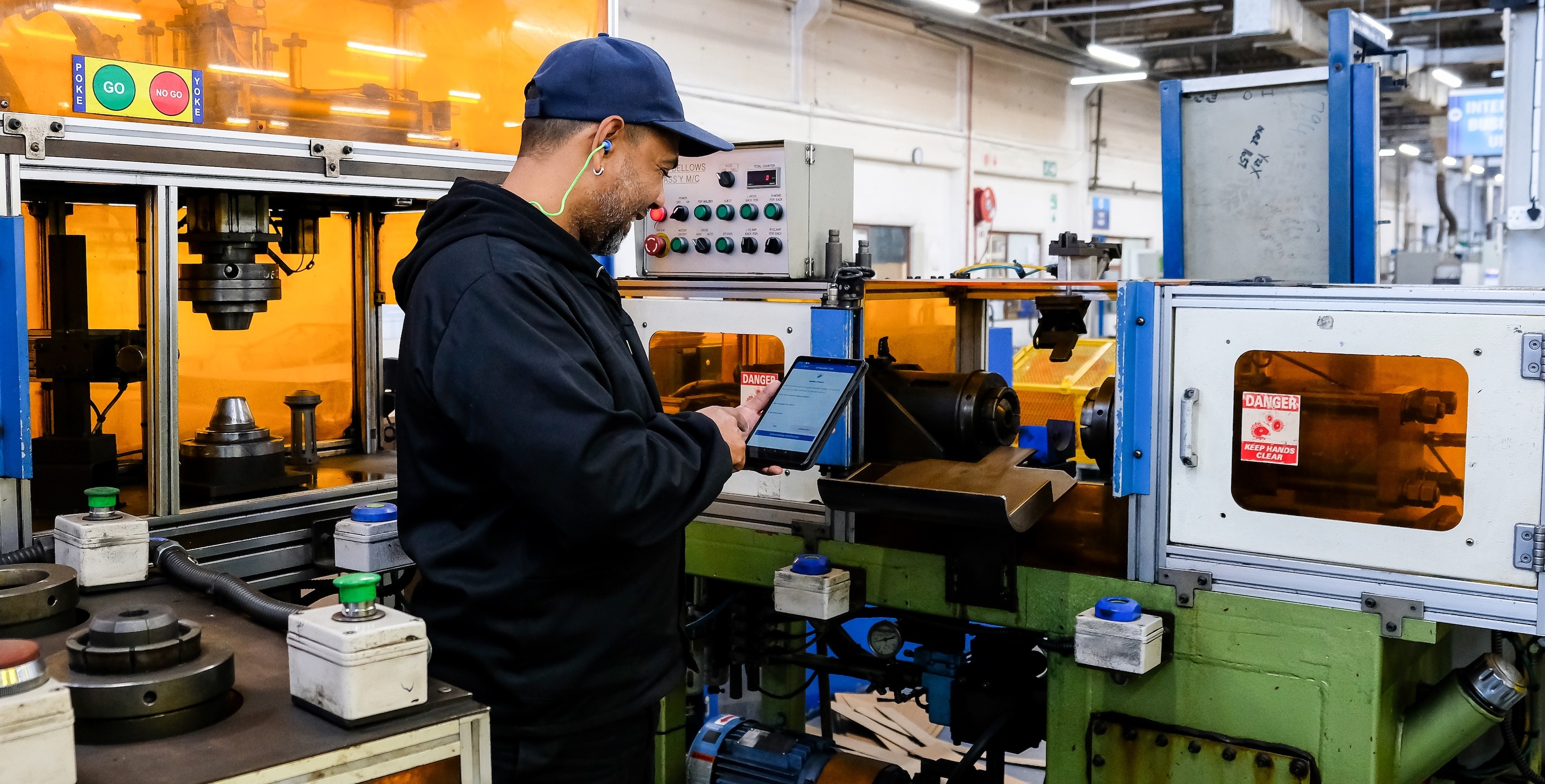
In truth, most digital initiatives fail, not because the tool or technology is wrong, but because the workflow itself never changed.
The illusion of progress
In many factories, “going digital” means taking a paper checklist, converting it into a Google form, and loading it onto a tablet. The physical clipboard disappears, but the workflow remains identical.
On the surface, it looks modern. In reality, it is little more than painting over rust, because the bottleneck is still there, and a human still has to read the data to spot a problem. The information stays trapped in a form, unable to trigger alerts, identify patterns, or prevent errors. If someone skips a step or enters the wrong value, the system does nothing to alert anyone that there is a problem.
True process efficiency comes from redesigning how work is executed, validated, and acted on, not from changing from a manual to digital form.
The stages of digital maturity
Factories typically progress through three stages of digital maturity towards real productivity gains.
The first is digitisation. The format of documenting the process changes: paper becomes a screen, but the workflow remains unchanged.
The second is digitalisation. Data is captured in tools like spreadsheets or databases, usually for reporting. The work is still manual, and the insight often arrives too late to matter.
The third is real digital transformation. This is where the workflow itself is re-engineered so the system actively detects and prevents failure at each step instead of passively recording it. Risks are detected automatically and alerts are triggered and communicated instantly, allowing teams to take immediate corrective action.
Efficiency does not come from more data being reported faster, but from autonomous decision making removing the noise, so the critical issues are highlighted and can be addressed immediately.
From tribal knowledge to institutional intelligence
One of the biggest sources of inefficiency in factories is reliance on tribal knowledge.
Every team has its highly experienced individuals who know exactly how a machine sounds when something is wrong, how a measurement should be taken, or which shortcut is dangerous. Because this knowledge lives in their heads, there is often a gap between these experts and everyone else.
Manual processes turn this gap into a broken telephone. Instructions for critical maintenance tasks are given verbally – and forgotten. The wrong measurements are written down. Data is typed up later. By the time someone realises there is a problem, it is already too late and a machine is about to break down.
Digitally efficient factories capture this expertise once and embed it directly into the work instructions. The fix is as simple as recording a video of the senior team member explaining the nuances and how to complete the required checks step by step, and then uploading it to the task.
Their co-worker follows the correct method at the moment of execution, validation of measurements happens automatically, and problems are escalated immediately.
What once took multiple people and days of delay can be reduced to a single action, completed correctly the first time round.
The human impact of better processes
Process efficiency is often framed as a technology problem, but its biggest impact is human.
Clear, guided execution reduces stress for operators and results in fewer errors and complaints. Senior staff can then spend less time policing paperwork and more time improving systems. When work is designed properly, people perform better, not because they are monitored more closely, but because the system supports them.
In an environment where skills are scarce and experience is retiring, this matters more than ever.
Why audits expose inefficiencies
Nowhere is the cost of poor processes more visible than during audits.
In manual environments, audits trigger panic. Teams scramble to find paperwork. Signatures are missing. Time stamps are unclear. Even when the work was done correctly, proving it becomes a project in itself.
Digital tools only improve compliance if they are designed to enforce the correct process, not just document it.
An efficient digital process makes it impossible to skip critical steps. Every action is logged automatically, creating a mandatory chain of evidence with full process traceability that doesn’t rely on memory or a manual filing system.
As a result, audit readiness becomes a by-product of daily work, and compliance stops being a drain on productivity.
Engineering efficiency, one process at a time
One of the biggest myths about digital transformation is that it requires a massive, multi-year programme. In reality, the most successful factories start small and scale deliberately.
A practical approach looks like this:
- Start by identifying one high-risk or high-friction process. Something that causes rework, downtime, or audit stress.
- Turn the standard operating procedure into a digital task. Then add validation rules so the system can detect abnormal values or missed steps and trigger an automatic alert.
- Build a dashboard to visualise the data. This lets you see trends at a glance, instead of hunting for them in reports. Use those insights to predict machine failure before it happens.
- Then review the data on a monthly basis to keep refining the process. Once the process is stable and delivering results, replicate it elsewhere, and see the productivity gains stack up.
For a real example of digital efficiency in action, see how Jendamark’s digital task management solution reduced machine downtime by 30%, saved almost 100 hours of reporting and admin, and improved plant maintenance for a customer. Read the full case study here.
The real takeaway
Improving process efficiency in a factory is not about buying more tools or digitising more documents. It is about replacing passive recording with active prevention. If a human has to read a report to find the problem, the system is too slow.
The factories that forge ahead in the next decade will be those that fix the work, record human expertise before it is lost, and let digital systems do what they do best: validate, alert, and prevent failure in real time.
You don’t need to transform the entire factory overnight. You just need to fix one broken process properly. DM
Jendamark’s digital task management app, ODIN Checkpoint, is designed to improve efficiencies for any manufacturer. Learn more at www.odincheckpoint.io.
Author: Jeannie Serfontein is an industrial engineer (M.Eng) and ODIN Checkpoint manager at Jendamark Automation.