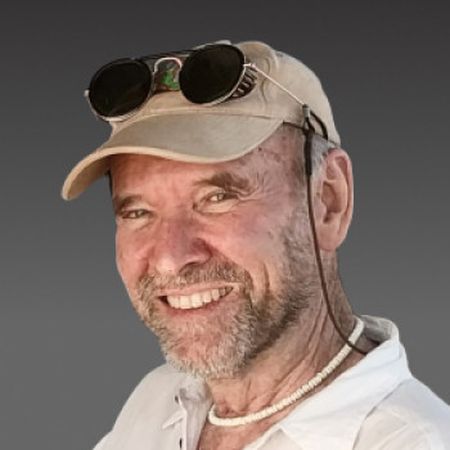
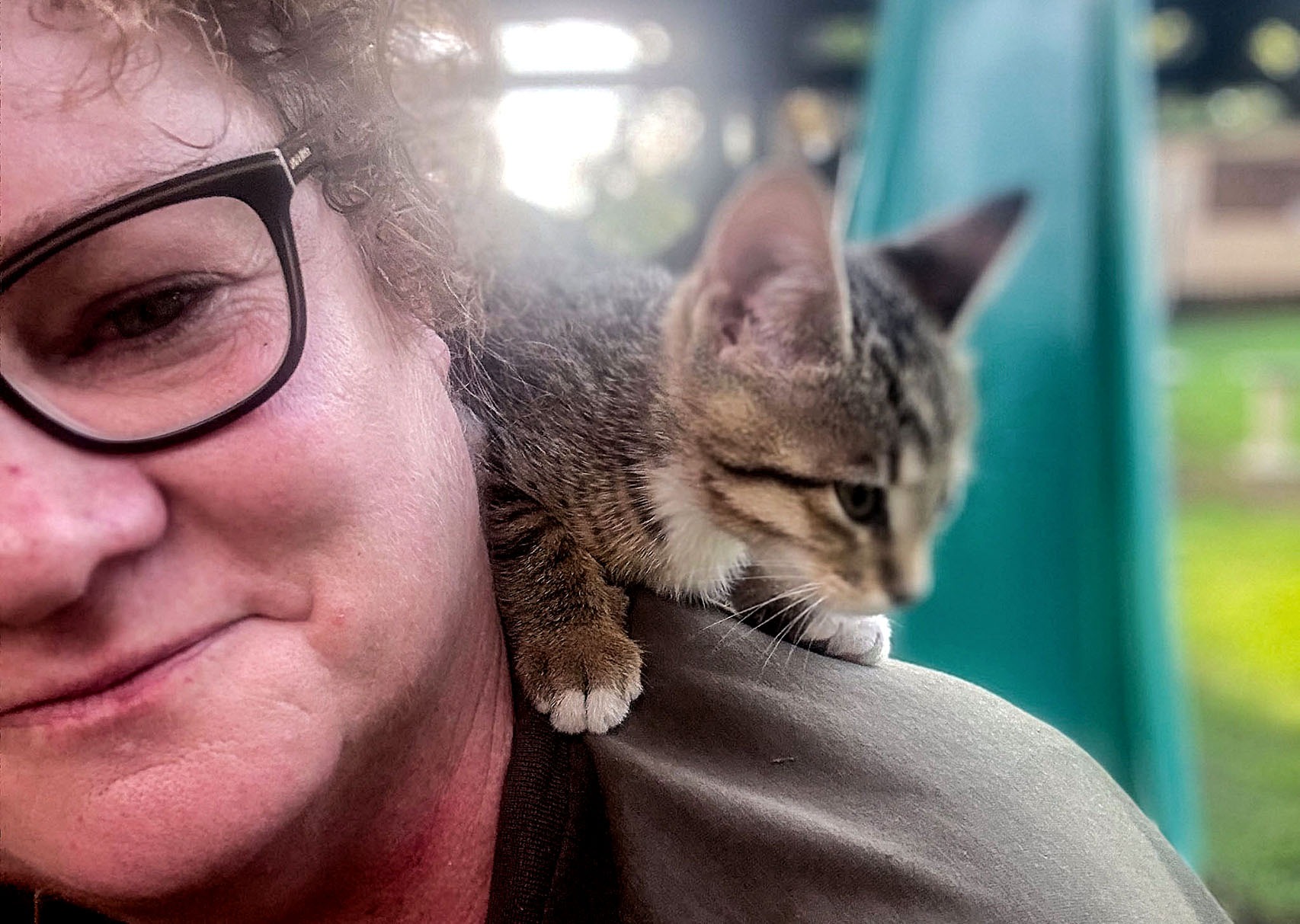
 Roaming journalist Leonie Jourbert and her travelling companion, a cat named Mouse. (Photo: Leonie Joubert)
 /file/attachments/2987/NOtesfromasmallfinal_916700.jpg)
Mist lifts late in the KwaZulu-Natal Midlands. By the time it clears, the hills look rinsed clean, as if nothing urgent happens here. It’s the kind of place that invites reflection, whether you asked for it or not.
Leonie Joubert has come to ground here for a few weeks, pausing a journey that has already crossed provinces and expectations. Fifteen months into a roaming journalism project, she’s discovered that endurance is not about pushing through at all costs, but about knowing when to stop, reassess and then keep going – lighter, wiser and still curious.
She’s had to concede a few things. Constant rough camping, for one, was romantic but untenable. Bodies have limits. So do tents. The work continues, but with gentler logistics: fewer nights in hailstorms, more borrowed rooms, a recalibrated idea of what endurance looks like when you still have to file copy the next morning.
That moment of adjustment captures something essential about Joubert’s work and life: an ability to face reality squarely, mourn what no longer works and keep moving anyway.
For more than two decades, Joubert has been one of South Africa’s most incisive science writers, someone who grew up without a clear sense of direction but with a powerful instinct to disappear into books. A journalism and history degree opened her thinking. Science writing found her almost by chance: she says she’s an “accidental writer”.
One opportunity led to another. A rookie assignment became a feature. A feature became a book chapter. A chapter became a book. Twenty years later, she has written at least 12 books and countless long-form pieces.
Her breakthrough came early, with a trip to the Prince Edward Islands – sub-Antarctic outposts where climate change is already remaking ecosystems. The isolation, the science, the physicality of the work all mattered. It taught her that the most powerful environmental storytelling happens far from desks, inside landscapes, in conversation with people whose lives are already changing.
At first, she thought she was writing about separate things: climate change, food, plastics, invasive species. Only later did she realise she was circling a single problem from different angles. Pollution. Carbon in the atmosphere. Chemicals in bodies. Plastic in rivers, in fish, in bloodstreams. And always the same questions beneath it: who benefits and who carries the cost.
From there, her reporting grew more systemic. Food, she discovered, wasn’t just about farming. It was about cities, corporate power and what researchers have called the neoliberal diet: cheap, ultra-processed, aggressively sold and quietly externalising its damage onto families and public health systems. These weren’t bad personal choices. They were engineered outcomes.
For years, Joubert believed that careful reporting, accumulated piece by piece, would help shift public understanding. Then, in 2018, the Intergovernmental Panel on Climate Change’s 1.5°C climate change report landed like a blow.
Climate grief
It made explicit what had been building almost unseen: more than half of all historical carbon emissions had occurred in her lifetime: the window for avoiding runaway climate collapse was slamming shut. The work of decades, hers included, had not been enough. Humans are irreparably damaging Earth.
What hit her was extreme climate grief.
Around the same time, her personal life unravelled. A long-term partner emigrated as part of his own climate resilience strategy. Newsrooms hollowed out. Work dried up. Journalism budgets collapsed under the weight of social media platforms and tech monopolies.
As a woman nearing 50 in a field that still equates authority with maleness, she felt herself slipping into the margins.
Joubert describes it as standing on a cliff, watching a tsunami approach a village below. Screaming warnings – but realising no sound coming out. The despair was absolute. She checked herself into hospital with life-threatening depression.
Recovery was slow and inelegant. She wrote a memoir about the experience – necessary, honest and commercially disastrous. To stay afloat, she sold the apartment she loved. Faced with the question of what to do with the energy she had left, she chose motion.
On the road with a cat named Mouse
/file/attachments/orphans/Don-LeonieJoubert-09_210426.jpg "At the office, Joubert style. (Photo: Leonie Joubert)")
/file/attachments/orphans/Don-LeonieJoubert-02_486103.jpg "The idea was simple: travel the country reporting on an increasingly stressed planet. (Photo: Leonie Joubert)")
/file/attachments/orphans/Don-LeonieJoubert-01_107389.jpg "Mouse provided the comic relief. (Photo: Leonie Joubert)")
She bought a small VW Caddy – smaller than she had hoped – packed her life into boxes and set off. A kitchen box. A pantry box. An office box. Two suitcases of clothes. Shoes under the passenger seat. And a cat named Mouse, who took up the role of navigator and comic relief with surprising competence.
The idea was simple: travel the country, report on an increasingly stressed planet until the money ran out and tell stories that could only be told from the ground. Against expectation, the project grew. Funding partners came on board.
A research fellowship from the Henry Nxumalo Foundation provided a vital thread of stability. Then Stellenbosch’s School for Climate Studies awarded her a research fellowship with a stipend. What began as a one-year experiment became a multi-year mobile journalism project.
The work itself is granular and systemic at once. In the Eastern Cape grasslands and Lesotho highlands, Joubert followed water, soil and grazing – showing how local custodianship underpins regional water security and global carbon storage.
In rural Matatiele, she stumbled on an unlikely environmental crisis: disposable nappies. With no waste collection and no alternatives, families had little choice but to dump them into the veld, where they clogged streams and rivers. From there, the story radiated outwards – plastics, fossil fuels, corporate responsibility, environmental health.
These are not desk stories. They require sitting, walking, listening. Translators. Elders. Songs breaking out mid-interview. Joubert insists that the most important connections only appear when you show up in person.
The logistics are brutal. Camping in 38°C heat. Filing copy while wind tries to dismantle your tent. Hail flattening your shelter. Lightning cracking above metal roofs (she and the cats – there are now two – got under a table). Internet signal hunted from hilltops.
More than once, she has retreated to the van simply to avoid hypothermia or panic. Eventually, she accepted that camping full-time was incompatible with sustained work, and began mixing short-term rentals with time on the road.
People often ask if she feels lonely or afraid. The answer surprises them. She’s felt much safer than expected, lonelier in cities. Solitude, she says, is not absence but space – a condition for thought and for writing. She describes the journey as a psychological Camino, a long, inward walk matched to an outward one.
However, the emotional toll remains real. Climate grief doesn’t resolve itself. Some days are held together by deliberate attention to kindness: watching people help one another, choosing to notice care instead of cruelty.
Philosophy has helped. Viktor Frankl’s insistence on meaning within suffering. Albert Camus’s argument that when meaning collapses, service remains. The idea that even if the ship is going down, rearranging the deck chairs might still ease someone else’s fear.
‘Don’t be a bastard to people’
/file/attachments/orphans/Don-LeonieJoubert-05_534143.jpg "With temperature hovering around 40°C, thoughts would stray to the madness of the journalism project. (Photo: Leonie Joubert)")
Joubert is unsentimental about outcomes. She doesn’t claim to be saving the world. What she insists on is agency. The point of her work, and of her life now, is not to fix everything, but to act where she can. Tell stories. Make connections. Help people see themselves inside systems rather than crushed beneath them.
Her work is being noticed. She’s won a number of awards and in 2025 scooped the coveted African Science Journalism Award for articles in Maverick Earth.
Her conclusions are almost disarmingly simple. Be kind. Don’t be a bastard to people. Act locally. Everyone has a point of agency if they’re willing to look for it. Help them find it. And face climate change head-on, keeping it front of mind. Don’t kid yourself: it’s happening.
In an age obsessed with scale – global solutions, planetary targets, impossible transformations – Joubert’s work insists on something quieter and more durable: attention, presence and the courage to keep walking, even when the road keeps changing. Words matter. DM