




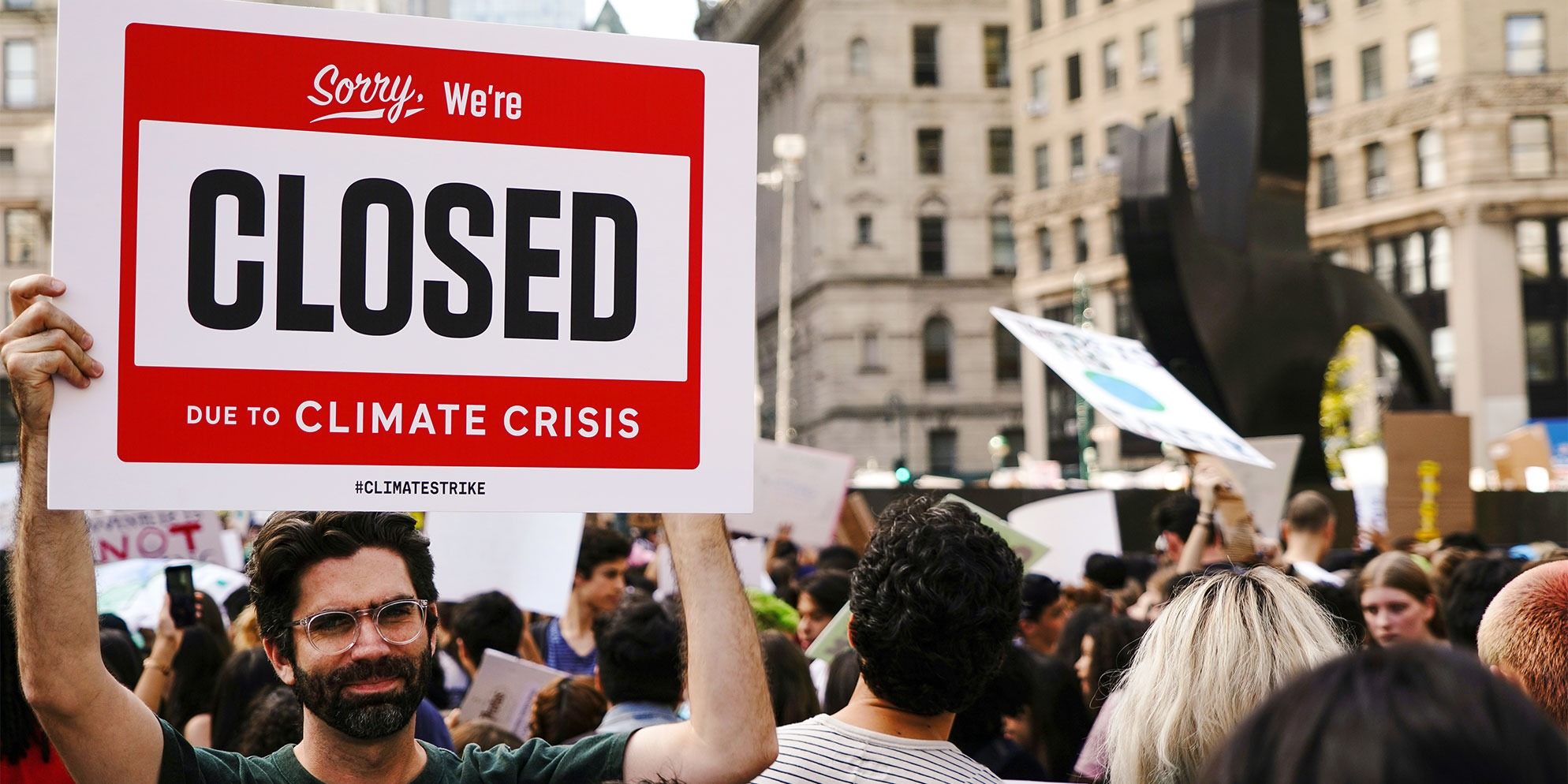
 The physics of the atmosphere have not changed because of an Environmental Protection Agency ruling. Greenhouse gases still trap heat and the climate is still changing. (Photo: Katie Rodriguez / Unsplash)
 Last week was a quiet administrative week in Washington (at least by Trumpian standards) when a sledgehammer fell with a loud clang. The US Environmental Protection Agency (EPA) finalised a rule that formally overturns its own 2009 “Endangerment Finding” – the scientific determination that greenhouse gas pollution endangers human health and thus requires regulation under the Clean Air Act. The same day, the EPA repealed emissions standards for light, medium and heavy-duty vehicles. More is to come.
While the legal experts parsed the nuances of the decision and the activists took to social media to vent their frustrations, it seemed to me that a more profound realisation was settling. The ruling marks the symbolic end of an era – the death of climate alarmism as the dominant lens through which we view our future.
For years, the public discourse has been dominated by a narrative of impending doom. We were told the clock was ticking down to seconds, that the seas were boiling (a truly silly metaphor well beyond hyperbole), and that the only moral choice was a radical, immediate dismantling of modern energy infrastructure. But the mood has shifted. We are witnessing, as the Rational Optimist author Matt Ridley recently noted in his piece “The Great Climate Climbdown is Finally Here”, a palpable retreat from the hysterical edge of the debate.
“The climate scare is running out of steam,” the article observes, pointing out that the activists who once commanded the cultural high ground are now struggling to maintain the narrative. The EPA’s ruling is the institutional embodiment of this exhaustion. It acknowledges a reality that many have felt but few dared to articulate: the social and economic cost of alarmism has become too high to bear, and the predicted catastrophes have failed to materialise at the rate and severity promised.
/file/attachments/2985/GettyImages-2248960503_323866_405308047f06d761656448a6db4f8a8b.jpg "Hunter Red Rebel Brigade during the People's Blockade at Horseshoe Beach on November 29, 2025 in Newcastle, Australia. The People's Blockade of the Newcastle coal port is a large-scale climate protest where thousands of activists, many in kayaks, attempt to halt coal shipments to demand action on fossil fuels and climate change. (Photo: Roni Bintang/Getty Images)")
I remember watching former US vice-president Al Gore’s 2006 documentary An Inconvenient Truth. I came away shocked and energised by the dire predictions. In the light of 20-year hindsight, most turned out to be at best exaggerated and at worst nonsense – the snows of Mount Kilimanjaro would disappear “within the decade”, the glaciers in Montana’s Glacier National Park would be gone “within 15 years”, the Gulf Stream would shut down, causing drastic cooling in Europe.
Uh huh. The public eventually notices when the promised apocalypse fails to arrive.
There might be a sense of relief in the face of the winding down of the shrieky side of the climate narrative, although it is a relief stripped of triumphalism. We should not cheer the dismantling of these policies because we wanted the “other side” to lose, but rather because the burden of alarmism had become crushing. For the better part of two decades, the Western world was gripped by a form of eco-anxiety that paralysed progress.
The main problem with the excesses of this movement was the way it began to view human beings not as solvers of problems, but as the problem itself. From the calls for degrowth to the dismissal of the energy needs of the developing world, the alarmist ideology often felt misanthropic. It demanded that we impoverish ourselves to save the planet, ignoring the other inconvenient truth that wealthy, resilient societies are far better equipped to handle environmental shifts than poor, fragile ones.
The rush to the exits had been accelerating even before this EPA ruling. As Ridley pointed out in his December article:
“In October, the Net Zero Banking Alliance shut down after JPMorgan Chase, Citigroup, Bank of America, Morgan Stanley, Wells Fargo and Goldman Sachs led a stampede of banks out of the door. Shell and BP have returned to being oil companies, to the delight of their shareholders. Ford is about to cease production of electric pick-ups that nobody wants. Hundreds of other companies are dropping their climate targets. Australia has backed out of hosting next year’s climate conference.”
On the other hand (as always), it is not as though “there is nothing to see here”. This is the critical nuance that must define the post-alarmist era. There is a high probability that the pendulum is swinging from hysteria to denial, especially with sensationalist words like “hoax” being bandied about by Trumpists. The physics of the atmosphere have not changed because of an EPA ruling. Greenhouse gases still trap heat, and the climate is still changing. The weakening of the activism movement does not negate the phenomenon of warming and other careful scientific measurements.
Alarmism was a terrible strategy; it advocated for silver bullets that didn’t exist and demonised practical solutions like natural gas and nuclear power. It led to Germany tearing down its carbon-free nuclear plants only to burn more coal – a hysterical own-goal if there ever was one, making its transition “the most expensive in the entire world”, in the words of its own chancellor.
It is entirely possible to accept that CO₂ is a warming agent and that we should strive for a cleaner energy future without believing that the apocalypse is scheduled for next Tuesday. Perhaps the death of alarmism is the necessary precursor to a sane, effective environmental policy.
The EPA ruling, while extreme, serves as a bookend to a period of irrational exuberance regarding worst-case scenarios. It reminds us that in geopolitical governance, policy must be proportional, and the costs of action must be weighed against the benefits. It forces us to confront the fact that we cannot simply regulate our way out of a complex atmospheric reality by fiat.
So, are we entering an era of environmental realism? Less dramatic, less cinematic and certainly less terrifying than the alarmist era? There are no Hollywood movies about bureaucrats gradually improving grid efficiency or engineers developing next-generation nuclear reactors. If so, maybe we will find something far more valuable in this new realism – a belief in human ingenuity that thrives best when not being scolded.
The alarmists meant well, or at least many of them did. They wanted to protect Earth. But their methods – fear, shaming and economic suicide – were flawed. Last week’s ruling is a chance to reset. DM
Steven Boykey Sidley is a professor of practice at JBS, University of Johannesburg, a partner at Bridge Capital and a columnist-at-large at Daily Maverick. His new book, It’s Mine: How the Crypto Industry is Redefining Ownership, is published by Maverick 451 in South Africa and the Legend Times Group in the UK/EU, available now.