



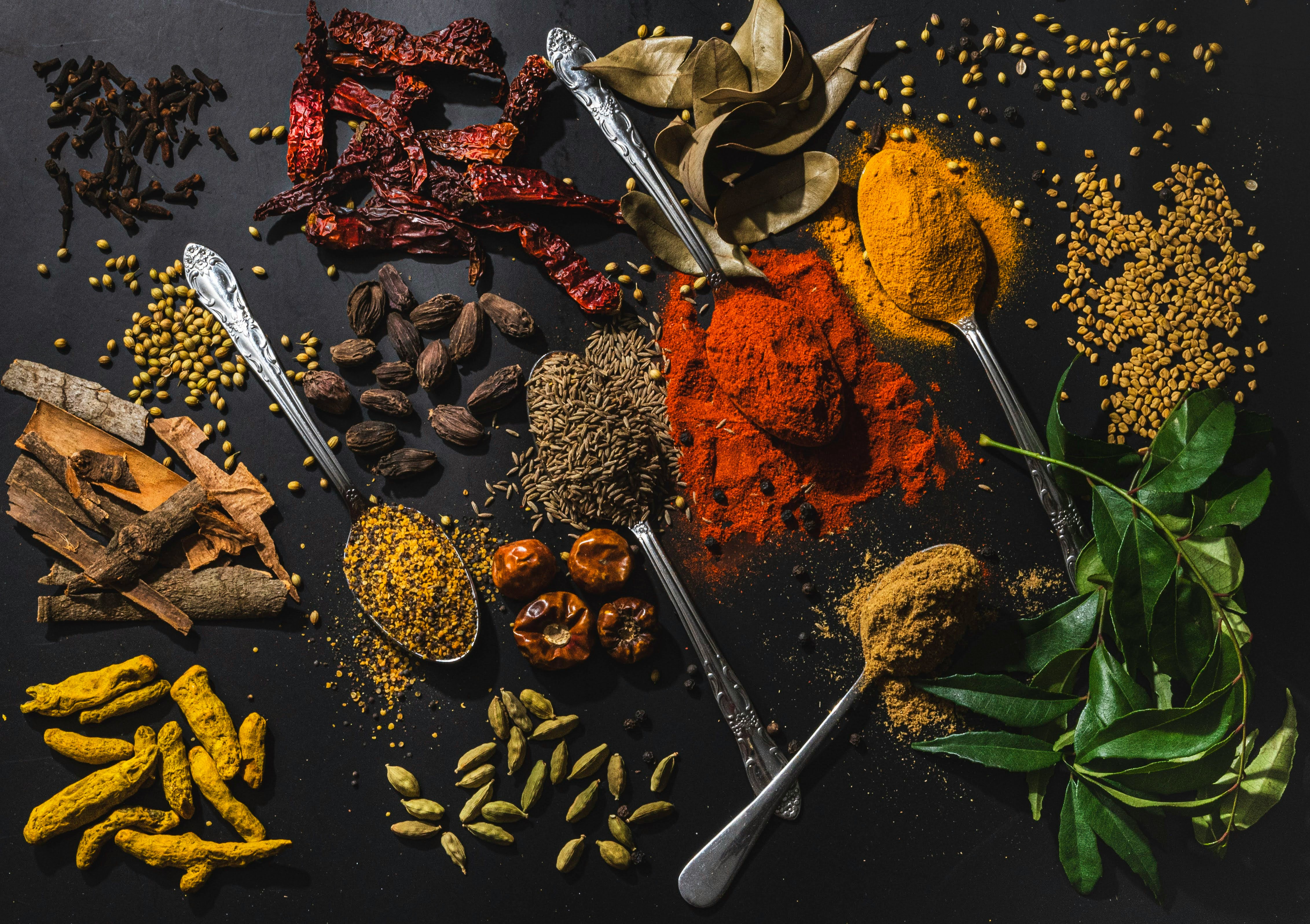
 (Photo: Anju Ravindranath from Unsplash)
 My relishing recently of a magnificent crayfish bisque at Noop restaurant in Paarl had me browsing C Louis Leipoldt, the late great Cape gourmand, to find his recipe for it. Somehow in the move to Cape Town I seem to have mislaid my giant Leipoldt volume, but in the slim 1976 publication of his final cooking manuscript I found the gem I was looking for.
Scanning the pages of the book, randomly, his familiar disdain for the fussy minutiae of cooking soon shuffled to the surface. And his lifelong fascination with the cooking of the traditional cooks of the Cape, the Ayahs as he called them, seasons every chapter.
In December 1946, four months before his death in April 1947 at the age of 66, Leipoldt wrote, in the foreword to this final manuscript, of his culinary inspiration as a little boy in the 1880s at the skirts of a “very expert coloured woman cook who bore the reputation of being one of the best at the Cape”:
“The Ayah’s art was the result of many years of instruction and experience in the traditional methods of Cape cookery, whose outstanding characteristics are the free, almost heroic, use of spices and aromatic flavourings, the prolonged steady but slow application of moist heat to all meat dishes, and the skilful blending of many diverse constituents into a combination that still holds the essential goodness of each.”
He observes that his Ayah, whom he does not name, had an expansive knowledge of the techniques and ingredients of Cape Malay cookery, all of which recipes had already been published in many books, but she fiercely ignored such tomes, never following a recipe other than the ones in her head. He doubted she’d even read them. She, herself, was the source of the knowledge, and she’d cooked her many dishes for the good and famous of her colonial day in Cape society.
‘He eschews finicking precision about quantities’
Fifty years ago this year, the late Brian Lello, in his note on the author on the publication in 1976 of Leipoldt’s Cape Cookery (W.J. Flesch & Partners), noted about Leipoldt:
“As an anti-pedant, he eschews finicking precision about quantities. Let others write medical prescriptions for food, instead of cultivating their flair. He goes to all sorts of (perhaps unconscious) lengths to avoid the gram and the ounce.
“Instead we find phrases like a hint of this or that – a sprig, a scattering, a pinch, “collect as many limpets off the rocks as your backache allows”, a morsel of tangerine peel, a blade of mace, a slither of cinnamon, a feathering of some or other goodie, a scrap of this, some flicks of that…”
And here it is on page 43 of this book, Leipoldt’s kreef bisque. How many flicks of this or that would there be, and just which ingredients would he have called for pinches, slithers or featherings of… and he wrote:
“Take two young carrots, two onions, two shallots, two lemon leaves, a teaspoonful of thyme, a clove of garlic bruised, a few scented verbena leaves; a slither of lemon rind, a slice of fat bacon, and half a pound of raw ham; chop these fine and simmer lightly with butter…”
Bacon, ham… honestly, I had to pause to check to see if I was reading the right one, but this is indeed his crayfish bisque recipe, for he continues:
“Season with pepper and salt; pour over a bottle of wine and let the whole boil up. Boil your crayfish in this mirepoix, and let it cool down in it when cooked.”
We’re making a soup, remember, so he proceeds:
“Now take out your crayfish and remove from it the flesh, especially the soft white and green substance found under the carapace, and the meat from the larger claws. Crush the remains of the crayfish in a mortar, and put it back, together with part of the tail flesh, in the mirepoix, to which you add a few cups of good fish or mutton stock, and let it slowly simmer for a couple of hours. Strain, and set the liquor aside for the moment.”
‘There can’t be many cooks who add mutton stock to their kreef soup’
There can’t be many cooks or chefs in 2026 who add mutton stock to their kreef soup or bacon to their mirepoix, but one thing I do not doubt is that this must have been a fine and certainly robust bisque-in-the-making. Leipoldt’s palate was as legendary as his knowledge of food.
And it’s not made yet, but we’re getting there…
“Pound the flesh, together with the coral and green meat, in a mortar with some butter, a morsel of mace, and a pinch of ginger powder, and add it to the liquor; simmer slowly taking care no lumps are formed and add, finally, half a cupful of boiled rice, and some of the tail flesh cut into dice.”
To finish his bisque, he told us, you need to “beat up a couple of egg yolks in the soup tureen with a glassful of sherry, pour in the soup, and serve immediately with croutons of fried bread”.
And there you have it, in that crayfish bisque recipe. The pinch of this or that, the blade of, slither of and feathering. And that is still how I prefer to cook. If it’s a cake or bread I’ll follow a recipe (to a point, before adapting it in some way), but when I’m cooking, I’m usually not measuring.
A glug of oil will go in and I’ll call it three tablespoons, a teaspoon of it is a little less. Cooking doesn’t have to be precise, if you’re an instinctive cook. Is it even creative cooking at all if a recipe is followed with slavish fascination? With my recipes, I prefer it if the reader veers off from my recommendations, certainly when making something in a potjie, mixing a marinade or making a rub, or deciding which kind of dried fruit to use in a curry or tagine dish.
Even make alterations to my potjie bread recipes if you want to, if not to the quantities of flour and whatnot, at least in the herbs or spices. All of my pot breads are my own variations of my own earlier pot bread recipes.
But it’s with a curry that I will veer off in any direction I want to, while respecting the essential elements that make a good one.
Leipoldt must have learnt something from his Ayah
Leipoldt must surely have learnt something about making a chicken curry from the Ayah of his boyhood affections. His paragraphs on this begin with an arresting exhortation.
“Let me implore you not to choose any old rooster for your curry; select a youngster, or two or three of them if you have many guests. Singe it well, and cut it up nicely but take pains not to crush the bones, for a splinter (as I have myself observed) may cause great discomfort and annoyance to the eater.
“Lay the pieces on a pan and brown them in butter. Braise your onions which you must cut up into thin slices, in butter or fat, with a couple of sour apples sliced, a spoonful of brown sugar, and a teaspoonful of salt.
“Mix a couple of spoonfuls of curry powder with some tamarind water or vinegar and add to the onions; let it simmer and then add the pieces of chicken.
“Cover the pot, and let all simmer quietly for a couple of hours, shaking the pot frequently; add a few tablespoonsful of coconut milk and let the curry brew gently on the side of the stove until you serve it up with boiled rice and chutney.”
I see no tomato in there, or tamarind, or any other spice we associate with a Cape Malay curry, so we must suppose that he trusted them to be in the curry spice mix he must have sourced somewhere in the day.
His days were not overly long – he died at 66 – though his times included the late Victoria decades, the Edwardian period and all the way through two world wars, if only just, the great connoisseur and poet having died in 1947, shortly before my parents were to wed in Yorkshire.
But, like some of us many decades later, Leipoldt’s mind took him to much earlier times, and the origins of the food he knew and tasted. And everything he tasted or felt compelled to cook flooded his world, his thoughts, his experiences, so that my impression of him is of a man whose existence was not framed by time.
And that, now that I think of it, must be my strongest connection with a man who fascinates me but who died eight years before I was born.
If only I had known him, but of course, if I had, I wouldn’t be here now. So there’s that. DM