



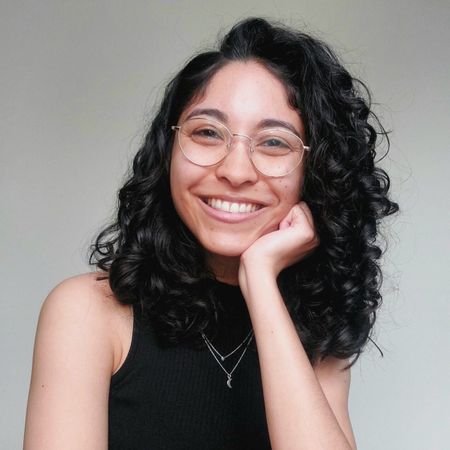
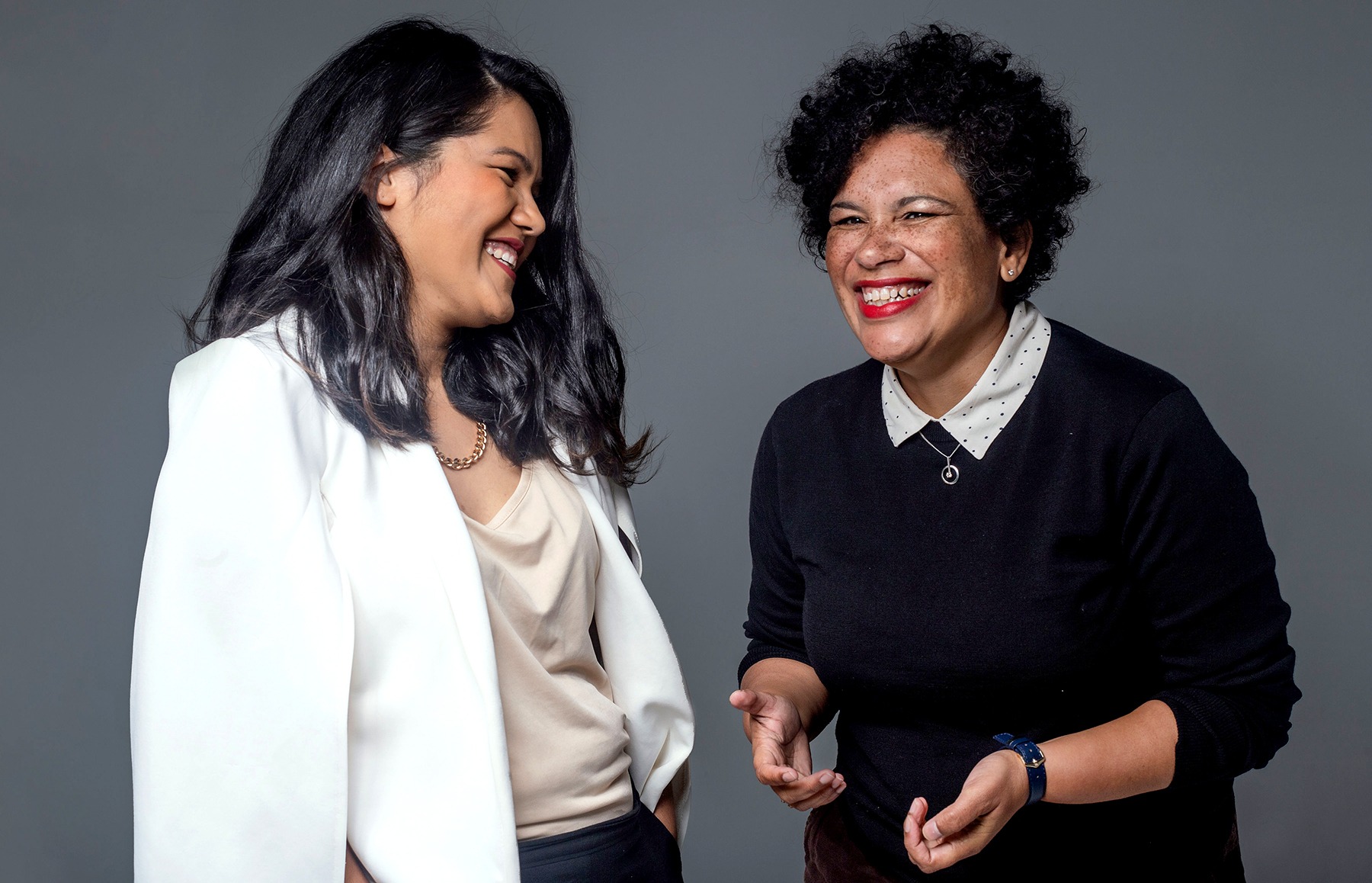
 Dominique Jossie (left) and Quanita Adams. (Photo: Rizqua Barnes)
 Since 2022, the founders of Blended Films, Dominique Jossie and Quanita Adams, have been championing the beauty of everyday mundanities and the nuances of local life. In Die Superette, for instance, Auntie Sonja (June van Merch) is a sharp-witted, no-nonsense cashier who uses her street smarts to outplay a pair of robbers. While in Finding Optel, teenager Claire Abrahams (Mikayla Brown) is an amateur detective in her quirky neighbourhood on the Cape Flats.
Daily Maverick spoke with Jossie and Adams about their creative partnership, how they’re navigating the challenges filmmakers are facing in South Africa, and their vision for sharing heartfelt and inspiring local stories on screen.
How did your creative partnership begin and how did it lead to founding Blended Films?
Dominique Jossie: Quanita and I met when we were both pregnant on the film set of Barakat in early 2020. We connected through our shared love for storytelling and motherhood and continued to work together on various writing projects.
In 2022, we decided to merge our filmmaking powers to tell stories and run productions in the way that we’ve always dreamed. We created a company that celebrates diversity, empowers women and minority groups, and promotes lekker vibes on set, where the people behind the camera also matter. If the cast and crew are happy, you will see it on screen.
Quanita Adams: Dom and I had been in each other’s creative and professional industry circles for at least a decade, so when the opportunity presented itself for us to formalise our partnership, we jumped at the chance.
Dom is an incredible producer – how I first knew her, and after working together in story rooms, on her projects and mine, I was blown away by her writing too. I am confident as a writer-director, but I am no producer! As a multi-hyphenate partnership, between us we are able to fulfil many roles and play to our individual and combined strengths. The perfect BLEND.
/file/attachments/orphans/L-RJunevanMerchMadeeghaAndersQuanitaAdams_RizquaBarnes_220496.jpg "From left: June van Merch, Madeegha Anders and Quanita Adams. (Photo: Rizqua Barnes)")
Is there a particular part of the film production process you enjoy most, and what about it resonates with you?
DJ: In this season of life, I really enjoy scripting. It’s here that you get to build worlds and birth new characters. Our writing rooms are lots of fun. Making a film is not just entertainment, it’s about saying what you want to shout out to the world, and hopefully, it resonates with others, whether it makes them feel less alone or brings pure joy.
QA: This is a tough one, I love it all. I am an actor, so naturally collaborative processes appeal to me. Even when I write, I tend to want to be in a group of people, all pitching ideas. I love a writers’ room! I could happily do that for the rest of it. Fingers stained by dry-erase markers. I love directing. I love how it all comes together, first around the table, then on the floor, then in an editor’s suite. It’s magic at every step of the way. I can’t choose.
What would you say are some of the major structural or industry challenges that filmmakers face in South Africa, and how has Blended Films navigated these?
DJ: I could write a book about this right now. The film industry is currently in survival mode, and we are working in one of the most challenging times with regard to film financing. The DTI rebate has stalled since October 2023, resulting in 50% job losses in the sector. Platforms have gone through structural changes, resulting in budget cuts and delayed approval outcomes. We also have a very small pool of content buyers and financiers locally, with a large pool of very talented filmmakers.
How are we keeping our heads above water? Collaboration is key to our strategy. We work closely with other creatives to share the load. The only way to survive is to move together, and we hope to see positive shifts this year.
QA: Yes, I echo what Dom has said. In a climate of dwindling funds, we are struggling to make the kind of movies, television, theatre and art we want to see. Resilience is baked into us as South Africans, but it would be wonderful to be able to create from a place of economic freedom, rather than having to make difficult choices based on budget and similar restrictions.
It’s tough for everyone, and nobody is trying to make less money. And there are global factors at play; we get all that. But we still try hard to give people their rate and create a work environment that feels unburdened. How can we make what we have stretch to make things comfortable for our crew in particular?
/file/attachments/orphans/JesseBrown_DominiqueJossie_124875.jpg "Jesse Brown on the set of Finding Optel. (Photo: Dominique Jossie)")
/file/attachments/orphans/MikaylaBrown_DominiqueJossie_295993.jpg "Mikayla Brown on the set of Finding Optel. (Photo: Dominique Jossie)")
In 2025, Finding Optel screened at the BFI London Film Festival. What kinds of conversations or impact do you hope Blended Films’ stories will spark among audiences, both locally and internationally?
DJ: Finding Optel is a very special film by two talented young filmmakers, Mikayla Joy Brown and Jesse Brown. It’s a colourful, quirky look at life on the Cape Flats that challenges the stereotypes we are all too familiar with. This is a great example of what we at Blended Films strive to achieve through our stories – Africa is not all poverty, skop, skiet and donner. It’s a place with heartfelt, inspiring people and their stories.
QA: Yes, exactly. In other ways, it also challenges an aesthetic that is too often associated with the community we come from. These filmmakers made bold visual and cinematic choices. There is a clear perspective, a voice that rings throughout.
More and more we are seeing “genre” stories emerging from filmmakers and storytellers, and it’s exciting for Blended Films that we get to be a part of that. Any and all conversations sparked by a strong story are always welcome. And if a Blended Films story can ignite that, then yes!
/file/attachments/orphans/L-RDirkStoltzDominiqueJossieDarrynBennetJunevanMerch_SaraPetersen_137619.jpg "From left: Dirk Stoltz, Dominique Jossie, Darryn Bennet and June van Merch on the set of Die Superette. (Photo: Sara Petersen)")
Both Finding Optel and Die Superette feature wonderful auntie characters. From your perspective, what makes the role of aunties so significant in our local communities and meaningful to represent on screen?
DJ: Aunties are always the unseen heroes. They are the constant figures in our lives who quietly fix and make things happen without recognition. We also know that the portrayal of women above the age of 45 on screen is rare, yet this category of women has great purchasing power in households. Older women are wise, nuanced and can also be lots of fun. We have another exciting new auntie show in the works. #watchthisspace.
QA: Aunties are the best! Who doesn’t love an auntie? And in South Africa, we have a rich pantheon of older women actors who work consistently and light up our screens with their characters. It’s inspiring that we have a culture that still honours women and provides opportunities for them to do incredible work, that surprises and delights our audiences.
Is there a film or show that has inspired you as a storyteller recently? What about it stood out or stayed with you?
DJ: For me, it has to be The Heart is a Muscle by Imran Hamdulay. It was South Africa’s entry to the Oscars. This film is doing exactly what we do but in a different way – challenging stereotypes of black men (particularly from the Cape Flats).
Being a man is not about rivalry and revenge, but also compassion and forgiveness as they learn to break toxic generational cycles. As a mom of two boys, this film hit me deep. From a production POV, this film also achieved a lot with very few resources, and this brings a sense of hope during these challenging times.
QA: This is always a tricky one for me. Honestly, anyone who can get it together to get their story out there, be it on the small or big screen, is an inspiration. It’s a triumph when you can rally a team and bring your creative vision to life. I often say, I was a much better filmmaker before I made a film, and it’s true. Once you realise what it takes to get your story out there, it gives you a different perspective.
As a woman from the Cape Flats, I love that we are building on the canon, continuing the work that came before us. We are being bold and telling stories on our own terms, that show us as we are. So rather than choose, I want to salute all of us who risk telling the story. DM
This interview has been edited for clarity. The Blended Films productions Finding Optel, Die Superette and Adam are available to watch on Showmax, with Hier.Na set to join the platform soon.