



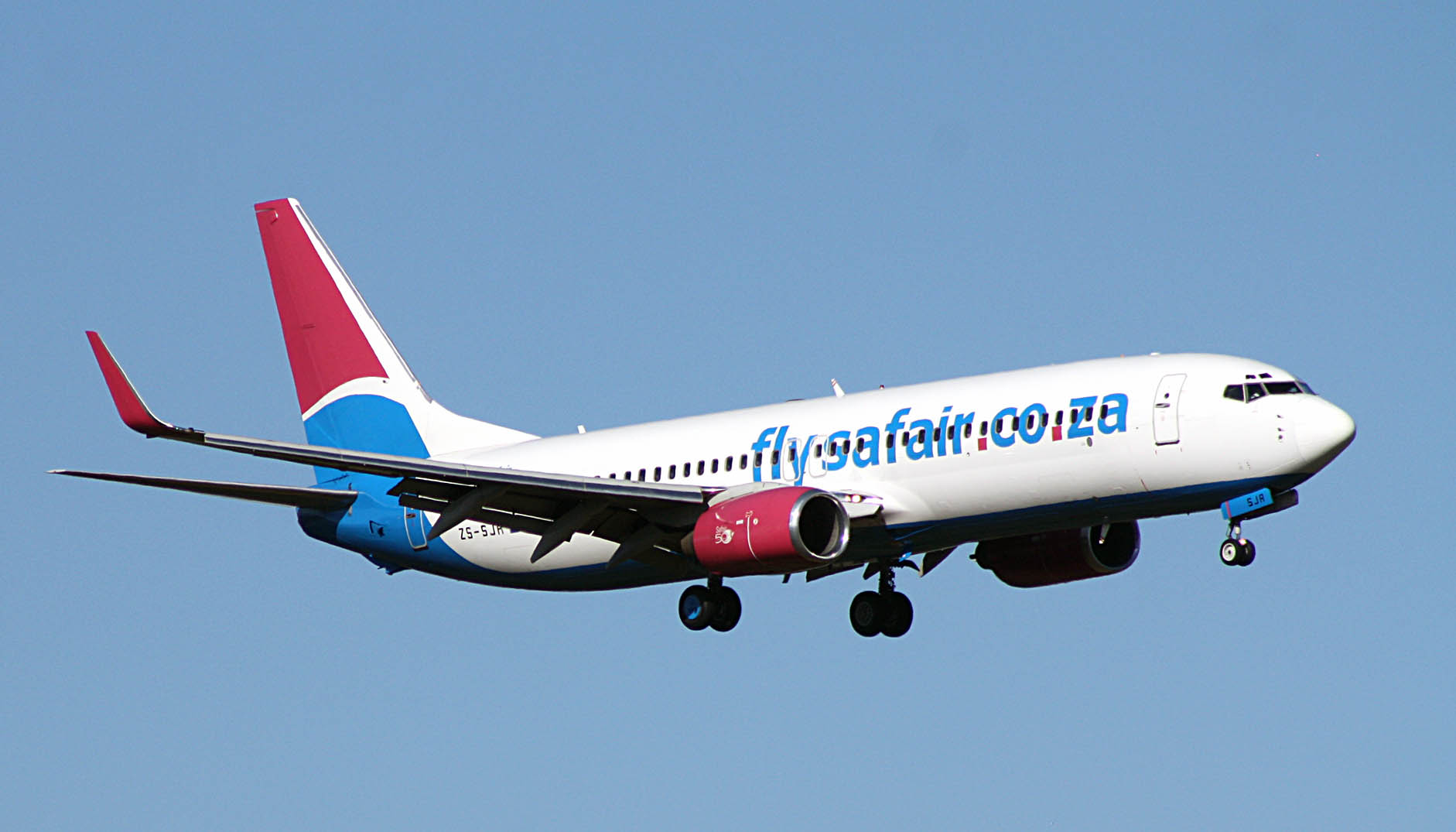
 Harith offered FlySafair a solution to a fatal regulatory defect that cures the foreign ownership breach permanently. (Photo: Wikimedia Commons)
No, this is not a B-BBEE deal – but it was a race to the finish to keep the continent’s “most on-time airline” in the sky. In January FlySafair launched a last stand to test the Air Services Licensing Council of South Africa’s interpretation of the South African Citizenship Act in court.
The chosen hill for this battle was the act’s wording. FlySafair argues that because 75% of the company’s shares are held by trusts and companies based in SA, it is compliant with the act’s “natural persons” definition.
Read more: Airlines fight threatens widespread grounding
Semantics, of course, is the currency of law. And if the airline can get legal backing for its view, it would (strangely) be a moral victory in a historic fight for survival that started before it took its first flight – in 2014 when Comair tried to smother FlySafair in its cradle.
Comair, as some would remember, was also subject to a pandemic-era takeover bid from FlySafair’s betrothed Harith General Partners.
What the law says
User ZAAirlineFundi wrote a helpful explainer of FlySafair’s regulatory troubles on the avcom.co.za forum:
The International Air Services Act 60 of 1993 states in Section 17 (5) A that:
(5) For the purposes of subsection (4)(a) [the granting of a licence], an applicant is fit if such applicant satisfies the council-
( a) that, subject to the provisions of subsection (9), he-
(i) if he is a natural person, is a resident of the Republic; or
(ii) (ii) if he is not a natural person, is incorporated in the Republic and that the voting rights in respect of such person are substantially held by residents of the Republic;
(b) that the person referred to in paragraph (a) will be actively and effectively in control of the international air service;
The subsection 9 that’s referred to provides for the minister of transport to direct an exemption from this requirement.
Predatory instinct
Writing on their own strategy, Harith CEO Tshepo Mahloele has previously explained that “investors are fast investing with their feet in the continent in their clamour to get a piece of the action”.
This is a firm that is walking the talk of the dual meaning of its name: “plough” and “protector”. Under Mahloele’s leadership, it is attempting to “plough the African continent, plant the seeds of infrastructure, while protecting the interests of its investors”.
The PIC-linked firm is quietly building an aviation empire, with plans to develop Lanseria International Airport into a legitimate OR Tambo rival. Harith’s landmark R6.5-billion acquisition of the Pan-African Infrastructure Development Fund about a year ago strengthened its position in key infrastructure assets, including Lanseria International Airport and Kelvin Power Station. The fund holds significant stakes in essential infrastructure across Africa, including 37.5% of Lanseria – SA’s only private airport, 37.92% of Anergi, which owns the Kelvin power plant in Johannesburg, and 15.3% of Remgro CIVH, a major player in fibre network assets.
It’s a similar play to the fast-progressing Cape Winelands Airport, but with the significant head start of actually existing operationally – and now, with the ink wet on the ownership of an anchor tenant.
Enforced compliance
While the deal is framed as a growth strategy, the timeline suggests a strategic rescue. FlySafair was effectively backed into a corner after the Air Services Licensing Council left it with a bloody nose in 2024, finding that the Irish-based ASL Aviation Holdings effectively controlled 74.86% of the airline. The ultimatum was clear: rectify the structure by early 2026 or face licence revocation.
FlySafair’s Chief Marketing Officer, Kirby Gordon, has worked hard to position this as a commercial evolution rather than a distress sale.
“Negotiations on this transaction were already under way some time before the Air Services Licensing Council issued its finding on FlySafair’s structure,” Gordon said in a statement circulated after the deal was announced, pushing back against the idea that its hand was forced.
Veiled admission
But even the seasoned spokesperson admitted the sunshine of utility piercing through the PR cloud cover.
“While this is not an automatic remedy, we believe that it is a constructive step,” he said of the sale’s impact on the legal headaches, adding that they would “continue engaging transparently with these regulators whose approval of the new structure is a requirement to conclude the transaction”.
Gordon insists the airline is being acquired “as a going concern with a clear focus on continuity of our operations, our strategy, our brand and our leadership team which will all remain unchanged”.
But the reality remains: Harith offered a solution to a fatal regulatory defect that cures the foreign ownership breach permanently.
Domestic law
ZAAirlineFundi continued:
The act governing the Domestic Air Services, The Air Services Licensing Act 115 of 1990 is pretty similar but the percentage discussed here is specific. Here’s the wording:
[A Domestic Licence can be granted if] (c)that, subject to the provisions of subsection (5), he—
(i)if he is a natural person, is a resident of the Republic; or
(ii)if he is not a natural person, is incorporated in the Republic and at least 75 per cent of the voting rights in respect of such person is held by residents of the Republic;
(d)that the person referred to in paragraph (c) will be actively and effectively in control of the air service; and
Here again the subsection 5 referred to provides opportunity to the minister to grant an exemption from this requirement.
The state gets its wings
Another inescapable reality – and a point of concern in the fallout – is that Harith is 30% owned by the Public Investment Corporation (PIC). This means that the government now has a financial interest in the two largest players in the domestic market: direct ownership of SAA and an indirect stake in FlySafair.
Harith has always been open about its roots, stating that the organisation was formed “through the early vision of the Public Investment Corporation in 2006”.
FlySafair may have managed to control the narrative of a supposed growth story for now (Gordon maintains the transaction “was not initiated in response to those findings”, but the facts suggest otherwise).
Harith capitalised on a desperate need for a local licence holder, trading the independence of SA’s most successful private airline for a seat at the table of a growing, state-adjacent infrastructure empire. DM