



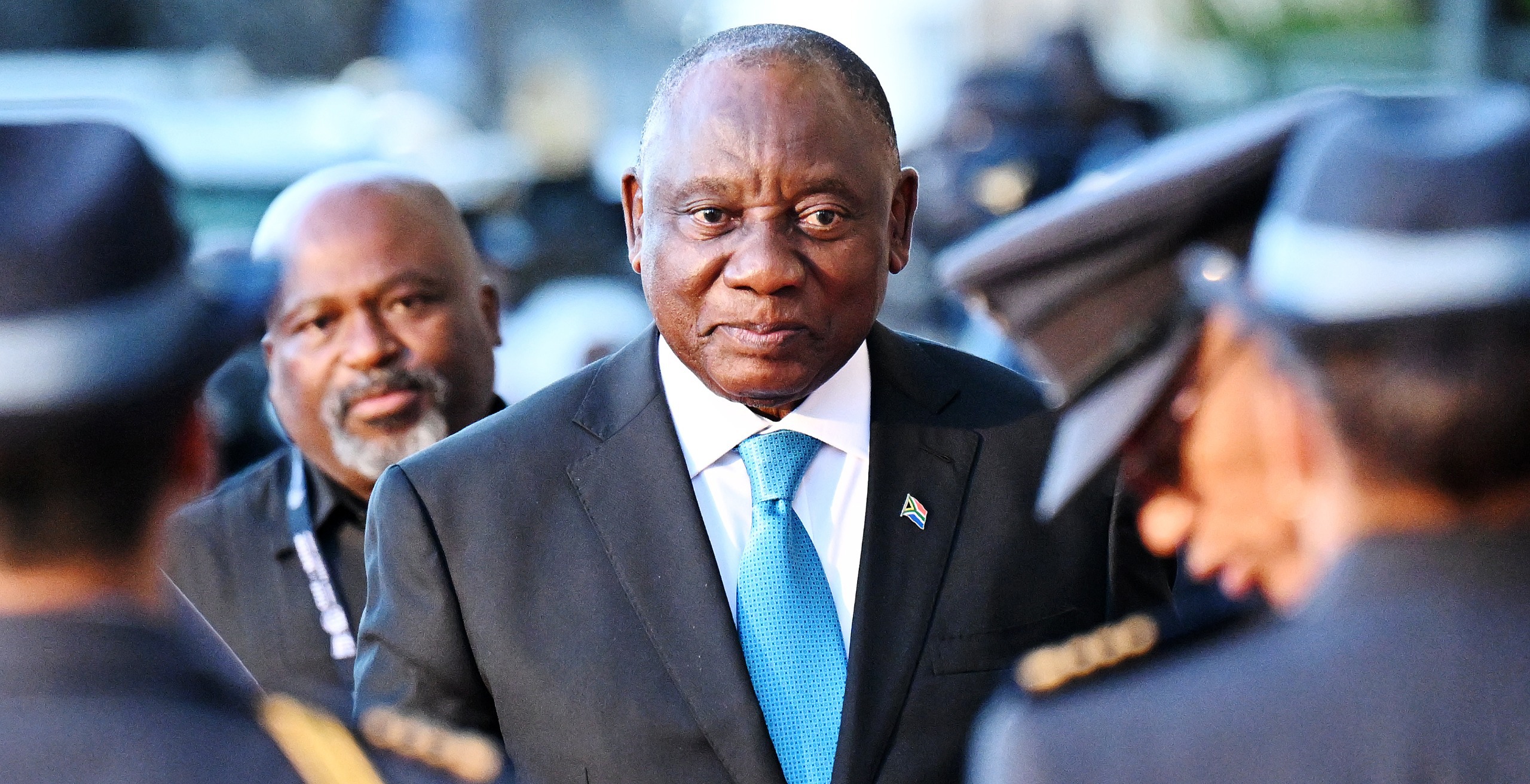
 President Cyril Ramaphosa before delivering the 2026 State of the Nation Address in Cape Town on 12 February. (Photo: Phando Jikelo / Parliament RSA)
 In a business-friendly State of the Nation Address (Sona), President Cyril Ramaphosa dealt with a rising private energy crisis – Eskom backtracking on giving up ownership of the transmission company.
“By 2030, more than 40% of our energy supply will come from cheap, clean, renewable energy sources. We are establishing a level playing field for competition, so that we are never again exposed to the risk of relying on a single supplier to meet our energy needs,” he said on Thursday.
“We are restructuring Eskom and establishing a fully independent state-owned transmission entity. This entity will have ownership and control of transmission assets and be responsible for operating the electricity market.”
Both the big business organisations – Business Unity SA (Busa) and Business Leadership South Africa (BLSA) – wrote to Ramaphosa this week saying that an independent National Transmission Company is essential to the country’s energy future. It is one of the final planks of energy reform that helped end the era of load shedding and substantially changed the energy mix.
“Given the importance of this restructuring for the broader reform of the electricity sector, I have established a dedicated task team under the National Energy Crisis Committee to address various issues relating to the restructuring process, including clear timeframes for its phased implementation. It will report to me within three months,” Ramaphosa said.
From power to water
After stepping into the energy fracas, Ramaphosa also took the wheel on water. He wants to ensure a positive new economic cycle is not stymied. The President moved his deputy, Paul Mashatile, aside to take over the National Water Crisis Committee to drive a similar reform programme.
The upbeat Sona was initially downcast because of a rising water crisis across South Africa, which affects its cities most. Most people live in cities, and in Johannesburg this week, multiple systems failed, leaving hundreds of thousands of people dependent on water tankers.
Read more: Morero denies Joburg water at ‘national disaster stage’ as DA heads to court
The speech started with the good news.
“Our economy is growing again, and this growth is gathering pace. While we have experienced four consecutive quarters of GDP growth, we know that it has to grow much faster to meet our social and economic challenges. We have achieved two consecutive primary budget surpluses. Our credit rating has improved, interest rates are coming down and inflation is at its lowest level in twenty years.
“We are on a clear path to stabilising our national debt. The rand has strengthened against the dollar. The Johannesburg Stock Exchange, the largest stock exchange on the African continent, has performed exceptionally well over the past year. This growth reflects broader economic recovery, investor confidence and increasing interest in South African equities. Our borrowing costs have declined,” said Ramaphosa, who cut a confident and almost ebullient figure.
He laid into municipalities and announced that there would be national government intervention on water. Water Affairs and Sanitation Minister Pemmy Majodina and Cooperative Governance Minister Velenkosini Hlabisa were dispatched to Johannesburg to deal with the crisis on the frontlines and missed the Sona address.
/file/attachments/orphans/6I1A3282_792790.jpg "Deputy Minister of Water and Sanitation David Mahlobo (far left), Executive Mayor of Johannesburg Dada Morero (second from left), Minister of Water and Sanitation Penny Majodina (centre), Cogta Minister Velenkosini Hlabisa (third from right), and Deputy Cogta Minister Dickson Namane Masemola, with city officials, conducted an oversight visit at the New Road reservoir in Midrand on 12 February 2026. (Photo: Felix Dlangamandla)")
“Poor planning and inadequate maintenance of water systems by many municipalities are the main cause of the problems we are going through now and are the reason that taps often run dry.
“There is no silver bullet to address this challenge, which has its roots in systemic failures and many years of neglecting infrastructure. To ensure water security in the long term, we are building new dams and upgrading existing infrastructure. We have committed more than R156-billion in public funding for water and sanitation infrastructure alone over the next three years.
“And we are in the final stages of establishing a National Water Resource Infrastructure Agency to effectively manage the country’s water infrastructure and to mobilise funding for water infrastructure.
“However, the real challenge lies not in the availability of water, but in getting water to people’s taps. The Water Services Amendment Bill will enable us to hold water service providers accountable for their performance and withdraw their license if they fail to deliver. If a municipality is not willing or able to provide a service to its residents, it must be done by another structure that can,” said Ramaphosa.
He said government has already laid criminal charges against 56 municipalities that failed to meet their obligations and said municipal managers could face charges in their personal capacities for violating the National Water Act.
“The critical problem is that in many metros, cities and towns, water revenue is being used for other purposes and very little is invested in upgrading and maintaining water infrastructure,” said Ramaphosa.
The National Treasury has established R54-billion incentives to reform metro water, electricity and sanitation services according to strict reform time-tables. Access to water is a basic human right, but it’s also a basic building block of an economy and business.
Industry support
Ramaphosa also punted private partnerships in logistics (ports and rail), water and other metro trading services. He talked up support for the ferrochrome industry, more tariff protections and subsidies for manufacturing. Trade diversification is going to be key.
“Already, we are the second largest exporter of citrus fruit in the world. We are opening new markets for our exports, from citrus and avocados to maize, livestock, grapes and wine,” he said and also announced muscular measures to deal with the foot-and-mouth disease pandemic.
As with the water crisis, Ramaphosa is taking direct control not by chairing a task force this time but by asking for monthly reports from a task team he has established.
With Home Affairs Minister Leon Schreiber, the visa system is making it easier for skilled people to invest, although certain Labour Department regulations are tightening up skilled migration. Ramaphosa also promised a 24-hour turnaround on decisions on some visa categories, which would be a miracle given the state of the current system.
“These changes send a strong message that South Africa is open for business and tourism,” he said.
The alcohol industry drew the short straw when Ramaphosa signalled measures to deal with abuse. The state will use licensing powers to reduce the high density of taverns and other outlets. He also hinted at unit price controls to make booze less accessible, both ideas likely to make the industry take to the bottle. DM