




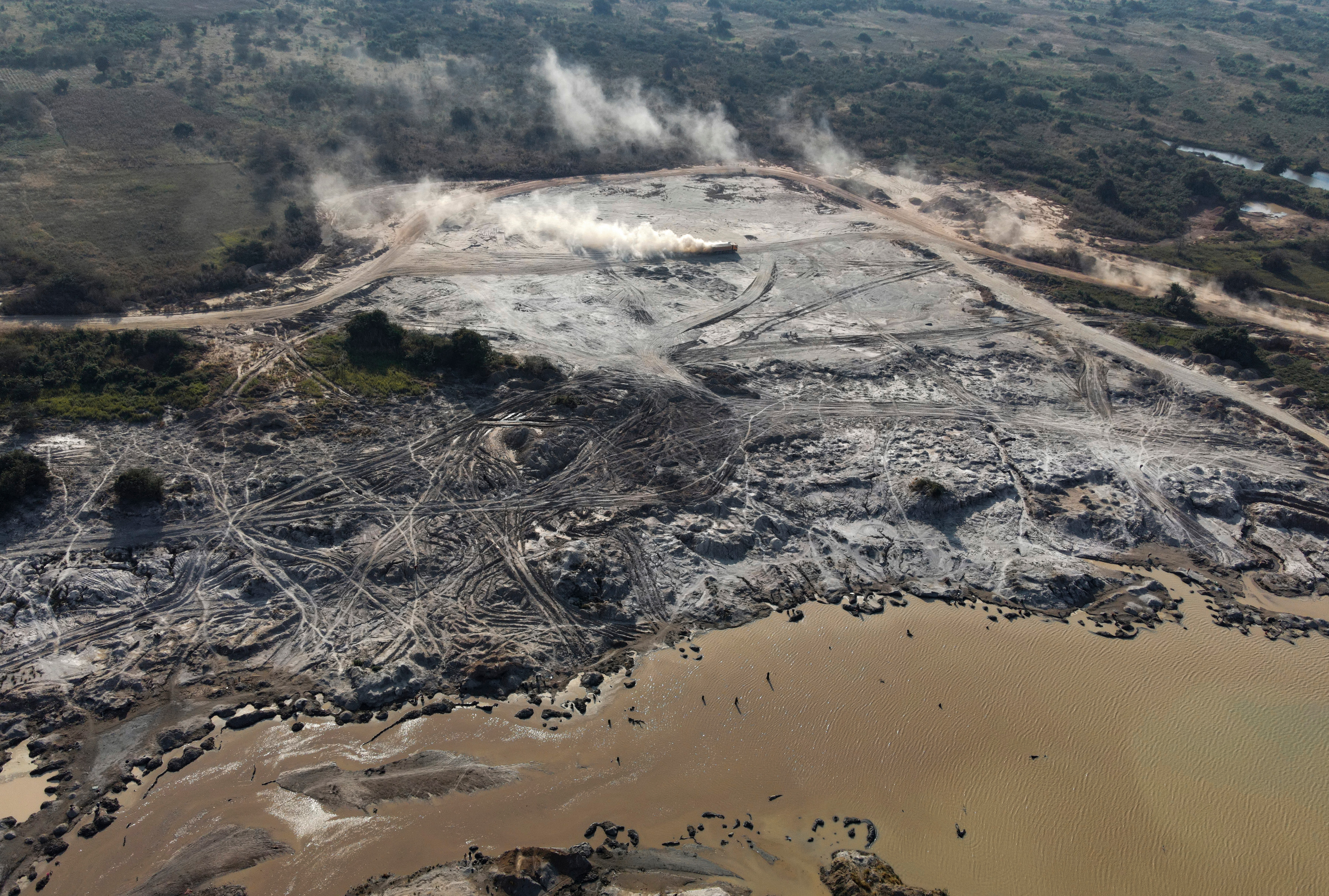
 This photograph shows the environmental toll of artisanal cobalt and copper mining in Kolwezi, Democratic Republic of Congo, on 24 May 2025. The landscape is scarred by open pits and pools of contaminated runoff, a visible consequence of the booming demand for clean energy minerals. (Photo: Michel Lunanga / Getty Images)
 /file/dailymaverick/wp-content/uploads/2025/10/label-Op-Ed.jpg)
In a recent article titled Blood minerals in DR Congo: Myth or reality? the author questions whether mineral exploitation meaningfully fuels violence in eastern Congo. This framing is misleading. It ignores the historical sequence through which the conflict emerged and minimises the economic structures that have sustained it since 1996. The article’s core claims rest on selective evidence and flawed assumptions.
For nearly three decades eastern Congo has endured a war defined by organised extraction. Governance failures, ethnic tensions and land disputes exist, but they did not produce a permanent war on their own. The conflict became entrenched because violence linked to mineral wealth proved economically sustainable.
Before 1996, eastern Congo was not trapped in continuous large-scale militarised violence. That changed when foreign-backed forces entered mineral-rich territories. Once armed actors encountered the scale and value of Congo’s resources, control of mines, trade routes and border corridors became the objective. From that point, violence followed an economic logic.
When the alliance that brought Laurent-Désiré Kabila to power collapsed in 1998 and foreign troops were expelled, the conflict escalated. It did not recede. The second war was not a spontaneous breakdown of governance. It was a contest for control of territory that generated extraordinary profits. I was in Kinshasa when that war began. The logic was clear then and remains clear today.
Since that moment, minerals have shaped every major phase of the conflict. Armed groups and military actors positioned themselves around gold, coltan, cassiterite and the corridors used to move them across borders. Political elites, security officials and commercial intermediaries built systems of extraction, taxation and smuggling that outlived militias and peace agreements. Ethnic and land-based narratives were mobilised repeatedly, but they functioned as tools of control. Revenue was the incentive.
Efforts to downplay the role of minerals rely on narrow distinctions. One common claim is that armed groups do not depend on mineral exploitation because weapons often originate from state stockpiles. This distinction does not withstand scrutiny. Mineral exploitation and arms supply operate within the same conflict economy. Corruption within state institutions has allowed officials to benefit from mineral flows while facilitating access to weapons. State involvement does not weaken the mineral argument. It confirms institutional capture.
Another claim is that traceability and certification mechanisms have largely resolved illicit mineral trade. The evidence does not support this. Fraudulent documentation, recycled tags and laundering through nominally compliant sites are widely documented. The sustained export of gold, tin and tantalum from neighbouring countries in quantities exceeding their known production capacity has been repeatedly noted by international observers. This points to systemic weaknesses, not isolated administrative error.
Responsibility must therefore be named clearly. Rwanda and Uganda have been repeatedly identified by United Nations expert panels and independent investigators as key transit and re-export points for minerals originating in eastern Congo. This is a matter of record. Denial does not alter the region’s economic geography.
Responsibility also extends beyond the region. International donors have invested billions in governance reform in Congo while largely avoiding the economic foundations of the war. At the same time, global technology and automotive companies dependent on cobalt, tantalum, tin, tungsten and gold continue to source from supply chains widely recognised as opaque. Major electronics manufacturers and electric vehicle producers regularly affirm commitments to responsible sourcing, yet rely on voluntary due diligence frameworks that lack independent enforcement.
This arrangement allows corporations to claim ethical compliance while shifting risk onto Congolese communities. Supply security and cost efficiency are preserved. Violence, displacement and environmental damage are treated as externalities.
The repeated insistence that Kinshasa must simply govern better completes this cycle of deflection. Governance reform is necessary, but insufficient. No state can regulate extraction effectively while regional actors profit from smuggling and global markets absorb minerals with limited scrutiny.
The refusal to acknowledge minerals as the core driver of Congo’s conflict is not an analytical oversight. It is a political choice. It protects extraction networks, international industries and donor strategies that prioritise appearance over outcome.
The conclusion is straightforward. Congo’s conflict is a resource war. Governance failures, identity politics and regional manoeuvring matter, but they operate around the economic value of the country’s minerals. Analyses that treat minerals as peripheral are not offering balance. They are sustaining denial.
If Congo is to move towards peace, the discussion must begin with honesty. That means acknowledging the economic foundation of the war that began in 1996. It means naming the governments, markets and corporate supply chains that benefit from instability. And it means building institutions capable of ensuring that Congo’s resources serve its citizens rather than perpetuate violence.
Minerals did not merely fuel the conflict. They were central to its creation and have sustained it. DM
Titus Lahilam Mulamba is a Congolese-American governance and international strategy adviser based in Europe, working across Africa, Europe and the US. His expertise spans trade policy, security and institutional reform, and his policy submissions on central Africa have been acknowledged by the US administration.