




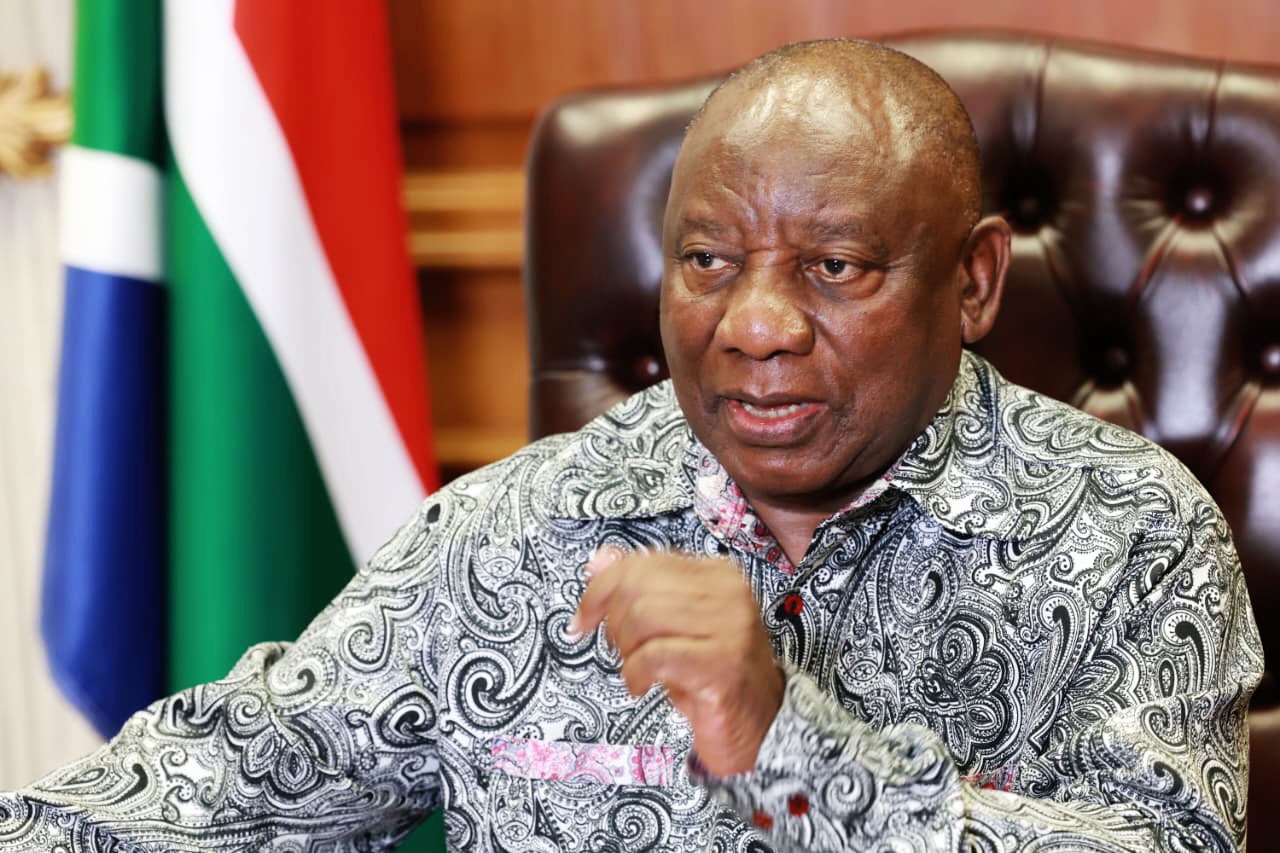
 President Cyril Ramaphosa. (Photo: GCIS / Baba Jiyane)
How is President Cyril Ramaphosa doing? On Thursday evening, he will say “it’s all good”. Some things are. The economy is looking up. There’s growing confidence. Energy reform stands out as a genuine success.
But almost everything else – from water to municipalities to jobs – tells a story of stalled delivery and unrealised promises. South Africa’s (SA’s) president has promised reform, professionalism and renewal. Our assessment of 10 State of the Nation Address (Sona) pledges from 2025 finds progress in energy and infrastructure – and repeated failure in local government, water, jobs and health.
/file/attachments/orphans/Top-10-promises-pledges-in-the-2025-State-of-the-Nation-Address1_620684.jpg)
With almost eight governing years as head of state, it’s fair to assess President Cyril Ramaphosa on action, not process. Our finding: the president is fixing the system but failing the street.
While our assessment of his 10 key promises in the 2025 Sona shows progress on process, we make a finding on the experience on the ground where it counts. On that score, it hasn’t been a great year, although global and local sentiment is up and for the first time in a long time, the economy is headed in a better direction.
Fix local government service delivery
Result: Fail
The Promise: Government will establish professionally managed, ring-fenced water and electricity utilities in municipalities, review the municipal funding model, and develop a new White Paper on Local Government to modernise the system.
The citizen experience: In a local government election year, this promise is a fail. By any metric, and apart from one metro and a few councils, the system is in a shambles or in systematic collapse and in a dire state of affairs, according to the Auditor-General report for 2023/24. Municipalities owe Eskom more than R100-billion, with no sign of these debt levels coming down; while R68.4-billion was allocated for infrastructure, the impact is not felt. There were 446 material irregularities noted – these are the most serious budget infractions or financial loss, misuse of public assets and substantial harm to the public.
Water stability is in crisis across the country and so is basic municipal infrastructure – at a local level, the state is broken and politics is shifting because of it. There are 66 hung councils run by coalitions across SA, with experience mixed. In the eight metros, those run by coalitions have experienced declines, not improvements, in an era of power sharing.
It’s true that there is a White Paper on local government reform which attempts to begin to change policy to deal with the issues, but there is no urgency. And in Johannesburg, still the economic national nerve centre, a presidential intervention by Ramaphosa worked at a superficial level in the run-up to the G20, but at a structural level, there is no system change.
The Minister of Cooperative Governance, Velenkosini Hlabisa, the political head of local government, is energetic and expected to publish a revised white paper in March 2026. The metro services reform Ramaphosa promised is happening, but it’s so slow that the impacts on how local government is experienced will take decades at this rate.
Build a capable, professional state
Result: In progress
The promise: to strengthen the role of the Public Service Commission senior appointments, and a graduate recruitment scheme will be introduced to attract skilled young professionals into the public service. A “capable, professional state” is also coded political language that promises to end cadre deployment and professionalise appointments. Cadre deployment may have been necessary in 1994, but became so corrupted through the decades that the Commission of Inquiry into State Capture found it to be a key determinant of State Capture. Prof Ivor Chipkin has written that the Public Service Amendment Bill is a “historic turning point” in public administration. This draft law shifts appointment decisions from politicians to directors-general or heads of department.
The citizen experience: While there is some progress in the national state where talented bureaucrats are taking up positions, at provincial and local level, the cadre game is still the only one in town. The impacts are clear with most provincial and local governments struggling to deliver basic development in a middle-income country with the richest fiscus in Africa.
Roll out digital government and digital ID
Result: Fail (Presidency claims a big success)
The promise: Government will invest in digital public infrastructure, relaunch gov.za, and implement a digital identity system to enable citizens to access services “anytime, anywhere”. The latest Operation Vulindlela report says: “The MzansiXchange pilot, which aims to establish a data exchange to enable sharing of data across government, entered implementation following its official launch on 9 October, 2025. Engagements commenced with Sassa to link government payments to verified accounts and store-of- value wallets, with the objective of reducing failed payments and fraud.” Operation Vulindlela is a high-level state reform initiative in the Presidency.
The citizen experience: there is some improvement in getting ID documents and passports more speedily, especially with the banks partnership. But even the State of the Nation online dashboard we’re supposed to be able to see live as an embodiment of accountability of the President’s annual address is no longer working, and our identity system is not effectively smart by any stretch of the imagination. Most citizens still experience a paper-based state.
Massive infrastructure spending and financing
Result: In progress
The promise: Government will spend more than R940-billion on infrastructure over three years, including R375-billion by state-owned enterprises (SOE), and unlock R100-billion in infrastructure financing through partnerships and new private-public partnership regulations.
The citizen experience: It’s happening. The Polihali Dam, part of Phase 2 of the Lesotho Highlands Water Project, the Mthentu bridge (between Lusikisiki and Port Edward) and other big infrastructure projects show progress. The promised figure is high, and both Eskom and Transnet have borrowed to fund massive grid, rail and port infrastructure. There are hiccups in the national electricity transmission company set-up, and Transnet is a big company to fix (as the sky-high number of trucks on our highways shows), but there is progress.
End load shedding and reform the energy system
Result: Great work
The promise: Government commits to completing energy sector reform, implementing the Electricity Regulation Amendment Act, building a competitive electricity market, and mobilising private investment in transmission to ensure long-term energy security.
The citizen experience: the country seems convincingly past the era of rotating power cuts, which cut us off at the knees. By making a political change and appointing Electricity Minister Kgosientsho Ramokgopa and by ending the cap on independent power production, the President made his most decisive policy change. There is a new generation of power producers, and renewables are now a decisive and welcome part of the shift. Experts fear rollbacks in energy reform by the incumbent monopoly Eskom, and the cost of electricity is crazy, but let’s give credit where it’s due.
Resolve the national water crisis
Result: Massive fail
The promise: Government will fast-track major water projects, complete the National Water Resource Infrastructure Agency, introduce licensing and enforcement for water service providers, and unlock large-scale investment in water infrastructure.
The citizen experience: Water policy reform is happening. If it works, the South African National Water Resources Infrastructure Agency could take disabling rent extraction out of the system of water infrastructure investment. Its success will depend on having the best people in place and giving them the space to reform water provision. It is a long, long way from done.
Reform is happening. Of that, there is no doubt. But taps are often dry across the country, except in a few municipalities and metros. Water protests are common as desperate communities take to the streets. The Department of Water and Sanitation too often resorts to victim-blaming. For example: in Gauteng, which is stricken by multiple water crises, government says over-consumption is a problem, whereas if you dig into its numbers, the wastage comes from infrastructure failure – and that is a political failing of putting cadres in charge of water systems across municipalities.
Launch a R20-billion-a-year Transformation Fund
Result: Done, but no business stakeholders really buy in
The promise: A R20-billion annual Transformation Fund will be established for five years to support black-owned businesses and SMMEs, alongside fast-tracking procurement reforms benefiting women, youth and people with disabilities.
The citizen experience: Started and partially capitalised with a loan from the Afreximbank bank, but the fund is not well-supported by business, as Lindsey Scheepers reports here.
Create jobs, especially for young people
Result: Fail – more than a million public works, but not sustainable jobs
The promise: Government will expand public employment programmes, scale up the Presidential Employment Stimulus, finalise a modern industrial policy, and drive growth in green manufacturing, digital services, agriculture, mining and tourism.
The citizen experience: This is a thorny one. Ramaphosa is now SA’s largest employer, especially of young people. The presidential youth employment stimulus offers marvellous opportunities to young people to get on their feet, working with a range of partners. It has won global awards.
But short-term public works jobs for young people are not employment or business opportunities that are systemic or the outcome of a successful, vibrant and growing economy. According to reports, 1.91-million young people have been given opportunities, while 5.64-million are registered on SAYouth.mobi, which helps young people with learning and earning.
Strengthen social protection and income support
Result: Fail
The promise: The Social Relief of Distress Grant will be used as the basis for a sustainable income-support system for unemployed people, with fragmented welfare programmes integrated into a single support pathway.
The citizen experience: If the purpose of the promise was to begin to introduce a basic income, there has been no progress. What SA does have, and of which we should be more proud, is a significant system of social solidarity in the form of grants paid to people who need them. There are 8.7-million to nine million people who receive a R370.00/month Social Relief of Distress Grant.
National Health Insurance
Result: Fail
The promise: Government will move ahead with preparatory work for NHI, including electronic health records, provider accreditation and governance structures, alongside major investment in hospitals, clinics and health-system quality.
The citizen experience: The move to national health insurance has no buy-in, not only from business but from people who are on medical aids and from progressive civil society. There are 9.17-million people covered by medical aid in SA, belonging to 71 registered schemes. Finance Minister Enoch Godongwana is lobbying for negotiations rather than court fights, but this is falling on deaf ears. (See this News24 article, for example. Paywalled but well worth a subscription.)
SA desperately needs good public health that all its citizens believe in, so the chokehold that expensive medical insurance has on regular people can end. The NHI is not it. The President is kicking this one into touch. So, a fail. DM
Comments
Scroll down to load comments...