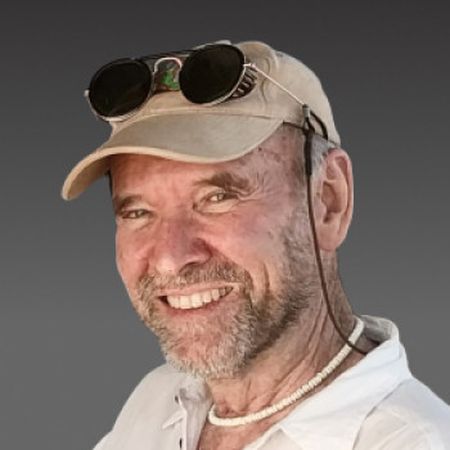
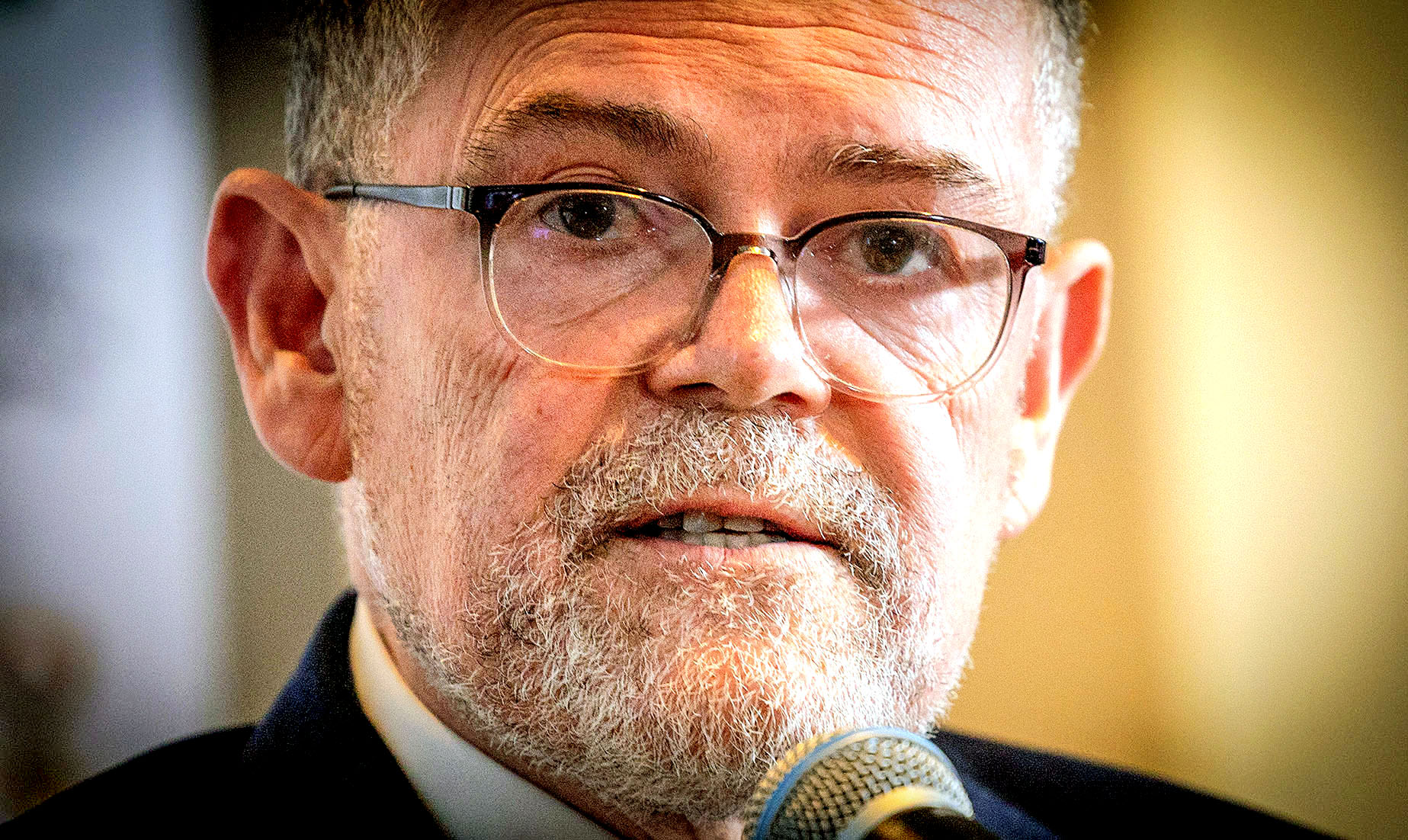
 Fired environment minister Dion George has launched a global conservation NGO, the Conservation Trust. (Photo: Luba Lesolle / Gallo Images)
 When Dion George was removed as minister of forestry, fisheries and the environment and resigned from the Democratic Alliance, there was speculation about what he would do next.
The answer is unexpected. This week, he reappeared on an international stage as the inaugural executive chair of a newly launched global NGO, the Conservation Trust.
Its purpose, according to its launch statement, is to “educate policymakers and build coalitions” to combat the illegal wildlife trade — not through on-the-ground conservation projects, but through policy toolkits, training and cross-border coordination aimed at closing loopholes and strengthening enforcement.
Officially, the organisation brands itself as nonpartisan. Politically, detractors might treat the launch as something else: a high-profile initiative announced by a politician who was recently fired from a politically sensitive ministry — and who insists he was removed because he tried to tighten regulation around controversial wildlife industries.
In an interview with Daily Maverick, George didn’t shy away from the fact that this scepticism exists. He acknowledged that people could interpret the trust as “me waking up in the morning thinking, oh, this is a good idea — a personal vehicle or a reputational counter-attack”. He argued that it wasn’t.
Organised crime issue
The trust’s launch, he said, was linked to something he learned inside government: that illegal wildlife trade is treated like a niche conservation issue when it is, in his view, a governance and organised crime issue.
“The illegal wildlife trade is not only a conservation crisis — it’s a governance failure that rewards criminal networks and punishes communities and ecosystems.”
He argued that trafficking networks overlap with other criminal flows — “weapons, drugs, people and money” — operating through what he calls the same set of pipes.
/file/dailymaverick/wp-content/uploads/2025/05/NeilAldridge_Pangolin.jpg "The illegal trade of pangolins is a global crisis, making them the world's most trafficked mammal. (Photo: Neil Aldridge for African Pangolin Working Group)")
That framing matters, because it signals what the trust says it wants to do: not replace conservation NGOs, but target the weak point George says he saw repeatedly: the gap between evidence and enforceable policy, and between law and implementation.
This gap, which he says is “the size of Texas”, is not a South African quirk but a global structural problem for which the trust will seek solutions.
George said his removal had accelerated the move from concept to implementation. “I began thinking about building the framework more effectively while still in office. My dismissal made the governance vulnerability impossible to ignore.
“If political change can reverse conservation direction overnight, then conservation policy is too dependent on personalities rather than durable institutional safeguards.”
What, exactly, is the Conservation Trust claiming to do? The press release describes it as a “policy ecosystem” organisation designed to equip legislators, regulators and senior officials with “credible, evidence-based education, practical policy toolkits” and “a trusted network for cross-border coordination”.
It frames the problem as persistent: governments may want to act, but lack a “shared playbook” that connects evidence to “real-world legislation, enforcement coordination, and financing”.
Global curriculum
In the first 12 months, George says he and the Conservation Trust intend to develop a global curriculum and policymakers’ field guide, run pilot training, publish model toolkits (including enforcement coordination, online trade controls and financial-crime disruption), convene regional roundtables, and track whether policy uptake actually happens.
In the interview, George distinguished this from traditional conservation philanthropy. “The trust isn’t actually a money mechanism — not a fund that raises donations and distributes grants to projects.”
He described it as “executive”: a mechanism designed to push policy into implementation and keep it there. Was it a think tank? He disagreed. “Think tanks think … and then they talk, and then they talk some more.”
He argued that the Conservation Trust’s modality was operational follow-through — designing legal and regulatory recipes and then moving those into government processes.
That is an ambitious claim. It also prompts obvious questions: what authority can a new NGO realistically wield over sovereign governments?
George argues that the leverage is practical rather than coercive. He says the trust will not “tell governments what to do” but identify gaps and help governments fix them, particularly where trafficking moves across borders, and mismatched laws create safe corridors for criminal networks.
Institutional literacy
“My usefulness lies in exactly the kind of access and institutional literacy that field conservation does not provide. As minister, I engaged with environment ministers internationally and became familiar with how conservation measures are diluted or derailed, including by competing government departments and commercial pressure.”
He said he is currently based in Washington, DC, and intends to move to London, describing DC as “the seat of the American government”, a practical place right now to engage with an environmental caucus in Congress.
He said he had startup capital and support from people in conservation spaces and insisted that transparency would follow in time through reporting.
Making enemies
George’s tenure in the Cabinet was unusually assertive: freezing new permits for captive lion breeding, setting a zero lion-bone quota, rejecting proposals to legalise the rhino-horn trade and making other contested environmental decisions. That assertiveness made him enemies.
/file/dailymaverick/wp-content/uploads/2024/01/8944530-copy.jpg "George rejected proposals to legalise the rhino-horn trade. (Photo: Fazry Ismail / EPA-EFE)")
George said there was interference in conservation decisions while he was in office, and he faced a smear campaign and even safety concerns after his removal, including what he describes as punitive actions around his diplomatic passport.
Pressed on whether the Conservation Trust was primarily a South African project, George said he didn’t want to make it just about South Africa, because the “big mistake is to fixate on the place you just left and miss the global pattern”.
However, South Africa was an obvious “first point of entry” because, he argued, the country has strong laws but weak enforcement and high political volatility in the sector.
In a sense, the Conservation Trust is George’s line in the sand.
“I will not support a model in which wildlife becomes simply a financial asset to be exploited,” he said. “In South Africa, John Steenhuisen pressured me to see wildlife policy through an economic lens — and I rejected it. I would have been haunted for the rest of my life if I had enabled policies I considered detrimental to wildlife.”
Is the Conservation Trust just a fightback? George said it was not a response to being fired, but to what he said his firing revealed: a system in which conservation direction can be reversed quickly, because the link between law, implementation and coordination is too weak to resist capture.
For now, Dion George is back in the conservation arena, and he’s asking the world to accept a central proposition: that illegal wildlife trade is a governance problem first, and that conservation policy needs institutional teeth that can survive political change. DM