




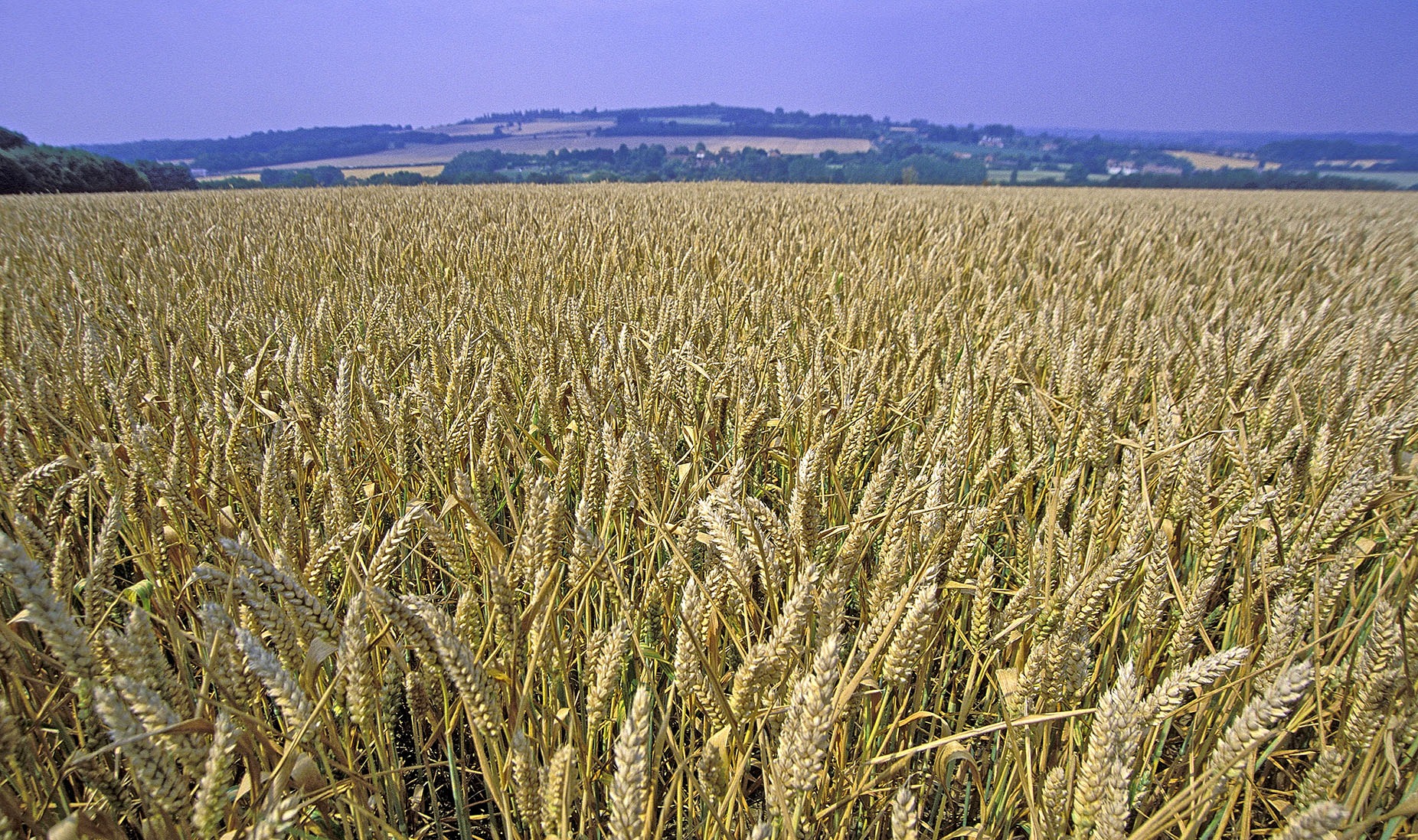
 A thriving wheat field in the Western Cape. Grain SA has warned of a looming collapse in SA’s wheat farming sector. (Photo: Gallo Images / Media 24)
 Julius Malema famously did not know when asked what a loaf of bread cost. But the price it fetches a few years hence is anyone’s guess and could potentially soar out of reach for all but the affluent and Gucci Marxists.
Or maybe it will collapse in the face of a flood of cheap imports that will wash away what is left of SA’s wheat sector.
/file/attachments/orphans/ED_510565_516081.jpg "A consumer after purchasing a R5 loaf of bread at Eyethu Lifestyle centre in Mofolo, Soweto on June 26, 2024 in Soweto, South Africa. It is reported that Shoprite has subsidised to help South Africans in need with their R5 campaign, to show the power of a R5 coin to bring dignity and comfort to marginalised communities. (Photo: Gallo Images / Fanie Mahuntsi)")
SA’s wheat farmers are being ground up in the the mill of the value chain they feed, and the sector’s survival is at stake.
Industry group Grain SA warned this week that the domestic wheat sector faces “a structural economic failure that now threatens producer survival, future planting decisions and the country’s long-term food security”.
This red light was flashed after a series of meetings in Swartland, Overberg, and the Southern Cape between GrainSA’s C-suite, wheat farmers and other stakeholders.
“What we heard clearly and repeatedly is that producers are not talking about weathering another difficult season. They are questioning whether wheat still has a place in their crop mix under the current system,” said Tobias Doyer, CEO of Grain SA.
Of course, Grain SA’s mission is to support grain farmers, so some skeptics may see this as alarmist. But Grain SA is not known for hyperbole. And commercial farming is an extremely risky and capital-intensive business that can be stressed by structural factors and flaws.
Persistent price-cost squeeze
Grain SA says that domestic producers face a “persistent price-cost squeeze”, which means that the price of their product keeps falling while the costs of production keep rising. Farmers and other commodity producers are deeply exposed to this economic ailment.
“Producers highlighted that while farm-gate wheat prices adjust downward rapidly, the same responsiveness is not observed elsewhere in the value chain. Economic analysis presented at the meetings showed that wheat contributes a relatively small proportion to the final bread price, yet producers bear a disproportionate share of downside risk,” Grain SA said.
The menacing storm clouds swirling over the wheat sector are many.
Global wheat prices have been depressed for a prolonged period while energy, fertiliser, logistics and mechanisation costs have been soaring.
Local oversupply
Another concern is that import volumes have been peaking in September and October, just before the Western Cape harvest period.
“Consequently, a local oversupply is created. Producers warned that import volumes entering the market during September and October exert direct downward pressure on domestic prices at the most vulnerable point in the production cycle,” Grain SA said.
Then there is the vexed issue of SA’s variable wheat import tariff, which only kicks in when prices fall below a five-year dollar-based average. This was formulated to afford some protection for farmers against depressed global prices.
“... producers expressed deep frustration that administrative delays and lagged implementation have rendered the mechanism ineffective when it is most needed”, Grain SA said.
South African wheat farmers are also competing against international players who are heavily subsidised by their governments. And within the wide value chain, input costs are – in the eyes of wheat farmers – unfairly inflated.
“Despite easing global commodity prices, periods of currency strength and stabilising energy indicators, producers reported limited downward movement in input prices... Producers warned that while they are expected to absorb falling output prices immediately, input costs have remained elevated and inflexible, further deepening the profitability squeeze at farm level,” Grain SA said.
The structural seeds being sown are producing a harvest of sorrow for South African wheat farmers. And the upshot is that many may stop growing the crop because it is no longer economically viable to do so.
Planting policy
In the opinion of this columnist – who is not a low-carb guy and digs his bread – urgent policy action should be taken on this front. SA imports about half of the wheat it consumes and the goal, for the sake of food security, local job creation and the wider economy, should be to reduce imports and boost domestic production.
A free-market purist might argue that if the sector is uncompetitive it should simply wither on the pasture. But visible hands unrelated to the market are undermining SA’s wheat farmers and threatening to turn their fields fallow.
“This is not a functioning free market correction. It is a structurally distorted system where producers carry losses while cost pressures elsewhere in the chain are not adjusting at the same pace,” notes Doyer.
So, what can be done?
Clear intervention on the timing of wheat imports, particularly during local harvest windows, is one of the proposals that Grain SA has put forward.
The timing of imports could perhaps be adjusted, though they are presumably a response to demand from domestic players in the value chain. A blanket import ban in September and October would be heavy-handed, possibly trigger unintended economic consequences and probably face legal challenges.
Grain SA has also called for increased transparency and accountability in pricing in the value chain, and that seems to be both realistic and sensible. It would also provide consumers with a better picture of what goes into the price of the loaf of bread they buy.
A fully responsive, automated import tariff system that functions in real time and reflects market conditions based on a relevant basis reference price, is another proposal, and such a measure also looks both sensible and workable.
Grain SA has also pointed to distortions on the JSE wheat contract that wheat farmers say no longer reflects the physical market. This can also surely be corrected.
SA’s 2025/26 wheat harvest, for the record, is estimated to be 2.66 million tonnes – in line with the previous season, but the official Crop Estimates Committee has been steadily revising its projections down.
Snail infestations (!) forced some farmers early in the season to replant, adding significantly to their costs. Hopefully any structural reforms will not go at the pace of the pest.
SA’s wheat farmers face many of the other challenges confronted by their peers: climate change and extreme weather events, policy uncertainty, the emotive and socially explosive issue of land reform, and mountains of debt.
It would indeed be an ominous sign for the wider agricultural sector if many stopped farming or switched to other crops. DM