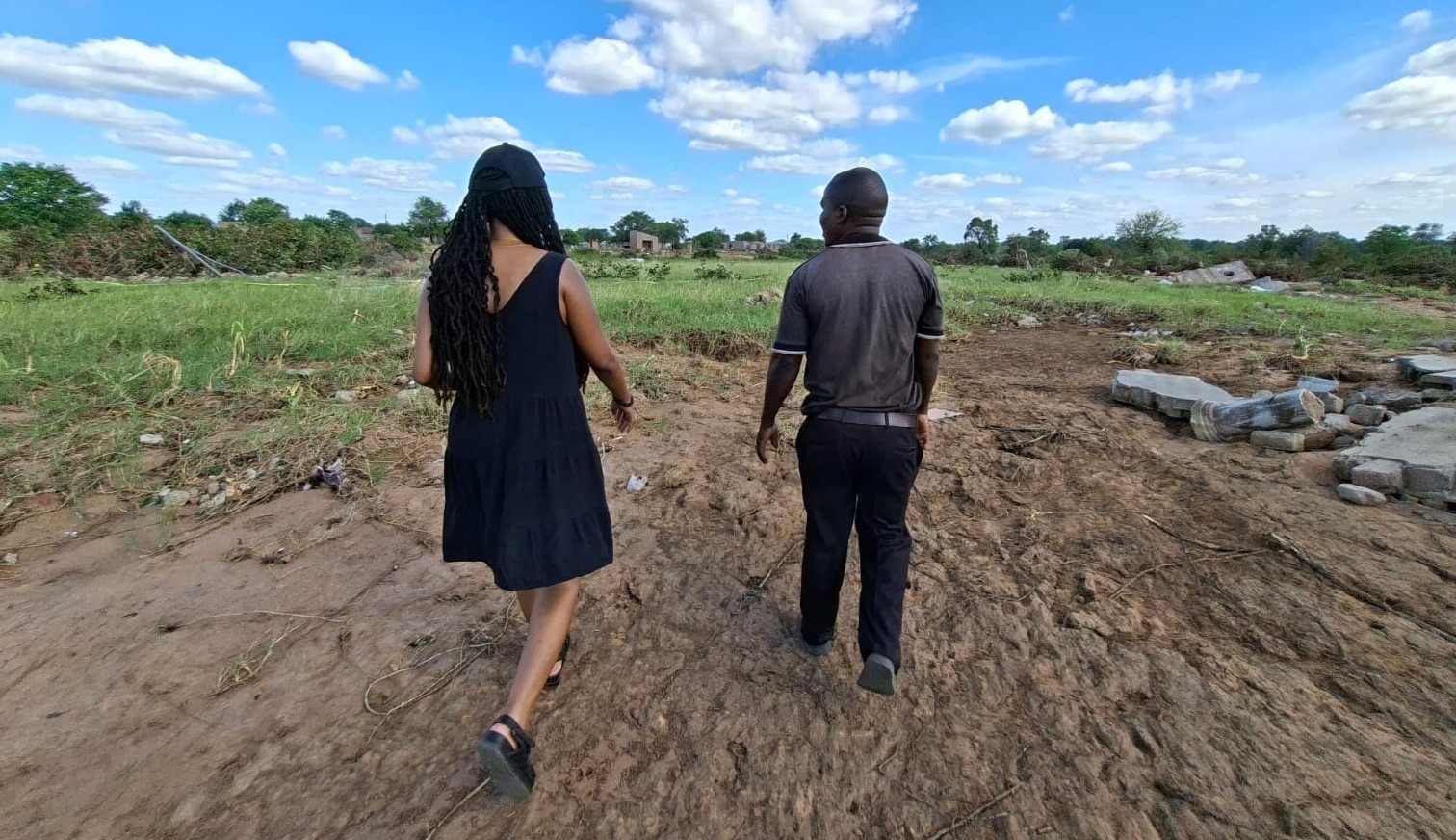
 After destructive floods in January, Sipho Dzambukeri leads Daily Maverick’s Lerato Mutsila through the devastated landscape of Mbaula Village in Giyani, Limpopo. (Photo: Felix Dlangamandla)
 I have always known about rivers, dams, rainfall patterns and the quiet, persistent ways water shapes our landscapes. These are things we engage with daily, so I understood water’s nature – its necessity, its patience and its destructive potential. On paper, floods are statistics: millimetres of rain, breached river levels, damaged infrastructure.
But it was only when Daily Maverick’s children’s reporter, Tamsin Metelerkamp, photojournalist Felix Dlangamandla and I walked through Mbaula Village beside the now-quiet Mbaula River, one of the hardest-hit areas in Giyani, Limpopo, that the true power of water fully dawned on us.
Read more: ‘We Are Trapped’: Floodwaters swallow villages as flooding, heavy rain batter Limpopo
We walked through homes split open like cardboard boxes, fields once promising maize harvests smothered in mud and debris. We traced the more than 1km path along which one survivor had been swept. People described the water arriving with a roar; not a rise, but a wall that gave no warning, offered no mercy and left nightmares behind.
/file/attachments/orphans/WFD_1757_217187.jpg "The aftermath of heavy rains leaves houses destroyed and devastated communities. (Photo: Felix Dlangamandla)")
/file/attachments/orphans/6I1A3142_517602.jpg "A damaged house after heavy rains swept through Mbaula Village in Giyani, Limpopo. (Photo: Felix Dlangamandla)")
In those moments, it became clear: water does not negotiate. When it overwhelms, it takes everything in its path.
Yet amid the wreckage, another kind of power revealed itself. On the ground, we heard stories of neighbours pulling one another from the mud and sharing food, clothes and shelter with those who lost everything.
/file/attachments/orphans/6I1A3115_764583.jpg "Displaced residents queue for food parcels at a relief centre after heavy rains destroyed their homes in Mbaula village Giyani. (Photo: Felix Dlangamandla)")
Community leaders organised clean-ups before any official help arrived. Elders offered comfort, faith leaders led prayers and young people cleared debris with their bare hands.
Loss was everywhere, but so was solidarity.
The floods reminded us that while water can destroy villages, it cannot wash away human connection. In crisis, people did more than survive; they began to imagine how to build back safer and better.
/file/attachments/2987/MC-LimpopoAftermath_273356.jpeg "Walking through the trail of flood destruction in Mbaula Village in Giyani, Limpopo. (Photo: Felix Dlangamandla)")
/file/attachments/orphans/6I1A3124_447475.jpg "A church temporarily houses displaced residents after heavy rains in Mbaula, Giyani. (Photo: Felix Dlangamandla)")
These floods are not isolated. They are part of a pattern we can no longer ignore. South Africa has endured devastating floods and prolonged droughts followed by sudden deluges and intensifying heatwaves. Globally, flooding, fires and storms continue to rewrite climate records. The science is clear: a warming world brings greater extremes – and vulnerable communities are paying the highest price.
What Limpopo demands now is not sympathy, but action. Climate adaptation must mean early warning systems that reach rural villages, land-use planning that respects floodplains, resilient housing, protected ecosystems and disaster responses that are swift, coordinated and humane.
/file/attachments/orphans/WFD_1781_692351.jpg "Olga Shivambu grieves the loss of her child amid the devastation caused by recent floods. (Photo: Felix Dlangamandla)")
In the days ahead, we will bring you stories about communities rebuilding with dignity, about collective strength born from grief and about what these floods reveal about South Africa’s readiness for a changing climate.
The water has receded, but the questions it leaves behind are rising. How we answer them will shape our shared future. DM