




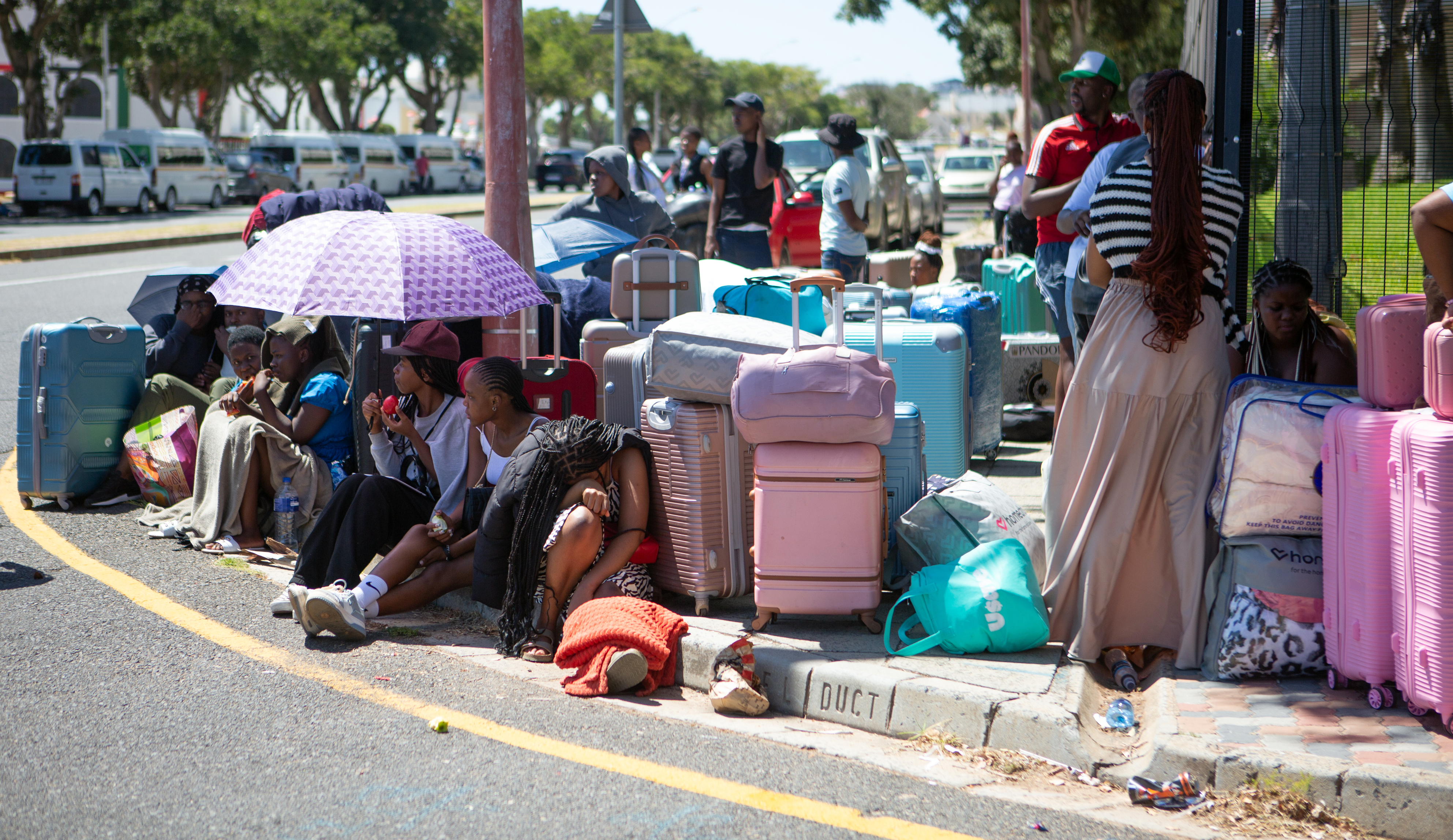
 Cape Peninsula University of Technology students who were on waiting lists for residence after reportedly sleeping outside the District Six Campus. (Photo: Gallo Images / Misha Jordaan)
 It’s a different academic year, accommodation issues continue to face CPUT yet again. This, as many first-year students and returning students are without accommodation and have been sleeping outside the university campuses in Bellville and District Six for the past few weeks.
When Daily Maverick visited CPUT’s District Six campus on Tuesday, 27 January, haggard students slept outside and covered themselves with blankets, as they had no accommodation.
/file/attachments/orphans/IMG_9126_514968.jpeg "Cape Peninsula University of Technology students sleeping outside after they housing request status have not been accepted on 27 January 2026. (Photo: Siyabonga Goni)")
On Monday, 2 February, students continued to arrive in numbers with their suitcases and blankets, seeking assistance with accommodation. When Daily Maverick spoke to some of them, they said their housing application status shows “pending”, while others are waiting for responses to appeals. CPUT spokesperson Lauren Kansley told Daily Maverick that some of these students were moved to temporary housing as their statuses are being assessed.
/file/attachments/orphans/unnamed_159888.jpg "Cape Peninsula University of Technology students queuing outside the District Six campus in Cape Town on 2 February 2026 to get assistance with accommodation. (Photo: Siyabonga Goni)")
A first-year student studying tourism management, Lisakhanya Payiya, from East London, who slept outside before being placed at Hanover Residence, said it was hard for her to sleep on the ground. “Being there was not nice because you do not even know what might happen as you are sleeping at night; it was scary. My body was aching, and I was just thinking about home. I stood in a slow queue to get assistance from the housing office. My mother was stressed because she wanted me to return home,” said Payiya.
Another first-year student, Eyethu Jaca from KwaZulu-Natal, studying a Diploma in Accountancy, said he was told by the housing office to find private accommodation after sleeping outside for two days. “I came here to seek a residence and slept outside after a communication from CPUT that I should get a private accommodation and/or stay outside their residences. They said I did not apply for a residence. As I was sleeping outside, it was cold and sore to sleep. I had to buy food with the little money I had, and if I had to go to a private accommodation, they would want a deposit,” said Jaca.
‘Did not meet the requirements’
A fourth-year returning student studying Senior Phase Education, Amarish Mpakumpaku, said he did not meet the requirements for housing after failing modules and has lodged an appeal, waiting for a response. “I had 57% instead of the 65% needed for accommodation. I then submitted an appeal on 31 December 2025, but January has come to an end, and I do not have a response. Classes have started, but I cannot go to class and cannot bathe. We are suffering because the money we got at home to use for groceries inside a residence is finished; we are eating it outside,” said Mpakumpaku.
Over the past years, CPUT has been faced with pressure of housing, and this has even led to student protests. In 2025, Daily Maverick reported that frustrations reached a boiling point after students clashed with police over the university’s ongoing accommodation crisis.
Read more: Students sleep in streets as Cape Peninsula University of Technology faces housing crisis
Kansley noted CPUT’s housing challenge, saying the institution is a “victim of its own success”, attracting more applicants than other universities. CPUT offers two types of accommodation: 16,200 university-managed beds and a secondary “private boarding” option with about 4,000 beds. Students unsuccessful with the first option can apply to the many private landlords, and if funded, the university administers payments.
“We are compassionate to those who apply and, unfortunately, don’t get accepted. However, sleeping outside and then blaming the institution is not a true reflection of all the efforts that we make to assist. We have nearly half of our student cohort in quality residences, and they have been placed because they followed the correct procedure. Those students are our priority,” said Kansley.
Responding to the issue of first-years sleeping outside, she said, “First-year classes start on Feb 8 only – we are not processing them into residence at this stage. The residence process is streamlined in a way that residences are entered and exited at specific times. This allows for deep cleaning and for us to focus on processing returning students. Students who arrive too early are not eligible to enter residence. This is communicated clearly to them, and if they choose to ignore that, then we cannot be held responsible for them having no access to campus,” said Kansley.
On the issue of appeals, Kansley said that residence appeals can take many weeks to wrap up and are based on availability. “The university is not able to offer accommodation to those who have prematurely travelled to campus with bags, expecting to be housed while they wait. CPUT can house 44% of its student cohort in residence, and we prioritise first years (we reserve 25% of beds for them). This is to ensure their safety and proximity to campuses…,” said Kansley. DM