




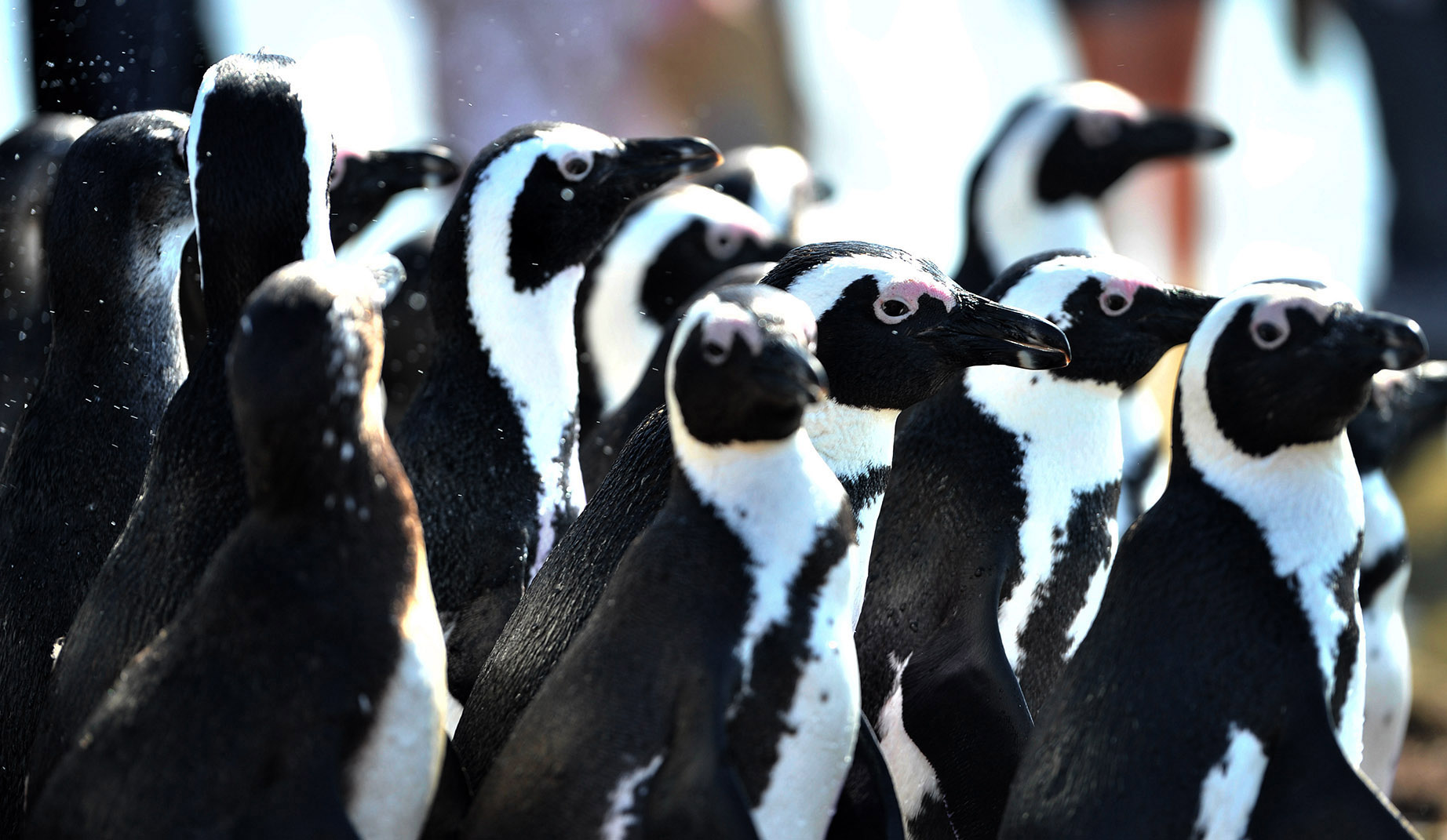
 Algoa Bay's penguins are under threat from tar balls washing up on Nelson Mandela Bay beaches. (Photo: Deon Ferreira)
 Small clumps of weathered oil, commonly known as tar balls, have washed up on beaches in Algoa Bay, the Garden Route and Struisbaai, sparking concern among conservationists and authorities.
The appearance of these sticky, toxic deposits along South Africa’s coastlines has raised concern for the country’s vulnerable seabird populations and placed the country’s limited coastal pollution monitoring capabilities under the spotlight.
To date, at least two seabirds — Cape gannets — have been reported oiled in Cape St Francis, in the Eastern Cape, but experts cannot yet confirm whether tar balls were responsible.
Read more: SA’s Garden Route beaches closed after oil droplets wash up ashore
The Southern African Foundation for the Conservation of Coastal Birds (Sanccob) confirmed it retrieved one dead Cape gannet over the weekend and was stabilising a second bird, which was not severely oiled.
On Tuesday Monica Stassen, Sanccob’s preparedness and response manager said, “It’s not very clear whether the type of oil on these birds matches the tar balls. You’d need to take samples of both to confirm, and our capabilities in South Africa for that are extremely limited.”
On Wednesday Stassen said that on closer inspection it did not appear that the rescued gannet had been oiled.
There had been no reports of penguins being oiled or affected by the tar balls, said Stassen.
She said the organisation first observed tar balls — small, sticky clumps of weathered oil — along the coastline just over two weeks ago and reported them to the relevant authorities on 24 January.
Stassen said Algoa Bay and Cape St Francis were home to colonies of critically endangered African penguins, while Bird Island had the largest colony of endangered Cape gannets, making the region highly vulnerable to oil spills.
/file/attachments/orphans/WhatsApp-Image-2026-01-23-at-154657_599768.jpeg "Tar balls have been washing up on beaches in Algoa Bay in the Eastern Cape, as well as the Garden Route and Struisbaai. (Photo: Sanccob)")
Stassen expressed serious concern about South Africa’s lack of capability to monitor coastal pollution.
“There is no monitoring of our coastline,” she said, “so any type of incident could happen, and unless the vessel reports it, it will go unnoticed until either birds get oiled or oil starts washing ashore.
“Our coastline is very busy. We’ve got a lot of maritime traffic, a lot of vessels moving through. It is a major concern that South Africa does not have these capabilities to identify pollution as it happens much quicker, which then makes it a lot easier to determine who the responsible party is and hold them accountable.”
Stassen and South African Maritime Safety Authority spokesperson Tebogo Ramatjie confirmed that the source of the tar balls was currently unknown.
Asked who was responsible for cleaning up the tar balls, Ramatjie said, “In the absence of a clearly identifiable polluter, the government — through its national, provincial and local structures — will step in while investigations continue to identify the responsible party.”
Ramatjie warned that tar balls were highly toxic and can be fatal if ingested by seabirds or other marine life. He urged the public not to handle the tar balls or attempt a clean-up.
Stassen also warned that oil was toxic to humans and animals. She urged the public to contact the authorities, including local municipalities, when they sighted tar balls on beaches.
Over the past year, Stassen said, similar incidents had occurred with oiled African penguins along the Eastern Cape coast.
“And no source of that pollutant was ever found. So it’s not an uncommon ... thing. And it again highlights the importance of having these capabilities, because we’re seeing it happening more and more.”
The Department of Forestry, Fisheries and the Environment (DFFE) said it was liaising with the provincial department and municipalities to advise on appropriate beach clean-up measures.
DFFE spokesperson Merle Van Diemel said the department, together with SAMSA, were investigating the source, as no vessel groundings, sinkings, or collisions were reported to SAMSA at the time.
If you sight oiled seabirds, please phone +27 21 557 6155 or +27 78 638 3731 (after hours) in Cape Town, and +27 41 583 1830 or +27 64 019 8936 (after hours) in Gqeberha. DM