




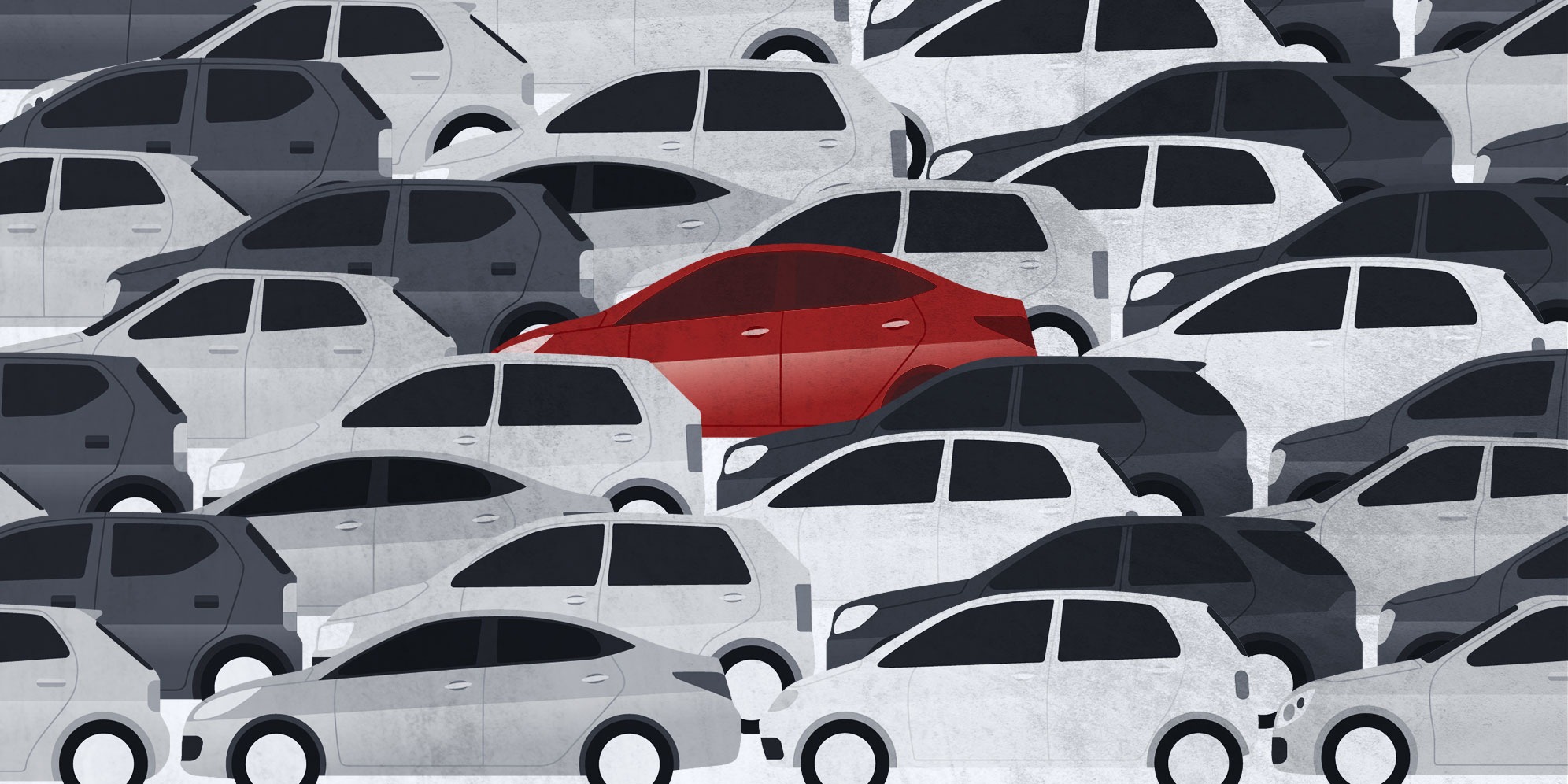
 Illustrative Image: Cars. (Image: Freepik) | (By Daniella Lee Ming Yesca)
 There are times when I really cannot understand what is happening around me.
Yesterday morning started with the mania of most Mondays. The Bohemian Rhapsody of the night before (thunderbolts and lightning – very, very frightening – geddit?) had kept me up with open windows and pouring rain and a very scared dog and all of the usual stuff that accompanies living on the Highveld in high summer.
And when I left the house to take my daughter to school everything seemed normal (apart from a puncture on the left rear tyre, but that’s a story for another ATB).
When I came back home though I realised there were a lot more cars on the road than usual.
When I left the house again at about 8.45am I could not believe my eyes. We live in one of those areas where the main roads are usually jammed on the way to Sandton.
This time, for the first time in the 13 (wonderful) years we’ve lived at that house, there was traffic around the entire block. My wife remarked that she could not understand why she was smelling diesel in our study.
There were cars everywhere, literally.
Later in the day a person who’s been covering Joburg traffic for nearly two decades at Radio 702 told me it had been insane everywhere, not only in my neighbourhood. Coming out of Soweto and coming in from Pretoria had been impossible as well.
The strange thing was that there was no particular reason, no one single highway, no shedding of the load by some truck, no idiotic roadblock by the JMPD.
It just was.
I think what happens in Joburg is that there are certain seasons for traffic, and this time of year is the worst of it.
That’s because everyone is back at work, schools are open, tertiary institutions are welcoming students back and everyone is working normal hours.
In a couple of months that will ease as people start working earlier or later, gym attendance becomes more or less enthusiastic, some schools go on holiday, and on it will go.
This probably won’t make you feel any better about being struck in a hot car for hours on end, but it may be interesting to know that traffic is a subject of great interest for mathematicians.
If I understood all the details I’d be working for a bank, but the study of the numbers involved in traffic is closely related to the study of fluid mechanics.
People write important and useful essays on “kinks” that cause huge traffic jams. It is this kind of maths that allows people in some parts of the world to predict those jams.
You might think this is all of no use to you, but if you plan a trip on an app like Google Maps or Waze, I’m sure it’s that kind of maths they use to give a pretty accurate prediction of when you’ll arrive.
However, you don’t have to be a mathematician to know the real reason we can end up with situations like Monday morning in Joburg.
It’s because there are more cars on our roads than there used to be, and the road infrastructure has not kept up.
Worse, of course, traffic lights are permanently buggered, the City does not care and the road surface, with bumps and holes and logs and dustbins, slows everyone down even more.
And then there are the drivers themselves. So many seem to think if they can just get a minute’s advantage it will change the world. Instead, they just make it worse.
Someone, somewhere with a better understanding of fluid mechanics than I, can probably tell you the peak number of cars that Sandton’s inroads can accommodate during your average rush hour, if everything is working.
In other words, if the robots were un-buggered, the roads were fixed, everyone obeyed the law, that kind of thing, how many cars could go into Sandton without a traffic jam.
I don’t know what it’s like where you live at the moment, but I’ve also noticed that “off-peak” traffic times are no longer “off” anything. If you drive from Sandton to Pretoria in the middle of the working day, there is huge traffic along the entire route.
Even leaving my house early on a Saturday morning, accompanied by that feeling of dread inspired by the bicycle training behind my car, the roads are busy from about 5am.
I am told things are very different in Cape Town. There, in my very limited experience, the traffic is at its most-jammed over the weekend. Everyone is trying to get the same set of spaces at the same time.
I should be happy about all of this. It means more people have more cars, and our economy is moving very nicely in real terms, thank you very much.
I’m sure it’s all tied to the fact new-car inflation last year was just 1.6%, the lowest on record. The influx of cars from China and India is having a huge impact, and is democratising car ownership.
This is a very good thing.
But I bet it doesn’t feel like it when you’re in a small tin can, surrounded by so many other cars, including the smell of petrol and diesel, and the sickly smell of someone else’s clutch. DM