




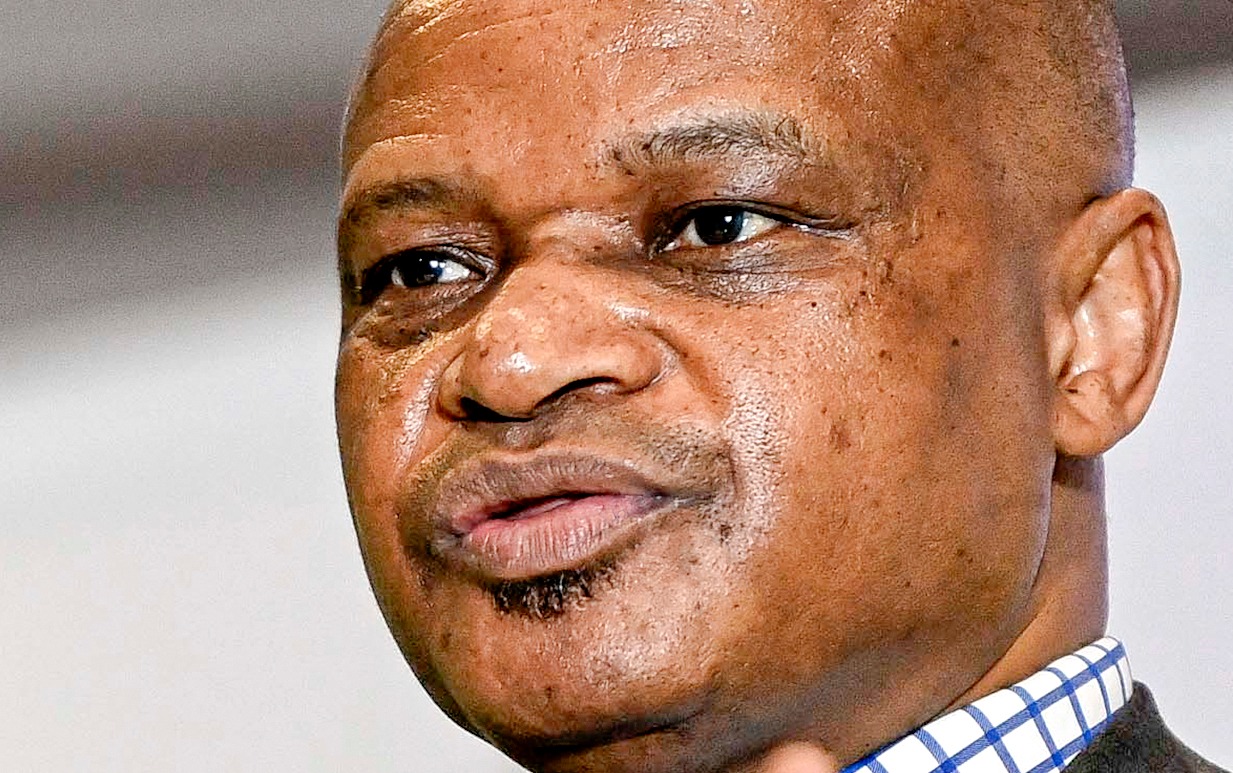
 National Director of Public Prosecutions Andy Mothibi. (Photo: Gallo Images / Volksblad / Mlungisi Louw)
 /file/dailymaverick/wp-content/uploads/2025/10/label-analysis-2.jpg)
As Andy Mothibi starts his first working day as National Director of Public Prosecutions it is trite to say that he faces a series of huge challenges. But, because of the inquiries into the South African Police Service (SAPS) and the momentum that is building in our society, he might have an almost unique opportunity to reset the institution.
When former National Prosecuting Authority (NPA) head Shamila Batohi took over the institution she famously described it as a “house on fire”. This was a reference to the factional battles that had taken place within it for years.
/file/attachments/orphans/ED_585816_538380.jpg "Former National Director of Public Prosecutions Shamila Batohi. (Photo: Gallo Images / Brenton Geach)")
Central to almost everything that had happened there was former president Jacob Zuma. When Batohi took over in February 2019 his shadow still loomed large over our politics, as did the damage he had done to our society.
While the institution has improved, its public image has not yet recovered. This is primarily because of the failure of the NPA to win convictions against those accused of State Capture.
The real damage here is not just that these people have not been convicted, it is that they have not been convicted despite all of the evidence heard against them during the Zondo Commission.
However, while the fallout from the State Capture era has defined much of our public narrative over the past few years, this is about to change. It is likely that this is being supplanted in the public mind by the inquiries into the SAPS and the criminal networks which enmesh both police officers and senior politicians.
This means that the next public test for the NPA is probably whether it will be able to hold those involved in the allegedly corrupt networks properly accountable.
Despite the current legitimate cynicism around the NPA, there is reason to believe that Mothibi might have an easier ride.
One of the major problems for the NPA has been the poor quality of investigations by the police. For many years the former head of the Hawks, Godfrey Lebeya, lamented the shortage of qualified and experienced detectives.
/file/dailymaverick/wp-content/uploads/2025/01/NGIZ0118.jpg "Former Hawks head Godfrey Lebeya. (Photo: Elmond Jiyane / GCIS)")
As is becoming crystal clear to anyone who is paying attention, senior leaders of the SAPS have been making decisions to benefit themselves or associates, and not to benefit justice.
The fact that KwaZulu-Natal Hawks boss Lesetja Senona could not, or would not, answer certain questions under oath at the Madlanga Commission last week shows how deep the corruption goes.
/file/attachments/orphans/G_rTxMCXAAAOc_u_949863.jpg "KwaZulu-Natal Hawks head Major-General Lesetja Senona. (Photo: General Prinzo / X)<br>")
Now that a process to suspend some of these officials is under way, with more expected to follow, it is likely that those who have obstructed justice will be removed. People like Senona should be taken out of the system.
Also, if the process started by the Madlanga Commission reaches its logical conclusion, and results in a completely restructured leadership of the SAPS, the police themselves should become much more effective.
In particular, if Police Crime Intelligence is finally, after many years, able to operate effectively, more evidence should be brought against organised crime. This should strengthen police investigations and the dockets they give to the NPA.
It may also be that the circumstances of these cases makes them easier to investigate than the State Capture cases. And it is unlikely that any of those implicated in the SAPS corruption will be able to start a political party, and actively campaign against the Constitution.
One of the important aspects of Mothibi’s tenure is likely to be that it will be relatively short since he is due to retire in about two and a half years. While this means he will not have that much time to imprint his own personality on the institution, it also means he has nothing to lose.
He has been fighting for justice all of his professional life – a person known for his anti-corruption credentials who has nothing to lose by trying to make major changes to the institution. At the same time, it appears he might be able to play a role in filling senior vacancies in the institution.
In normal times there are four deputy heads of the NPA. Most, perhaps all, of these posts are vacant (on Sunday afternoon the NPA’s “Top Leadership” page displayed only Batohi and two other people who were defined as “acting” in their positions).
Mothibi might be able to recommend to President Cyril Ramaphosa who should be appointed to those posts, thus influencing who would be in a strong position to succeed him. There are other circumstances that may ease the road slightly for Mothibi.
Many of the problems the institution has faced go back to one person, Zuma. It was the NPA’s failure to charge him when it charged Schabir Shaik for corruption relating to the Arms Deal in the 1990s that allowed him to become President, delay his own trial and eventually exert control over the organisation.
/file/dailymaverick/wp-content/uploads/2025/11/ED_585731.jpg "Former president Jacob Zuma. (Photo: Darren Stewart / Gallo Images)")
If Mothibi is finally able to overcome Zuma’s Stalingrad legal tactics, and if the trial against him actually begins during his tenure, this would completely change the public perception of the NPA.
Perhaps nothing could draw a line under both the Arms Deal and the State Capture era more firmly than the sight of Zuma answering a prosecutor’s questions under oath in the dock.
And, our changing political dynamics might make life easier for the incoming NDPP and whoever follows him. As the ANC loses its political power it seems unlikely any party will be able to dominate our politics for some time.
This means it is unlikely that any one political party, or any leader within any of the parties, will be able to have significant power over the NPA.
While Batohi reiterated during her final public address as NDPP on Friday afternoon that no politician had attempted to influence her or her organisation, the fact is the risk of this will now recede further.
There are many reasons to believe the NPA cannot recover from its current state. As Batohi reminded us on Friday, it needs more money, its prosecutors should be better paid, it needs its own accounting officer and more legal independence.
But there are also reasons to believe it could improve in the short time Mothibi will be at the helm. DM