




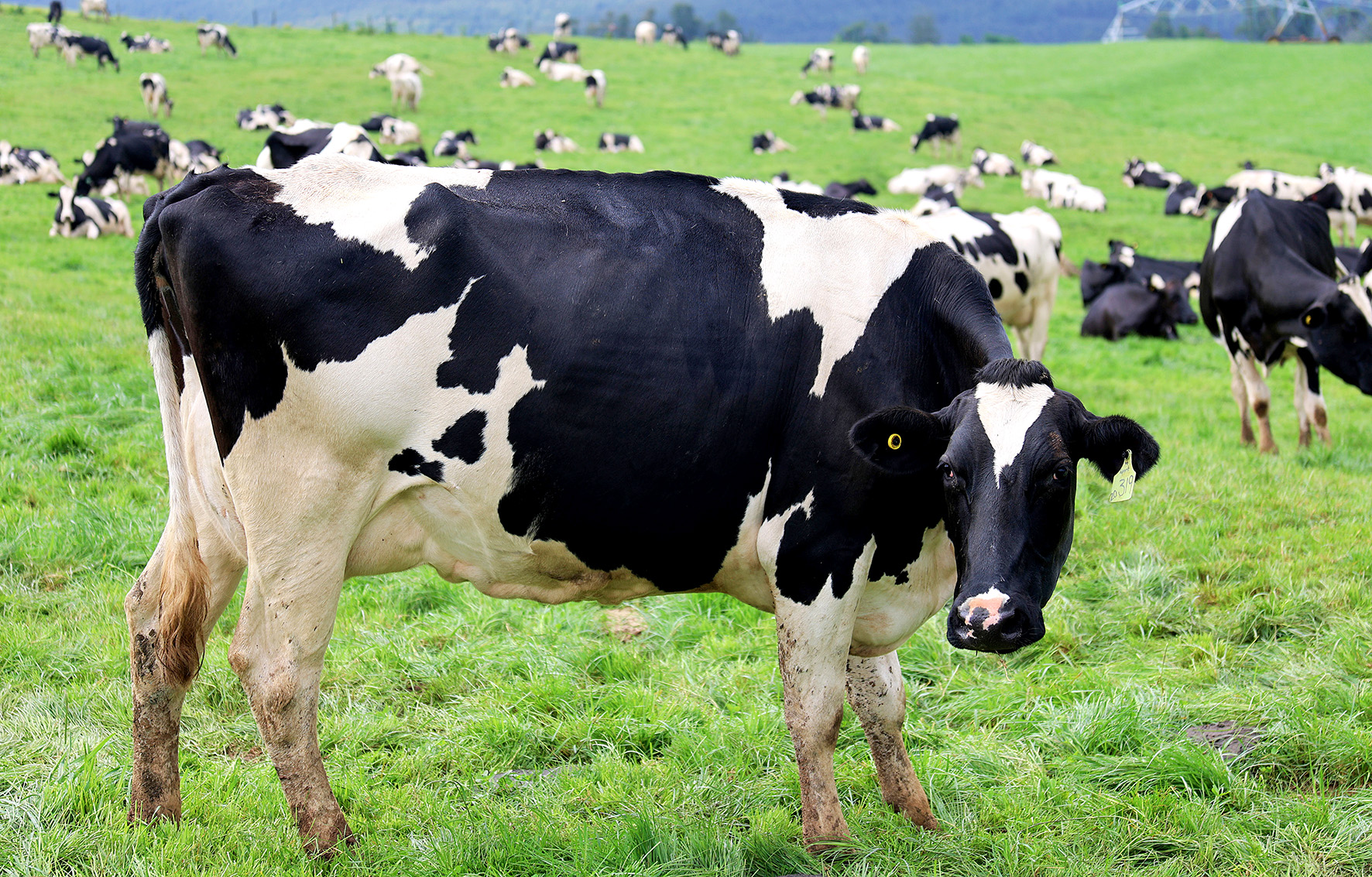
 Farmers fear a second wave of foot-and-mouth disease after daily new cases and a vaccine shortfall. (Photo: Leano Larona)
 Just as some Eastern Cape farmers breathed a sigh of relief after their foot-and-mouth disease (FMD) quarantine was lifted last year, the threat of the disease spreading across the country has them hunkering down and praying they will be spared a second outbreak.
With new cases being reported almost daily across the country, veterinarians in the field say controlling the spread of the disease is becoming increasingly challenging as domesticated animals, as well as wildlife, are contributing to the ongoing crisis.
And while FMD holds no threat to human wellbeing, it is spreading across various animal species at an alarming rate, raising questions about whether the disease, which is typically only spread through contact, has now become airborne.
While the regions along SA’s northern borders have always been more susceptible to FMD, the Eastern Cape recorded localised outbreaks two years ago, with confirmed cases in the Kouga Municipality and the northeastern parts of the province.
In recent months, more and more cases have been confirmed across the province and country, with the Northern Cape currently the only province not to report any positive cases of FMD.
Several dairy farms in Kouga were placed under quarantine for 12 months, some of them after voluntarily vaccinating their livestock in September 2024 as a preventive measure to stop the spread of the disease.
While a 12-month quarantine was a heavy price to pay, forcing farmers to implement additional biosecurity measures and add more processes to render their milk production safe, their forward thinking paid off. Their latest FMD test results came back negative and their quarantine was lifted towards the end of 2025.
/file/attachments/orphans/FMD29_997131.jpg "Disinfectant stations placed along the highways around Ixopo and at the entrances of farms are being used to try to stop further spread of foot-and-mouth disease. (Photo: Leano Larona)")
“But we are clearly not out of the woods yet. We are hearing some horror stories coming from KZN, about cows losing their hooves and being culled in droves. We cannot allow FMD to come back here,” said Kouga farm manager Karel Schoeman.
Read more: KZN dairy farmers face massive losses amid the ravages of foot-and-mouth disease
According to Schoeman their operations near Humansdorp were among the first to detect FMD in their herds in 2024. They were able to secure enough vaccinations before shortages were reported, and treated their affected animals quickly.
“We also volunteered for pre-emptive vaccinations. While we did not fully agree with the 12-month quarantine on those herds, we understood that was simply the cost of doing business.
“Now we are hearing talk of other strains that are resistant to the vaccine we used, there might be other, more dangerous symptoms, and the disease is spreading faster than ever. It’s hard to keep up any more.
“All we can do is take every possible precaution to protect our livestock and pray to God that it does not end up on our farms again,” Schoeman said.
FMD is a highly contagious disease that affects cloven-hoofed animals.
Symptoms include hypersalivation, loss of appetite, ulcers and lesions on the tongue and around the hooves, lameness and a drop in milk production.
/file/attachments/orphans/FMD13_856314.jpg "Dairy cows usually recover from foot-and-mouth disease within weeks, but there can be permanent milk loss or reduced productivity. (Photo: Leano Larona)")
Fatalities are rare if animals are treated quickly. Younger animals are more susceptible and most fatalities are among newborn livestock or due to culling to prevent the spread of the disease. People cannot contract FMD.
Further east, on a communal plot near the KwaZulu-Natal border, Derek Ngubeni’s herds are struggling.
Ngubeni said he lost a calf last week shortly after birth. The disease was transmitted from its mother, and the calf was too weak to survive.
“The cow had sores on its feet and around its mouth. It was sick, but still strong. The biggest problem was the sores on its udder. She did not allow the calf to drink, and it became too weak.”
Ngubeni said he was fortunate to receive doses of the vaccine last year, keeping some of his cattle healthy. Unfortunately, due to the nature of their communal farming – sharing grazing with other livestock owners – they were unable to monitor all the cattle coming and going, and the disease could not be stopped.
This is one of the major concerns around the current FMD outbreak, and Milk SA veterinary adviser Dr Mark Chimes said controlling the movement of cattle, and other cloven-hoofed animals at risk of contracting the disease, was one of the main reasons it was spreading at such an alarming rate.
“Simply put, FMD is out of control,” Chimes said. “In an ideal world we would shut down all animal movement, vaccinate pre-emptively, and keep quarantines in place for as long as needed to get ahead of this disease. Unfortunately, the financial implications of such a strategy would be devastating.”
He said SA hit “the perfect storm” for the disease to spread after flare-ups in previously controlled regions from November.
“We are dependent on a vaccine that is being manufactured in Botswana. However, that facility had to close for scheduled maintenance late last year, and by December we ran out of stock, leaving us vulnerable to FMD outbreaks.”
/file/attachments/orphans/FMD25_692283.jpg "Farmers use cloths and bandages to treat lesions and warts that grow on cattle’s hooves. (Photo: Leano Larona)")
He said piggeries and other livestock also had outbreaks, and infections among wildlife were an increasing concern.
“We have had reports of herds of impala, as well as kudu, showing symptoms. It is near impossible to control those animals’ movements as they easily jump fences.
“Buffalo are another problem because they are often asymptomatic but can still carry and spread the disease.”
While the majority of cases are reported in the eastern regions of the Eastern Cape, Chimes said outbreaks further east could be devastating to the dairy industry.
“The N10, the road running from Nelson Mandela Bay up towards Nxuba, is like an invisible barrier. Now that Kouga is clear, we need to stop FMD from spreading over that line. If it heads further west from there it could easily spread into Tsitsikamma, which is one of the most dense dairy producing regions in the country.
“From there it could spread like wildfire and easily reach into the Western Cape. That would be a disaster.”
While scientific proof shows that FMD can only be spread through physical contact, particularly when coming into contact with a diseased animal’s saliva, recent evidence would suggest that the virus could have adapted and is now airborne.
“We currently have no scientific tests to confirm that FMD has mutated to become airborne, however the evidence on the ground surely suggests that it is spreading without physical contact over short distances,” Chimes said.
While the disease is highly contagious, and they are discovering various strains that spread among animals, Chimes reaffirmed that the disease cannot be transferred to humans, and products from animals with FMD were still safe for consumption.
“Cows can develop mastitis, and much of the milk they produce is discarded. But milk from other animals is put through additional processes to ensure its safety, and meat from cattle with FMD is completely safe for human consumption.” DM