




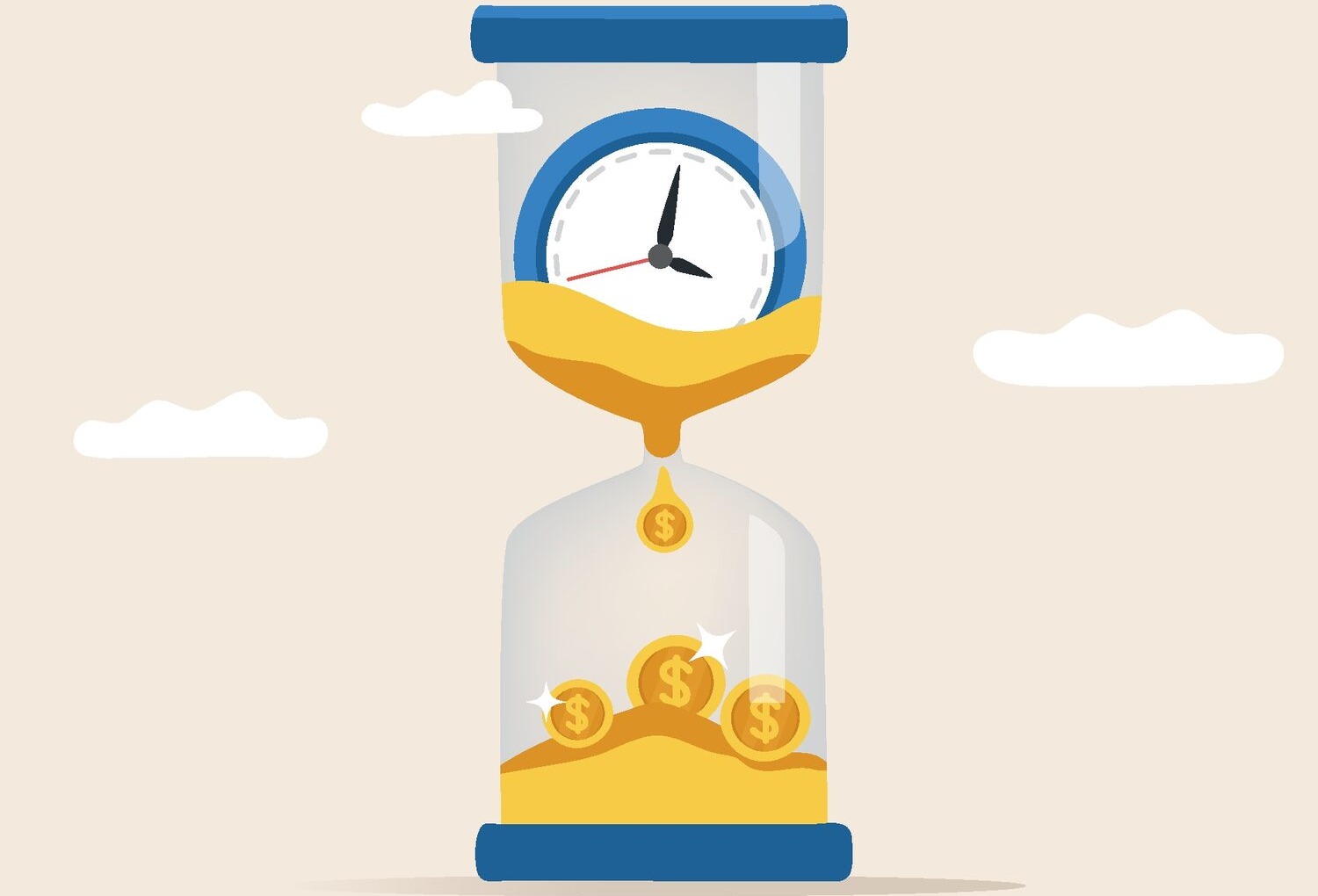
 One of the biggest silent costs isn’t switching – it’s staying in cash because investing feels scary. Illustration: Freepik
 If you’ve checked your investment balance recently and felt a small urge to do something, you’re not alone. Markets wobble, headlines scream and suddenly switching funds or moving to “something safer” feels responsible, even grown-up.
However, the latest Momentum Investments’ Sci-Fi Report 2025 suggests the opposite is often true.
Looking at investor behaviour over the past year, the report shows that many South Africans quietly paid a “behaviour tax” by reacting emotionally to market moves. Not through fees. Not through bad products. Through perfectly human decisions, made at exactly the wrong time.
Paul Nixon, head of behavioural finance at Momentum Investments, compared the period from September 2023 until September 2024 with April 2025 and saw that switches increased 130% because of the market’s antics. At the time, there was also an inflow of well over a billion rand into the Momentum Money Market.
Nixon calculated that clients who switched then would have lost yearly growth of more than 10%. But one must also consider how well the All-share index (Alsi) of the JSE has grown since then, and the loss would have been far larger. By the end of 2025, the Alsi had grown far more than another 30%.
Clients who were stuck in less risky assets missed out big time.
Nixon’s research further shows that anxious investors and those trying to read and time the market lost out the most.
Key points to remember
Here are four insights worth filing away for which the future you will thank you.
💡Your emotions cost more than fees: Investors who switched portfolios during periods of market stress lost roughly 1.3% in returns on average. That doesn’t sound dramatic, until you remember it compounds over decades. Calm beats clever far more often than we’d like to admit.
💡Volatility is not a signal to flee: Switching activity spiked when local markets dipped and volatility jumped. In other words, people sold when things felt uncomfortable. History suggests this is usually when patience is most valuable. Markets recover. The results of panic decisions don’t.
💡Your money personality matters: The report breaks investors into behavioural types. The anxious group did the most damage to their outcomes, whereas more assertive investors actually added value by staying put or rebalancing calmly.
💡Waiting to invest is also a decision: One of the biggest silent costs isn’t switching – it’s staying in cash because investing feels scary. Delaying investment by years can cost far more than one bad market year ever could.
So what’s the practical move you can use to keep your money growing optimally?
Before making any big investment change, introduce a 48-hour pause. No switching, no withdrawing, no dramatic emails to your adviser. If it still feels sensible after two sleeps and one market-free walk, then revisit it.
Your money doesn’t need you to be brave, clever or fast. It mostly needs you to be boring and consistent, which is deeply unfashionable but remarkably effective.
And if you’re feeling twitchy about markets right now, that’s okay too. Just don’t let a moment of discomfort become a long-term financial souvenir.
Your take
Money Cents reader Keir wrote in to say the newsletter that this article is based on reminded him of his dad. “He got immersed in shares in mid-life and did what he thought was quite well. That was until many years later, when he bumped into a colleague who had started investing with less money than my dad.
“The difference was he never fiddled with his investments. My dad was always messing about with graphs, share prices and endless vigilance.
“His pal had ended up with twice as much as him. That cheesed him off no end.” DM
This story first appeared in our weekly DM168 newspaper, available countrywide for R35.
/file/attachments/orphans/DM-23012026001CPTJHB_284128.jpg)