




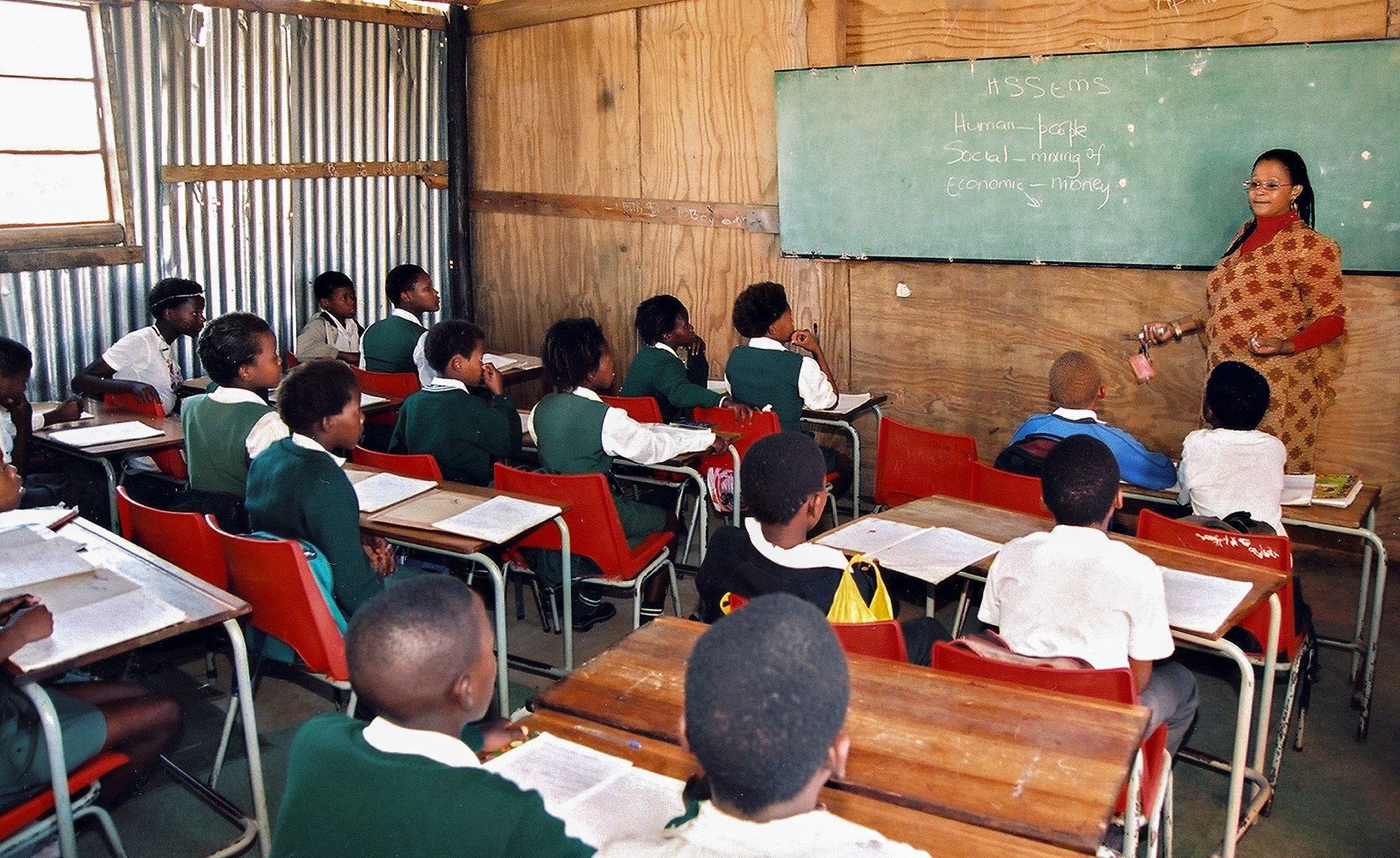
 Parents say rising costs are making it increasingly difficult to keep up with back-to-school costs, with many unable to afford school uniforms and stationery. (Photo: Unknown)
 Going back to school is meant to be a positive milestone, with pupils arriving with new bags, books and complete uniforms, ready to learn. But for many families, that picture does not match reality, as financial pressure continues to delay access to basic school essentials.
Retailers say that they are still sitting with significant back-to-school stock, much of it tied up in unpaid lay-bys. Lay-by systems, which allow customers to pay for goods in instalments without interest, have long been a lifeline for low-income households, helping parents avoid debt while spreading costs over time.
However, as children returned to school, many lay-bys remained incomplete. Daily Maverick visited several stores and spoke to managers who requested anonymity. A PEP store manager said parents were often only able to pay the minimum deposit.
“We still have a lot of clothes; we have a lot of lay-bys at the back. Not all parents can afford it, so what they do is they will put on the minimum. People are struggling; they can’t even afford to make that a R1,000 lay-by. They will make a lay-by of R100 or R200, just so that the child can have books and a pen and things like that. This happens every year,” said the manager.
/file/attachments/orphans/IMG_8937_353438.jpeg "Parents are struggling to pay for school uniforms with many putting down the bare minimum on lay-by. (Photo: Siyabonga Goni)")
She explained that when lay-bys are cancelled, deposits are refunded, but the items are returned to the shop floor.
“We don’t keep their deposit money. They get the deposit money back on lay-by, and it gets cancelled, unfortunately. They will lose their school items; they get placed back onto the floor,” she said.
Another PEP store manager echoed the same concern, saying it was difficult to watch parents struggle to complete payments.
“It doesn’t feel nice, because it’s school stuff, but then you must know how much stuff you’re going to put in the lay-by. Yes, we understand that sometimes a single parent has three kids, and they have to figure out what they’re going to do, but they still can’t afford to take the lay-by. Some customers come and refund the lay-by and take certain stuff out,” the manager said.
An Ackermans store manager shared similar experiences.
“It's a consistent thing where they do lay-bys every year. Those lay-bys sometimes get kicked off when they expire on the system. Some of them really forget about the lay-bys. Some of them may have relocated to another province,” the manager said.
‘Things are expensive’
Parents told Daily Maverick that affording school uniforms had become increasingly difficult. Masihlangane Cici, whose child attends Moshesh Primary School in Langa, Cape Town, said unemployment had forced painful choices.
“Uniforms are expensive, especially since I am not working. I opted to make my child wear last year’s clothes; I do not even feel well because my heart aches. There’s no money, and at home we also have to eat. When I opened a lay-by for my child, it went on for three months, and school was already open. This had an effect. You see another child wearing well, and for yours it is different,” said Cici.
Read more: SA parents paying premium cost for branded threads and basic pens
Another parent, Siyamthanda Qeqe, based in the Gqeberha, Eastern Cape, said that while early planning helped, social grants alone were often not enough.
“Social grants are not enough, especially if you have no other income. A uniform should sometimes come from the school when a child is struggling… I also usually go to PEP or Jet stores for my child because they can be cheaper. What is troubling is the schools that want children to wear a different colour shirt instead of the normal white shirt,” said Qeqe.
Likhona Lucas, in Langa, Cape Town, said she avoided lay-bys by budgeting her child’s social grant carefully, though she acknowledged the pressure many families faced.
“Most parents are not using the grants well. If you go to PEP or other stores, you can manage to buy socks or a jersey. I don’t want to say things are not affordable; yes, some struggle because they have to buy food using the same grant, but people can try,” she said.
The Competition Commission has urged schools not to require students or pupils to buy uniforms or stationery solely from the school’s preferred supplier. According to the commission, parents should have the right to choose where to purchase such items, fostering competition among suppliers.
/file/attachments/orphans/Price_645048.png "(Graphic by Daniella Lee Ming Yesca)")
Back-to-school pressure turns into a crisis
Roland Goldberg, an associate professor in Marketing Management at North-West University, said the back-to-school season had shifted from being a once-off strain to a full-blown crisis for low-income families.
“Between food inflation and the rising costs of transport and electricity, school expenses are now competing directly with the grocery bill. We’ve reached a point where many families simply can’t bridge the gap any more; it’s not just about budgeting better, the money just isn’t there,” said Goldberg.
He added that abandoned lay-bys are a warning sign of deeper financial distress.
“When we see lay-bys sitting uncollected weeks after the school term has started, it’s a massive red flag. It shows that families are facing sudden income shocks and can’t finish what they started. Even though there’s no formal interest, it’s a sign of extreme financial distress,” he said.
“The high volume of abandoned lay-bys in 2026 is a sobering indicator of where the consumer is at. People clearly want and need these items, but the actual purchasing power has evaporated. For retailers, this means more stock sitting in backrooms and lost revenue. For the rest of us, it’s a warning that even essential spending is becoming a luxury for a huge portion of the population. Consumers aren’t just stretched; they’re breaking.”
Retailers try to soften the blow
Retailers are attempting to bridge the affordability gap through targeted promotions. PEP, for example, is offering school shoes for just 99 cents when customers spend R300 or more on school clothing and stationery, pay using an FNB debit, credit or Fusion card, and present a PEP Rewards card. The promotion is limited to the first 120,000 qualifying customers. DM