



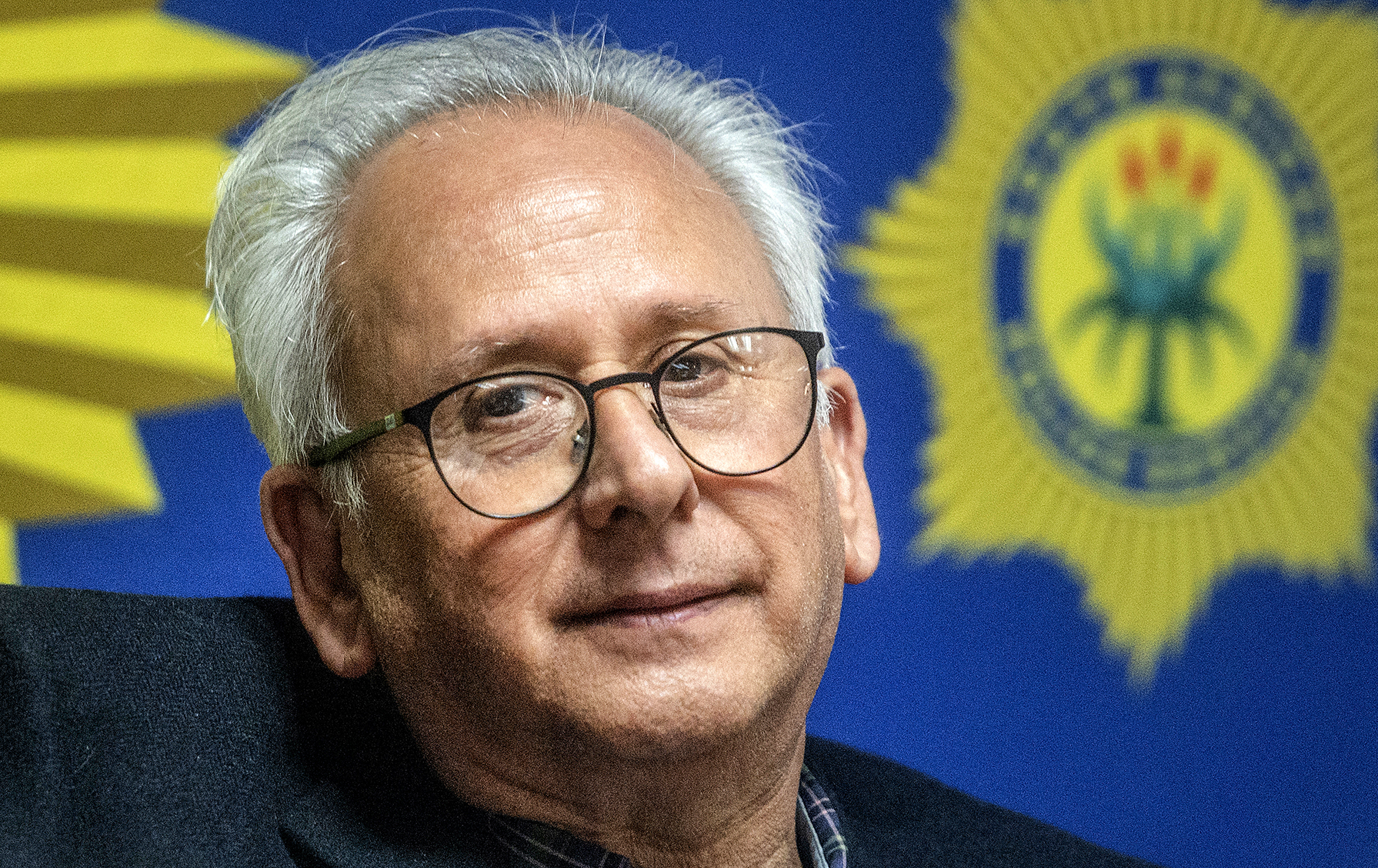
 Minister of Police Firoz Cachalia ( said in reply to a parliamentary question that in North West, Gauteng and KwaZulu-Natal accounted for the highest number of unlawful unrests and detentions. (Photo: Gallo Images / Brenton Geach)
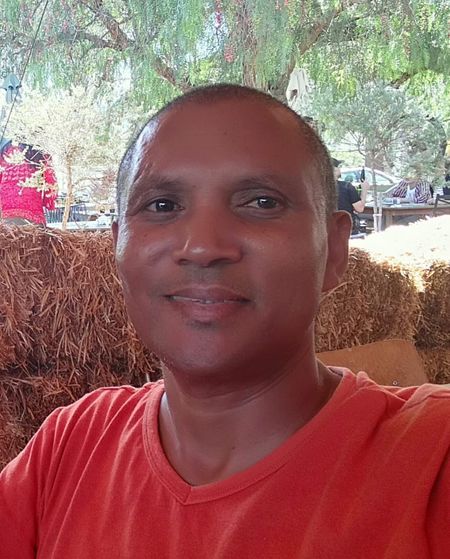
 Franco O’Riley was unlawfully arrested and detained from 6 to 8 December 2016. Although his civil settlement was only finalised in August 2025, the trauma of his time behind bars still haunts him. He remains deeply shaken by the memory and the fear of being sexually assaulted while in custody.
On Wednesday, 14 January 2026, O’Riley – who at the time of his arrest was employed at Wimpy Zeerust, North West – candidly recalled the harrowing events of his detention.
“My greatest fear was being raped in prison. Luckily there were not too many people in my cell. After an experience like this, you are never the same person again. You lose all trust in the police. You fear them, and you will never call the police again,” he said.
In an attempt to start afresh, he left his hometown and moved to a completely different place to rebuild his life.
In August 2025, the South African Police Service (SAP)S was ordered to pay O’Riley R80,000 after his unlawful arrest and detention in 2016.
O’Riley was arrested without a warrant on a charge of common assault. The SAPS failed to listen to his explanation. However, in August 2025, the North West High Court in Mahikeng found that O’Riley was justified in instituting legal action against the police, as the matter concerned the unlawful deprivation of his liberty.
O’Riley’s case is one of thousands involving victims of unlawful arrest and detention, exemplifying the trauma endured behind bars and the memories that continue to haunt them.
Questions to acting police minister
A recent parliamentary question posed by Economic Freedom Fighters (EFF) MP Lorato Fito to the acting police minister, Firoz Cachalia, indicated police face 48,569 outstanding civil claims for unlawful arrest and wrongful detention, with a contingent liability of R56.7-billion.
Fito’s inquiry was prompted in part by a recent Mthatha High Court ruling that ordered the minister, in his capacity as the executive authority of the SAPS, to pay R1.26-million for the unlawful 21-day detention of Thandekile Sabisa and Lawrence Mambila.
/file/attachments/orphans/images3_275122.jpg "EFF MP Lorato Fito. (Photo: Parliament of South Africa)")
Cachalia clarified the contingent liability figure: “This amount does not reflect the amount paid by SAPS on civil claims but reflects the amount claimed on all matters received from the oldest claim registered on the Loss Control System up to date.”
Across all provinces, SAPS paid out R541-million for unlawful arrests and detention in 2022/23 , which dropped to R491-million in 2023/24, before rising to R620-million in 2024/25. Between April and September in the current financial year, SAPS paid R301-million.
Last year, North West, Gauteng and KwaZulu-Natal accounted for the highest number of incidents. Cachalia noted that some of the payments related to the Marikana Massacre, which may account for North West’s position.
Earlier in 2025, the then police minister, Senzo Mchunu, reported that police were facing civil claims of more than R14-billion for unlawful arrests and detentions and R714-million worth of civil claims for shooting incidents involving members of the public.
SAPS ‘no longer functional’
North-West University political analyst, Professor André Duvenhage, warned that the staggering figure sends the wrong signal at a time when both the Madlanga Commission and a parliamentary ad hoc committee are hearing evidence of corruption and misconduct within the SAPS – including allegations implicating senior leadership and politically connected figures.
“This goes directly to the effectiveness and efficiency of police officers, and whether they are operating within an ethical framework. When you are a soldier, you basically defend your country against foreign enemies but when you are in the police, you need to uphold the full constitution of the Bill of Rights,” he said.
/file/attachments/orphans/DSC_9674_599530.jpg "Professor André Duvenhage. (Photo: North-West University)")
He said misconduct within SAPS is now impossible to ignore, with corruption allegations, inefficiency and ethical failures having reached the point where the police service can no longer be described as functional.
“We can only talk about a failed police service,” he said.
Read more: SAPS disciplinary system fails to address police brutality, eroding public trust in law enforcement
Duvenhage highlighted another sign of dysfunction: the stark imbalance between public policing and private security, with about 179,502 SAPS members compared to an estimated 800,000 private security personnel.
“If you look at those figures, it is telling us that the police force is not operating. More and more people are retreating into gated communities – effectively closing themselves off like in the Middle Ages. Access is controlled by gates, guards are posted at entrances and private security has replaced the presence of the state.”
“We have a serious problem – there is no doubt about that. There is no easy turnaround. If we want real change, it must be a top-down process, enforced with strong discipline and a willingness to act against individuals, even those with high levels of political influence,” he said.
He reiterated that the starting point for redressing the crisis lies at the very top of the police service. Referring to the adage that “a fish rots from the head down”, he argued that meaningful reform must be driven at the highest political and governance levels.
He identified the Minister of Police, senior SAPS leadership and Parliament’s oversight bodies, including commissions and committees, as the key institutions responsible.
These structures, he said, must act in a coherent and coordinated manner to provide clear direction to the police and, crucially, to hold individuals accountable for misconduct.
Read more: Police misconduct betrays the very constitutional order law enforcement swore to protect
Alleged rot exposed
Evidence before the Madlanga Commission and a parliamentary ad hoc committee has cast a shadow over the suspended deputy national police commissioner, Shadrack Sibiya, raising troubling questions about his conduct, alliances and the intersection of policing and political power.
The most damaging testimony against Sibiya came from a protected witness, identified only as Witness C – a member of the elite Political Killings Task Team (PKTT). Testifying on Thursday, 30 October, Witness C alleged that the deputy commissioner had received illicit payments from alleged organised crime figure Vusimuzi “Cat” Matlala, a central player in the so-called Big Five cartel.
Read more: Shadrack Sibiya caught in the middle of glory and scandal
An alleged breakdown in trust surfaced during sidelined police minister Senzo Mchunu’s testimony, when Justice Mbuyiseli Madlanga noted that Mchunu issued a directive without consulting senior SAPS leadership, despite claiming a good relationship with Commissioner Masemola.
Read more: Madlanga grills Mchunu on failure to consult SAPS leaders before disbanding NPKTT
Crime Intelligence boss Dumisani Khumalo testified this week that almost of the police in Gauteng have links to cartels. He didn’t provide evidence but referred to a threat and risk assessment.
‘Buck stops with minister’
Wayne Duvenhage, CEO of the Organisation Undoing Tax Abuse (Outa), was unequivocal when asked who bears personal responsibility for the projected R56.7-billion SAPS liability arising largely from unlawful arrests and detentions.
“In our view, the buck stops with the minister. He appoints – and can remove or influence the removal of the commissioners. While it is the commissioners who must perform and contain or reduce these excessive costs arising from unprofessional conduct and inefficiencies, the public and Parliament must hold the Minister of Police to account.”
He also echoed the view that the staggering financial exposure points to deep-seated institutional rot within SAPS leadership, which has filtered down through the ranks and normalised unlawful arrests and detentions.
“A lack of professional policing that has worsened over time, due to poor leadership who are disconnected from the realities and requirements of policing in SA, all of which ultimately stems from political interference and agendas that are not citizen-centric,” he stated.
He reiterated that police corruption, collusion and coercive relationships with criminal elements are key drivers of unlawful arrests, including the use of detention as a tool for intimidation, extortion and so-called “evidence fishing”.
“The public are losing respect for the police, especially in rural areas where they are closer to the conduct of the police and witness the political agendas playing out.”
Read more: The deepening crisis of trust in South African policing
A recent survey by the Human Sciences Research Council (HSRC) shows that public trust in the South African Police Service (SAPS) has plummeted to its lowest point in nearly three decades.
Meanwhile, AfriForum says the projected R56.7-billion liability reflects systemic institutional failure, driven by weak command and control, poor supervision, limited understanding of arrest powers and a culture in which constitutional violations go unchecked.
AfriForum community safety spokesperson Jacques Broodryk said unlawful arrests are fuelled by corruption, coercion and abuse of power, with detention routinely misused for intimidation, evidence fishing or extortion.
Weak accountability, he warned, allows these abuses to thrive – driving up taxpayer costs and shredding constitutional rights. DM
Other cases
September 2025: The minister was ordered to pay Sebelo Patrick Mojola R40,000 in compensation for unlawful arrest and detention on 30 July 2014;
April 2025: the minister was ordered to pay Serame Petrus Tikoe R850,000 in respect for unlawful arrest and detention from 1 September 2022 to 15 February 2023;
October 2024: the minister was ordered to pay Tshepo Moses Boysa R95,000 for unlawful arrest and detention;
10 April 2024: the Minister was ordered to pay Tshenolo Stanley Khorae R220,000 for wrongful arrest and detention; and
8 April 2024, SAPS was ordered to pay Jongile Dan July an amount of R1-million for his unlawful arrest and detention between 11 July 2015 and 28 January 2016.