




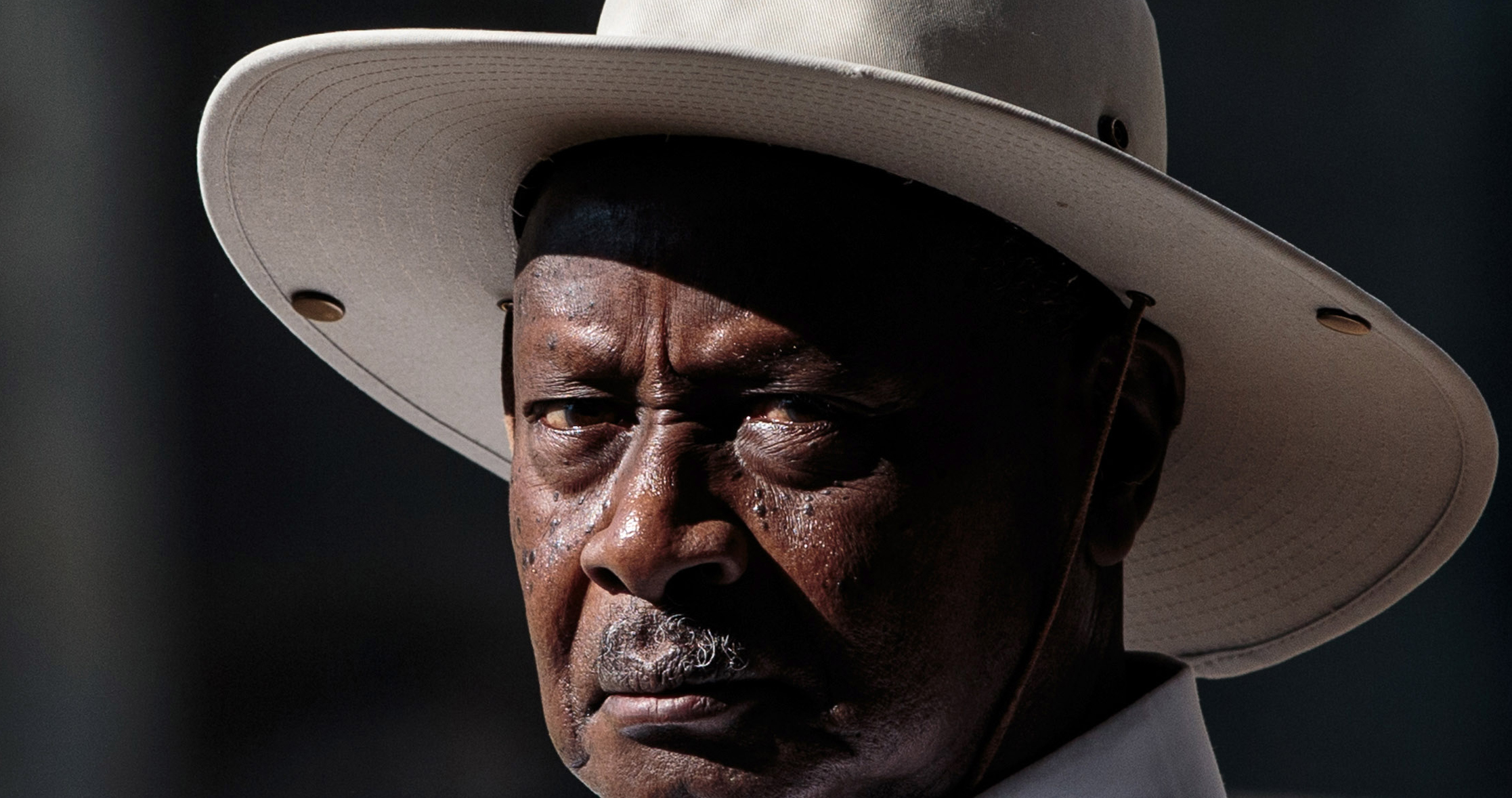
 President of Uganda Yoweri Museveni. (Photo: Jack Taylor / Getty Images)
 Museveni is expected to fend off a challenge from the popular singer Bobi Wine, but the vote will be a test of the 81-year-old leader's political strength and ability to avoid the kind of unrest that has rocked neighbours Tanzania and Kenya.
The longtime leader has campaigned on a slogan of "protecting the gains", vowing to maintain peace and lift the country into middle-income status.
Wine, a 43-year-old pop star nicknamed the "Ghetto President" for his humble origins, has promised to end what he calls Museveni's "dictatorship" and has appealed to young people angry about scarce economic opportunities. More than 70% of Uganda's population is under the age of 30.
HUNDREDS ARRESTED, AT LEAST ONE KILLED
Security forces have repeatedly opened fire at Wine's campaign events, killing at least one person, and have arrested hundreds of his supporters. Museveni's government has defended the security forces' actions as a justified response to what it called lawless conduct by opposition supporters.
The military has deployed heavily on the streets of the capital Kampala and authorities cut internet access and limited mobile access across the country on Tuesday to curb what they called "misinformation" about the vote.
The U.N. Human Rights Office said last week that the elections were taking place amid "widespread repression and intimidation".
Besides Wine, six other opposition candidates are challenging Museveni - Africa's third-longest-ruling head of state. Voters will also choose more than 500 members of parliament. Polls are due to close at 4 p.m. (1300 GMT) with results expected to be announced within 48 hours, i.e. by Saturday afternoon.
MUSEVENI IS A STRATEGIC PARTNER OF THE WEST
Museveni came to power at the head of a rebellion in 1986. He has changed the constitution twice to remove age and term limits, and his dominance of Ugandan institutions means there is little prospect of an election upset, political analysts say.
As president, he has positioned Uganda as a strategic partner of Western nations, sending troops to regional hotspots like Somalia and taking millions of refugees.
Economic growth, traditionally reliant on agriculture and tourism, is expected to surge into double digits when crude oil production from fields run by France's TotalEnergies TTEF.PA and China's CNOOC 600938.SS begins later this year.
Museveni has faced criticism for alleged human rights abuses and unfair elections, charges his government has always denied.
The United States denounced his last election victory in 2021 - in which he defeated Wine with 58% of the vote - as neither free nor fair. Security forces killed more than 50 opposition supporters in the lead-up to that vote.
Similar criticism from President Donald Trump's administration is unlikely this time after U.S. diplomats were instructed in July not to comment on the integrity of foreign elections.
PRESIDENTIAL SUCCESSION IN FOCUS
Museveni is widely believed to favour his son, military chief Muhoozi Kainerugaba, as his successor, though the president has denied grooming him for the role.
Kainerugaba, a prolific social media presence who often posts threats of violence against opposition leaders, has openly declared his presidential ambitions, but his status as heir apparent is not universally accepted within the ruling party, analysts say.
"While bringing stability, another term for the 81-year-old President Museveni will heighten succession risks, effectively kicking the can down the road on leadership transition," said Jervin Naidoo, a political analyst at Oxford Economics.
(Editing by Aaron Ross and Philippa Fletcher)