




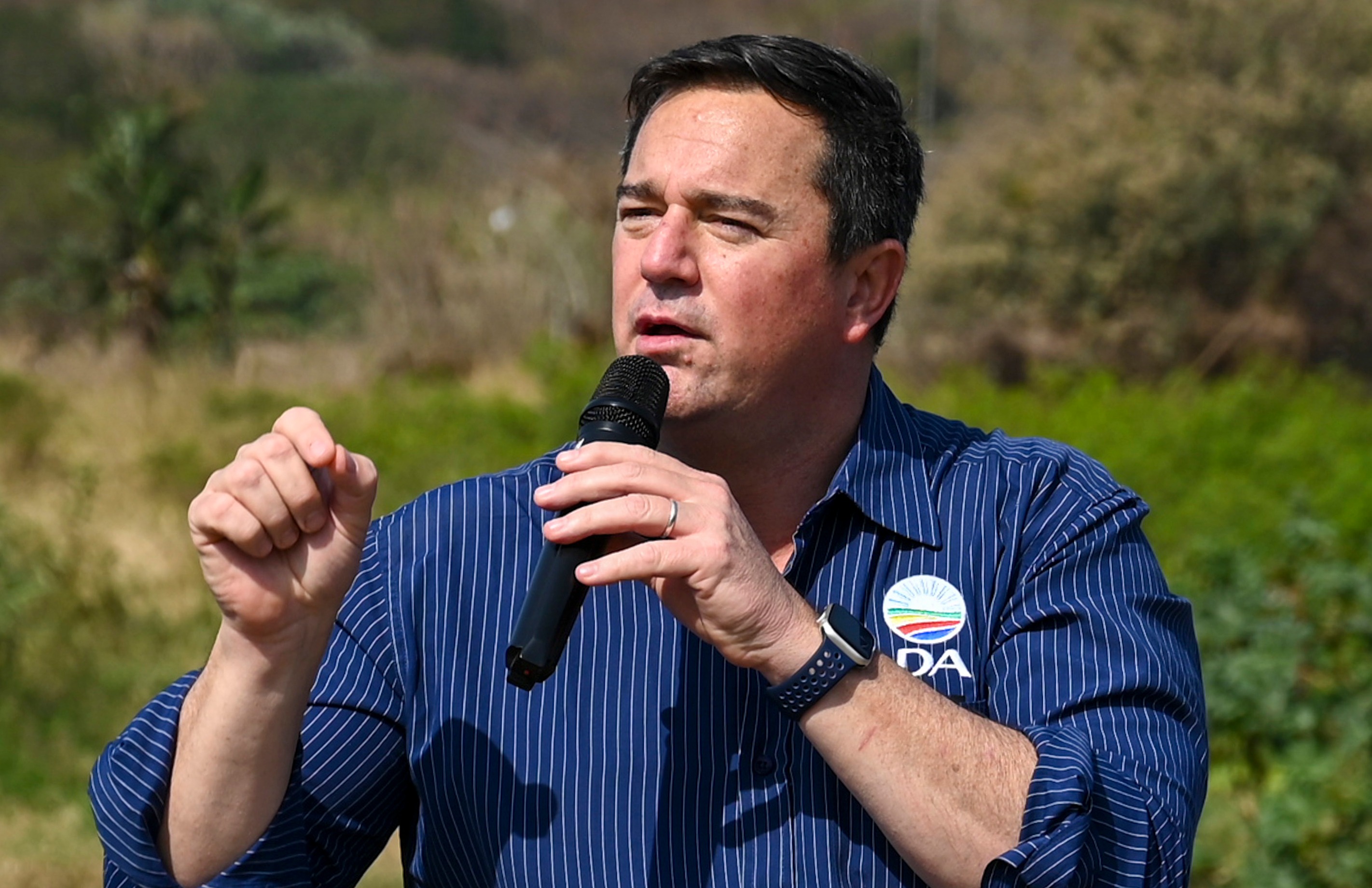
 Agriculture Minister John Steenhuisen’s plan to manage foot and mouth disease in SA has been met with scepticism. (Photo: Darren Stewart / Gallo Images)
 The Minister of Agriculture, John Steenhuisen, on Wednesday, 14 January, updated Parliament on the status of foot and mouth disease (FMD) in South Africa, and called for it to be declared a national state of disaster.
He outlined the strategy and timelines to vaccinate the national herd to achieve FMD-free status. This includes targeted vaccination with imported and local vaccines, enhanced surveillance and an urgent legislative review.
“This is a clear roadmap for the protection of our national livestock herd and the restoration of South Africa’s international standing in the agricultural sector. Since losing our FMD-free status in 2019, our farmers have faced unprecedented challenges. I have received many pleas for help, from commercial to communal farmers, who have borne the heavy burden of the recent FMD outbreaks in the country,” he said.
Addressing the farmers, he said, “We understand the financial and emotional toll that the outbreaks have had on your families and your livelihoods. We remain deeply sympathetic to the hardships you have endured; however, I want to assure you today that we have a plan that is both realistically achievable and technically sound. I must be frank with the nation: achieving FMD-free status is a monumental task that will not happen overnight.”
The strategy will be implemented over 10 years, beginning with stabilisation and consolidation, before moving toward the eventual withdrawal of vaccination and final recognition of national freedom through vaccination by the World Organisation for Animal Health.
‘Drastically impacted’
Richard de Bufanos, the director of Modderfontein Dairy, lost millions of rands in revenue due to foot-and-mouth disease in mid-2025. He vaccinated his herd, which has already been reinfected.
“We were drastically impacted by the disease,” he said. “We have six dairies, and we had to watch each one get infected over a period of six weeks, and this is frustrating because this is completely preventable.”
Each dairy has about 1,000 cows, and De Bufanos said the disease had cost each dairy about R6-million.
Regarding Steenhuisen’s plan, he said: “I don’t know enough about the state of disaster. But for me, that would have been more effective early on when you were trying to stop [the spread of the disease].
“If you want to set up roadblocks and bring in the army, etc, it would have been more helpful seven months ago when you were trying to stop the spread. That horse has bolted. It’s too late for that.
“What you’ve got to do now is you’ve got to put out the fire first, because this is a raging fire. And the state of disaster is not going to help you with that. If anything, it’s going to hurt people’s ability to follow their business practices. It’s going to create more unemployment. It’s going to put people out of business. But I don’t know enough about it.
“There are advantages to freeing up funds that can be used. There are. But if the main priority is so you can bring in the army and stuff to try and enforce rules, then not now, not the time.”
De Bufanos said the solution would be to change the policy to allow a new vaccine aimed at the strains affecting South Africa to be produced in the private sector, and to allow commercial farmers to buy it and private vets to administer it.
“This is about food security, this is about job security — in this country we can’t afford to lose more jobs, we need an immediate solution, then we can talk long-term goals,” said De Bufanos.
Free State Agriculture (FSA) has called for Steenhuisen to “use his authority to declare a disaster and to repeal the sections of the Animal Diseases Act that grant incapacitated state agencies exclusive rights to import, store and distribute vaccines, as well as to conduct the required laboratory tests.”
/file/attachments/orphans/FMD12_780218.jpg "Dairy farmers in South Africa were hard hit by the outbreak of foot and mouth disease in 2025. (Photo: Thando Nene)")
In a statement shared on 9 January 2025, the organisation said the Ministerial Task Team needed to urgently:
- Identify Pirbright vaccine pairing “to ensure we have the right vaccines for the right strains”;
- Authorise correct vaccine imports from reputable companies;
- Authorise vaccine availability to state and private veterinarians with the necessary traceability protocols; and
- Authorise open and transparent free-market vaccine pricing.
Dr Jack Armour, the commercial manager of the FSA, said: “There is currently no vaccine available for the state vets to administer in the Free State. Furthermore, of great concern, there are confirmed reports of where the BVI vaccine procured through the state from Botswana was administered, and the entire dairy herds still got full FMD six weeks later with dire consequences.”
Cooperative route
The CEO of the Red Meat Producers Organisation (RPO), Dr Frikkie Marè, addressed the concerns of frustrated producers who have called for the industry to take the Department of Agriculture to court.
“The RPO is often asked what we are doing about the situation. In short, there are basically two paths. One is to work with the government to find solutions to the state-controlled disease, and the other is to take the department to court and thereby attempt to prove that not enough is being done, thereby having the court intervene.
“We have decided to go the cooperative route. This does not mean that we do not apply pressure and do not ask the necessary questions; it means that we are willing to cooperate, and therefore, we are listened to, and we still manage to achieve successes,” said Marè.
“What is new about the situation is that we are now seeing deaths of young calves due to ‘tiger heart syndrome’, where the virus affects the heart muscle, whereas extensive cattle previously showed very mild symptoms. It is not only the calf deaths that are worrying, but lactating extensive production cows are getting severe mastitis, and adult animals are lying down because they are so crippled that they cannot stand or walk.
“We are receiving reports that dairies that were vaccinated six weeks ago have now picked up the virus and, despite vaccination, are still experiencing huge losses in revenue,” said Marè.
Updated vaccine
KZN Dairy farmer Tom Turner said he was concerned about declaring a national state of disaster because of the potential ways it could be executed. He said securing a 12-month updated vaccine and allowing farmers to buy it themselves was the solution.
“I’ve vaccinated my cows for 17 different things. The only thing I don’t vaccinate them for is foot and mouth, because I’m not allowed to. So for the commercial farmers, this would almost have had no impact,” said Turner.
“If they implement a state of disaster, are they going to allow the free movement of products? And if they do, do they require documentation, and who’s going to produce that documentation? So, those are the sort of concerns I have.
“The problem is, over the last 18 months, the government has made multiple promises, there’s a long string of broken promises .... delays, and this inaction has created the problem that this has become. And it’s avoidable. This is a man-made crisis,” said Turner. DM