




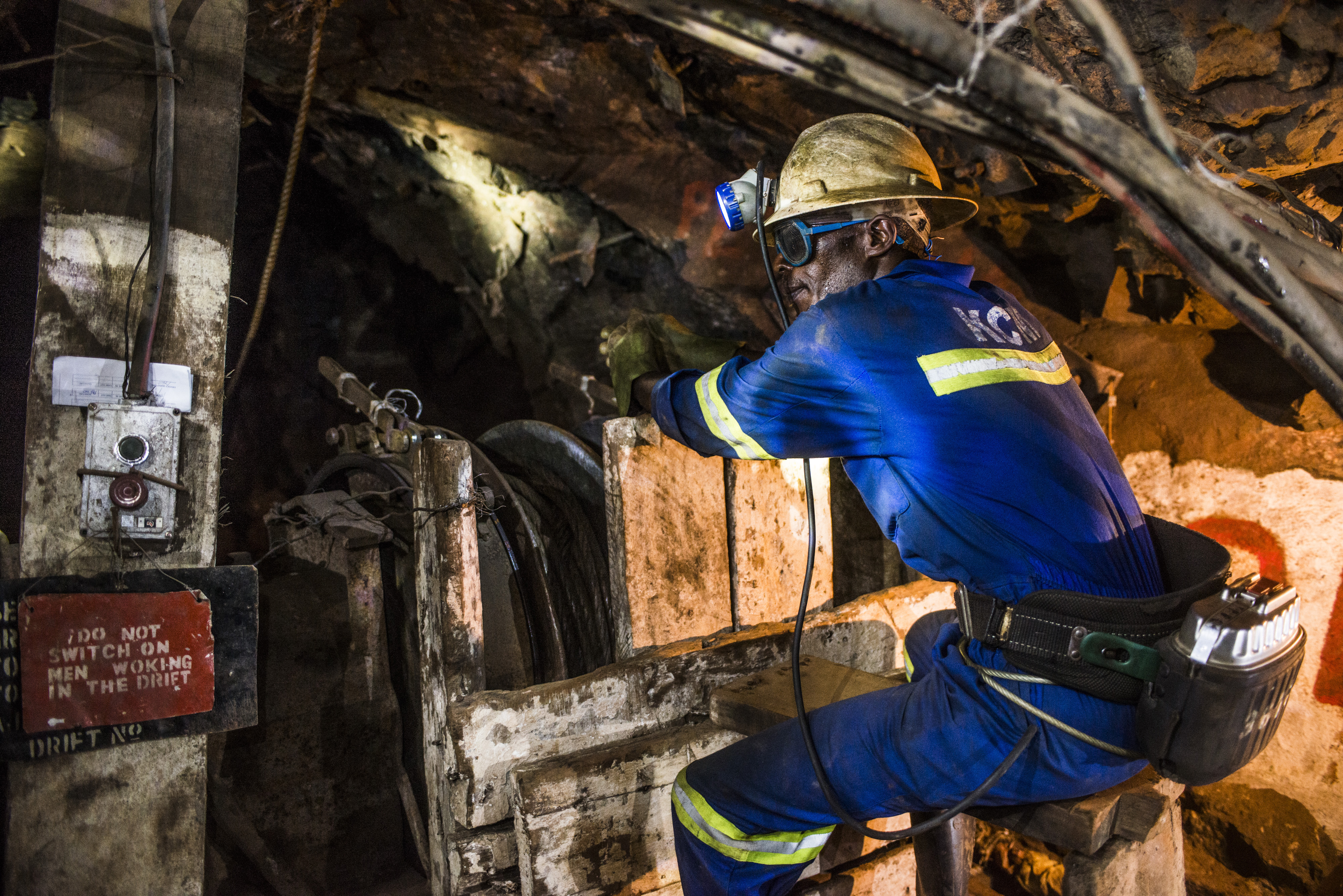
 A miner uses a machine to excavate copper ore in an underground tunnel at the 296m level at the Nchanga copper mine in Chingola, Zambia. (Photographer: Waldo Swiegers / Bloomberg via Getty Images)
 Driven in part by new sources of demand – notably the surging energy needs of AI – S&P Global warns in a new report that looming copper shortages could undermine electrification, the renewable energy drive and the global economy, a state of affairs that poses a “systemic risk for global industries, technological advancement and economic growth”.
/file/attachments/orphans/unnamed-14_718235.jpg "(Graphic generated by ChatGPT)")
Mining is the “keystone industry” that props up the arch of the global economy – almost every good and service is enabled by mining, and mining itself is not possible without copper – the red metal is the “keystone commodity.”
Read more: How mining became the planet’s unlikely saviour
The report – Copper in the Age of AI: The Challenges of Electrification – projects that annual copper demand will soar 50% from current levels by 2040 to 42 million metric tonnes as the pace of electrification accelerates to meet vectors of demand, old and new.
But its projections for supply underline a darkening disconnect, with production seen peaking at 33 million metric tonnes by 2030.
Even with an expected over-doubling of supplies of recycled copper scrap over that timeline to 10 million tonnes, it all adds up to a yawning chasm with an expected shortfall of 10 million tonnes, or around 25% of anticipated demand.
What this means
Copper is the enabler of the global economy, and demand will outrun supply unless there is major adjustment across the copper supply system.
Processing, for example, is heavily concentrated in China and the report calls for multilateral cooperation and more regional diversification. It also calls for faster permitting for new mines and a “time clock on litigation’ on this front.
This does not mean the sector can just go out and trash the planet. But mining is no longer the wrecking ball it once was and for wider environmental outcomes such as the green energy transition, we need more copper, faster.
“Here, in short, is the quandary: copper is the great enabler of electrification, but the accelerating pace of electrification is an increasing challenge for copper,” said Daniel Yergin, vice chairman at S&P Global who co-chaired the study.
“Economic demand, grid expansion, renewable generation, AI computation, digital industries, electric vehicles and defence are scaling all at once – and supply is not on track to keep pace. At stake is whether copper remains an enabler of progress or becomes a bottleneck to growth and innovation.”
Such shortfalls for such a critical metal will also send its price into the stratosphere, with huge implications for global supply chains and inflation.
There are many moving parts to this unfolding saga, which explains why copper is so high on the radar screens of mining boardrooms – and why so many governments have classified it as “critical”.
On the production side, the bottom line is that new economically extractable deposits are not being discovered at the pace required to meet projected demand. Even if new mother lodes are suddenly uncovered, it takes, on average, 17 years for a new copper mine to begin production from a discovery.
That means any major new copper find that comes to light this year will probably not begin extracting the stuff before 2043. And the supply of qualified geologists and mining engineers is also in decline.
“The copper sector faces a host of challenges above and below ground, ranging from declining ore grades; rising costs for energy, labour and other inputs; increasingly complex and difficult extraction conditions; environmental opposition, lengthy judicial reviews and pressures from investors and governments,” S&P notes.
While grades and production decline, demand is seen rising robustly on four broad fronts, with a potential fifth one on the horizon.
The rise of the machines
AI and data centre demand is one emerging sphere, and the other is increased defence spending in an era marked by escalating geopolitical tensions. Data centres and weapons have one big thing in common: they need copper.
/file/attachments/orphans/Screenshot-2026-01-12-101942_271938.jpg "Copper in the Age of AI: The challenges of electrification — copper demand is projected to soar 50% from current levels by 2040 to 42 million metric tonnes as the pace of electrification accelerates to meet vectors of demand, old and new. (Graph: S&P Global)")
Demand from these two sources is seen tripling by 2040, representing a combined four million metric tonnes of additional demand.
What the report refers to as “core demand” – power generation, construction, electrical appliances, shipping, aviation and much more – will remain the largest market for copper, and it is also on a rapid growth trajectory.
“In the developing world, a combination of urbanisation, rising incomes, and changing building practices means electricity use and thus more copper. One vivid example: the developing world is projected to add as many as two billion new air conditioners by 2040,” the report says.
Clean energy transition
Another copper-hungry sector that has been taking off is the clean energy transition. Electric vehicles require almost three times as much copper as a conventional car, and solar and wind also need an abundance of the metal.
“And now a possible new vector of demand is on the horizon – humanoid robots,” the report says.
“There is much variance in projections for their scale by 2040 – varying from tens of millions to hundreds of millions to a billion or more. Whatever the actual number, these humanoids will not just be wired – but heavily wired – with copper.”
The report is a sobering reminder of our dependence on copper and ultimately mining, and the clock is ticking.
“The future is not just copper-intensive, it is copper-enabled. Every new building, every line of digital code, every renewable megawatt, every new car, every advanced weapon system depends on the metal,” the report pointedly concludes. DM