




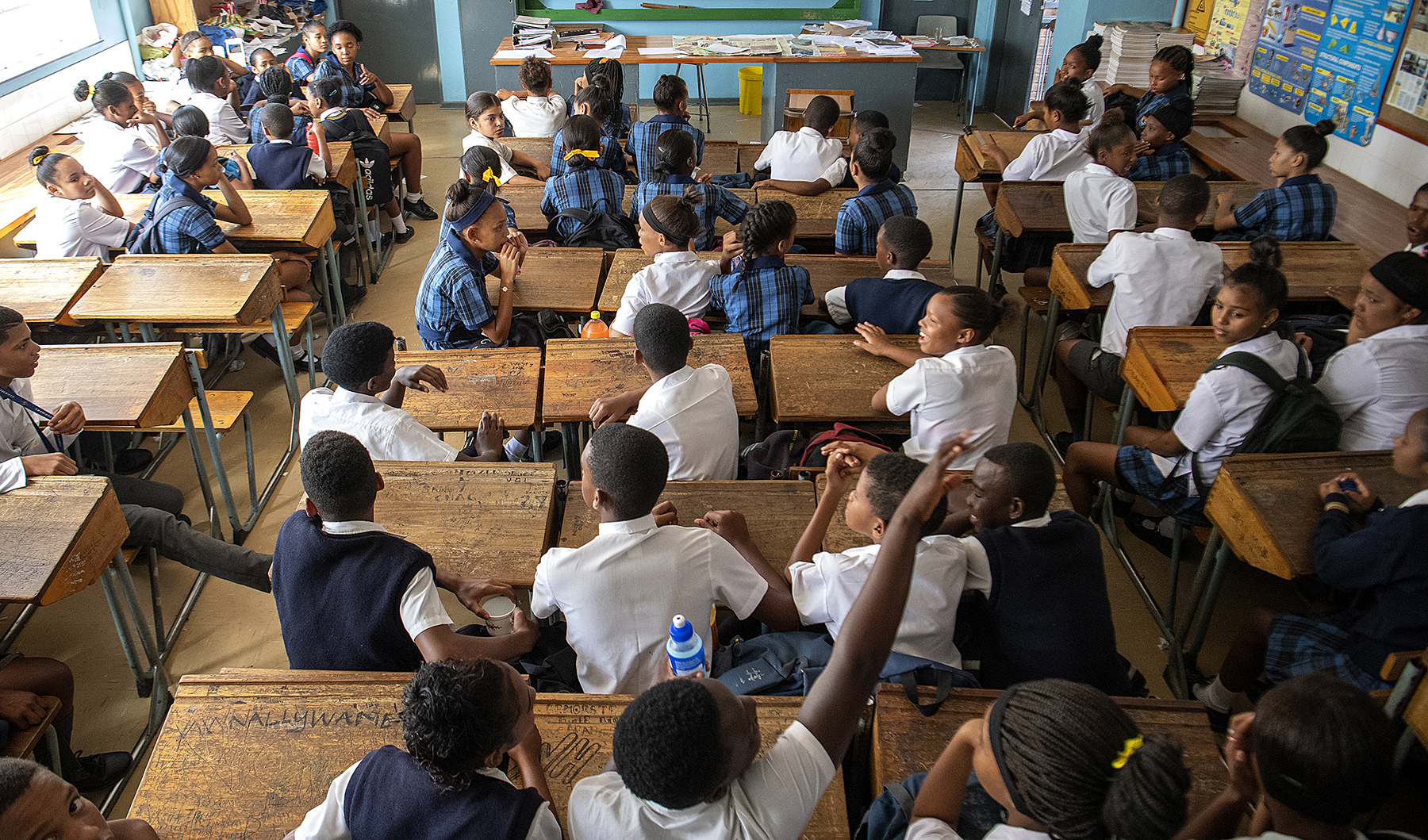
 Parents, policymakers, and civil society must act collectively to ensure that placement chaos becomes a relic of the past, not an annual headline. (Photo: Jaco Marais /Gallo Images / Die Burger / Jaco Marais)
 /file/dailymaverick/wp-content/uploads/2025/10/label-Op-Ed.jpg)
On 6 January, the Gauteng Department of Education (GDE) reported 4,858 unplaced Grade 1 and Grade 8 learners, down from a staggering 140,000 nationally in early December 2025, with Gauteng accounting for the bulk. While this marks progress, the lingering backlog exposes systemic failures in planning and infrastructure that undermine the country’s commitment to Social Development Goal 4: inclusive and equitable quality education.
Urban pressure points
Hotspots like Ekurhuleni, with 3,169 unplaced learners, reveal the strain of rapid urban migration on township schools. Parents face mounting anxiety as the academic year looms, with appeals and daily placements continuing well into January.
The GDE cites “high-pressure zones” as the root cause, but critics argue that chronic underinvestment and poor forecasting perpetuate this annual crisis. Township schools are already overcrowded and cannot absorb the influx of learners from informal settlements and new housing developments.
This is not a new phenomenon. Gauteng has faced similar placement bottlenecks for more than a decade, yet the scale of the 2026 crisis underscores how reactive measures, such as temporary classrooms, fail to address structural gaps.
The numbers behind the chaos
- Placement rate: nearly 99% of 12 million applications have been processed nationally.
- Outstanding appeals: 6,736 cases are still unresolved.
- Other provinces: no updated official figures available since December. This raises transparency concerns.
Daily placements are ongoing via www.gdeadmissions.gov.za, but delays violate timelines set by the South African Schools Act, which requires final placement before the start of the academic year.
Experts warn that late placement correlates with higher dropout rates and learning gaps, particularly for Grade 8 learners transitioning to high school. Yet, South Africa lacks longitudinal data on these outcomes. This is a glaring research gap that demands urgent attention. A systemic review of placement data could inform evidence-based reforms.
What parents can do: a survival toolkit
Day 1: engage with the school
Present proof of residence, birth certificate and previous reports. Request a written rejection from the school within 48 hours.
Days 2-7: escalate to district level
Call 0800 000 789 or WhatsApp 060 891 0361. Submit Form 2 online (priority for Ekurhuleni/Johannesburg).
Week 2+: mobilise collectively
Join #PlaceMyChild2026 on X or WhatsApp. Group submissions improve success rates by 40%.
Essential support
- Legal aid: Section27 (+27 11 356 4100, info@section27.org.za);
- Interim learning: DBE e-Portal, Siyafunda app, Khan Academy Africa;
- Local Hubs: Breadline Africa tutoring in Soweto/Johannesburg; and
- GDE info email: gdeinfo@gauteng.gov.za.
Beyond the crisis: demand real reform
Education MEC Matome Chiloane acknowledges Gauteng’s “high-pressure” zones, but piecemeal fixes won’t suffice.
Experts have called for:
- 50,000 new seats in 2027 budgets;
- Mobile classrooms for Soweto; and
- AI-driven placement systems to prevent future bottlenecks.
These reforms require political will and sustained investment. Without them, South Africa risks normalising an annual cycle of chaos that erodes public trust and deepens inequality.
Parents and advocacy groups are becoming increasingly vocal, using hashtags like #FixPlacements2026 to demand accountability. Civil society organisations argue that the crisis violates constitutional rights and perpetuates systemic exclusion. According to SECTION27, “Every year a large number of learners do not secure suitable placement in the first term of the school year and are placed much later or remain unplaced for the entire school year.”
The human cost
Behind the numbers are real stories: parents taking unpaid leave to queue at district offices, learners missing the first weeks of school, and families resorting to costly private options. For many families, delays mean children miss critical orientation weeks, creating anxiety and learning gaps that persist throughout the year. For low-income households, these delays compound existing vulnerabilities, making education a privilege rather than a guaranteed right.
The emotional toll is profound. “Every year, it feels like a lottery,” says one Johannesburg parent. “You apply early, follow the rules, and still your child has no school.”
Why this matters
- The annual school placement crisis is more than an administrative failure: it reflects deeper systemic issues in South Africa’s education landscape. Urban migration patterns, inadequate infrastructure planning, and limited transparency in provincial reporting create recurring bottlenecks that disproportionately affect vulnerable families. As an educator, I believe the solution lies in data-driven forecasting, community-based advocacy, and policy accountability. Without structural reforms, such as AI-powered placement systems and equitable budget allocations, the cycle will continue, eroding trust in public education and compromising learners’ right to quality inclusive education.
The bottom line
South Africa cannot afford another year of reactive crisis management. Education is the cornerstone of equality, yet every January exposes cracks that deepen social divides. The question is no longer whether the system is failing the citizens. The question is how long we will tolerate failure before demanding structural change. Parents, policymakers, and civil society must act collectively to ensure that placement chaos becomes a relic of the past, not an annual headline. DM
Dr Nathan Ferreira is a lecturer in the Department of Inclusive Education at the College of Education, University of South Africa. He holds a PhD, MEd, BEd (Hons) in Inclusive Education, a Higher Diploma in Education, and a BA.