




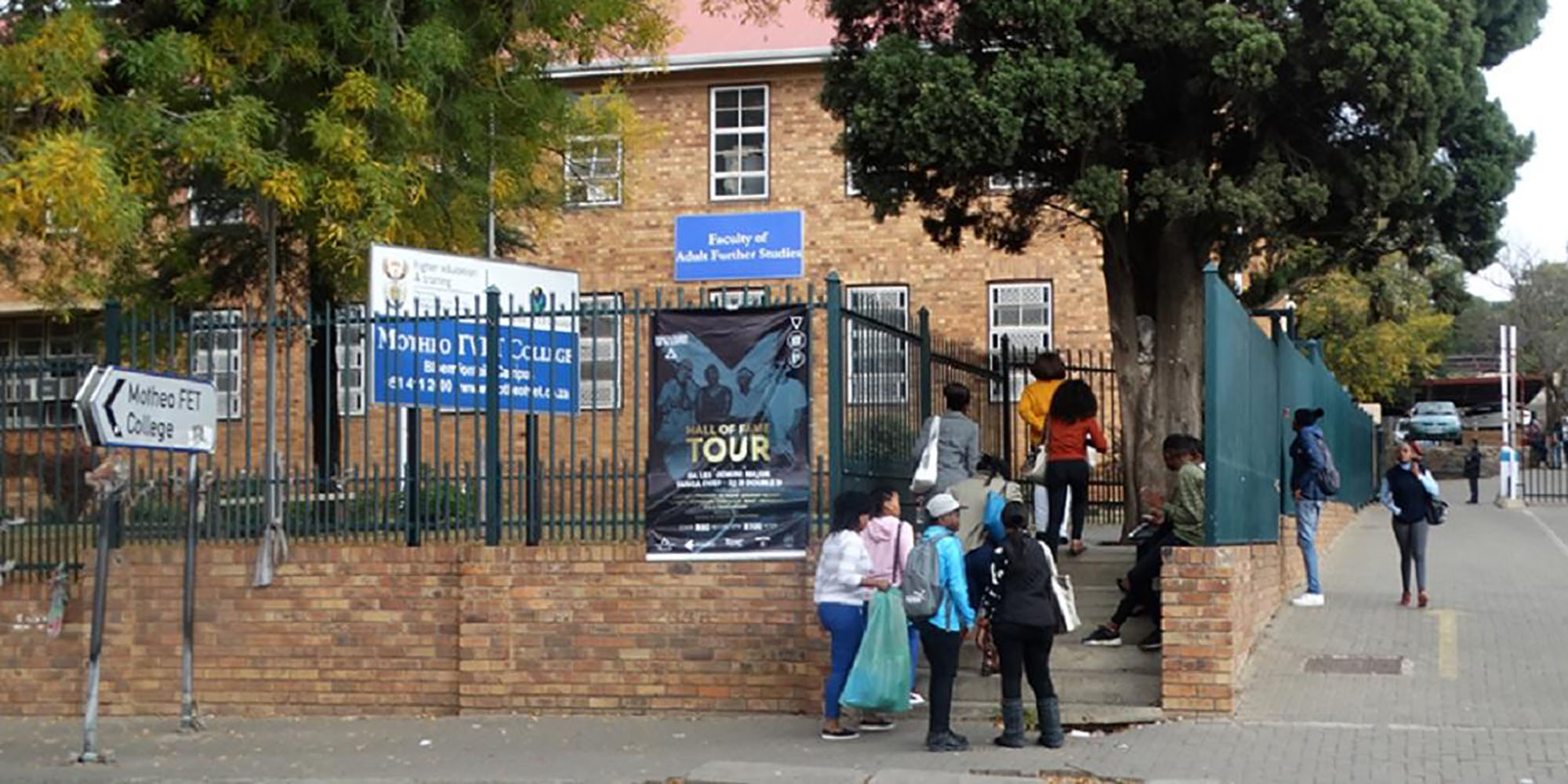
 Staffing shortages are likely to be a problem at TVET colleges in South Africa in 2026. (Photo: Supplied)
South Africa’s 50 registered public Technical and Vocational Education and Training (TVET) colleges are bracing for the return of students in the coming weeks. However, the halls may be emptier than expected, not of pupils, but of teachers. Professor Mbulungeni Madiba, Dean of Education at Stellenbosch University, warns that colleges are grappling with a severe lack of qualified staff, particularly in high-tech fields like mechatronics.
Daily Maverick spoke to Madiba, Deputy Minister of Higher Education and Training Mimmy Gondwe, and the Deputy Director-General responsible for TVET colleges, Sam Zungu, on the readiness of colleges for the 2026 academic year and plans to overcome the challenges that were faced in 2025.
Teacher shortage
According to Madiba, the shortage of TVET lecturers is driven by systemic and interconnected factors, including the strong pull of industry, where qualified artisans, engineers and IT professionals earn significantly higher salaries and enjoy greater professional prestige than in TVET teaching. He says there is a failure to retain teachers.
/file/dailymaverick/wp-content/uploads/2025/09/Professor-Mbulugeni-Madiba-Anyrec.png "Professor Mbulungeni Madiba, the Dean of Education at Stellenbosch University. (Photo: Supplied)")
“Retention is further undermined by heavy workloads, excessive administrative demands, frequent curriculum changes, poor infrastructure, outdated equipment and governance challenges that create demoralising working conditions. These challenges are compounded by slow and rigid public-sector hiring processes, uncompetitive HR practices that cannot accommodate scarcity skills and a long history of underinvestment in the TVET sector,” said Madiba.
In January 2025, the Portfolio Committee on Higher Education noted that students of Taletso TVET College in Mafikeng, North West, were struggling due to unfilled critical posts, including a permanent principal and other positions in corporate, academic and innovation services, among other things.
Daily Maverick questioned Zungu about this, and he confirmed that the acting principal, MZ Nkomo, had been permanently appointed on 1 April 2025. Other colleges advertising principal positions include the King Hintsa, Lovedale, Mthashana and Gert Sibande colleges, and “recruitment processes are under way”, said Zungu.
He added that the Department of Higher Education and Training was also offering bursaries for lecturers to upskill their qualifications in scarce skills areas.
/file/attachments/orphans/Screenshot-2025-03-20-at-120229_429644.jpg "Sam Zungu, the Deputy Director-General responsible for TVET Colleges. (Photo: https://www.ncutvet.edu.za/)")
Read more: It’s time to get vocational education less wrong in the battle against youth unemployment
Plans to improve TVETs in 2026
With the academic year set to start, Zungu says the plans for 2026 include:
- Modernising and aligning qualifications with workplace needs.
- Increasing access, funding and student success.
- Strengthening system responsiveness and partnerships.
- Positioning TVET as central to national skills and economic growth.
- Using digital content to improve access and quality.
In 2025, funding delays at the National Student Financial Aid Scheme (NSFAS) hindered students, resulting in protests that damaged campus infrastructure. In June 2025, the Democratic Alliance condemned the burning of the offices of the Northern Cape Urban TVET College after students protested due to delays in receiving their NSFAS allowances.
Zungu said that the Department of Higher Education and Training and NSFAS identified the core issues that drove the 2025 protests: administrative delays, poor communication, lack of upfront funding and accommodation payment backlogs.
“Provide funding on time and upfront, make systems transparent and trackable for students, strengthen governance, accountability and sustainability, and improve communication and responsiveness to student needs. These are all intended to reduce the likelihood of protests and destruction of property by ensuring students know when and how they will be funded so that their basic needs can be met,” said Zungu.
Meanwhile, Gondwe, who led initiatives and busted bogus colleges in 2025, said their primary focus in the TVET sector would be on strengthening governance, deepening partnerships with industry and ensuring that skills development was directly linked to employability.
/file/attachments/orphans/ED_568463_449571.jpg "Mimmy Gondwe, the Deputy Minister of Higher Education and Training. (Photo: Frennie Shivambu / Gallo Images)")
“We are prioritising demand-led skills programmes aligned with sector masterplans, expanding workplace-based learning opportunities, modernising training infrastructure and strengthening lecturer development. Equally important is improving student support systems to meaningfully improve access, progression and completion,” said Gondwe.
The Sector Education and Training Authority (Seta) plays a huge role in bridging skills gaps, boosting employment and developing sector-specific skills. It manages training funds (levies), promote internships and apprenticeships, and ensure training aligns with industry needs. According to Gondwe, the partnership of Setas with TVETs would be crucial.
“The success of the TVET system will be measured by the strength of its Seta and industry partnerships, shifting workplace learning from a peripheral activity to a well-funded and quality-assured core component of occupational training. It will be important to professionalise lecturers through industry exposure by scaling up Seta-funded lecturer workplace attachments,” said Gondwe.
TVET colleges are often seen as a “second option” rather than prominent institutions that aim to upskill learners. Madiba told Daily Maverick that TVET colleges needed to attract high-achieving students, and their graduates should have access to quality, well-paying employment opportunities.
TVET intake and student funds
During a briefing in September 2025, Department of Higher Education and Training Minister Buti Manamela said they projected 170,000 first-year spaces. NSFAS confirmed on Tuesday, 6 January 2026, that beneficiaries at TVET colleges would continue to receive their allowances directly into their personal bank accounts. Colleges were tasked with ensuring that students captured and verified their banking details accurately on the NSFAS portal. DM
Comments
Scroll down to load comments...