




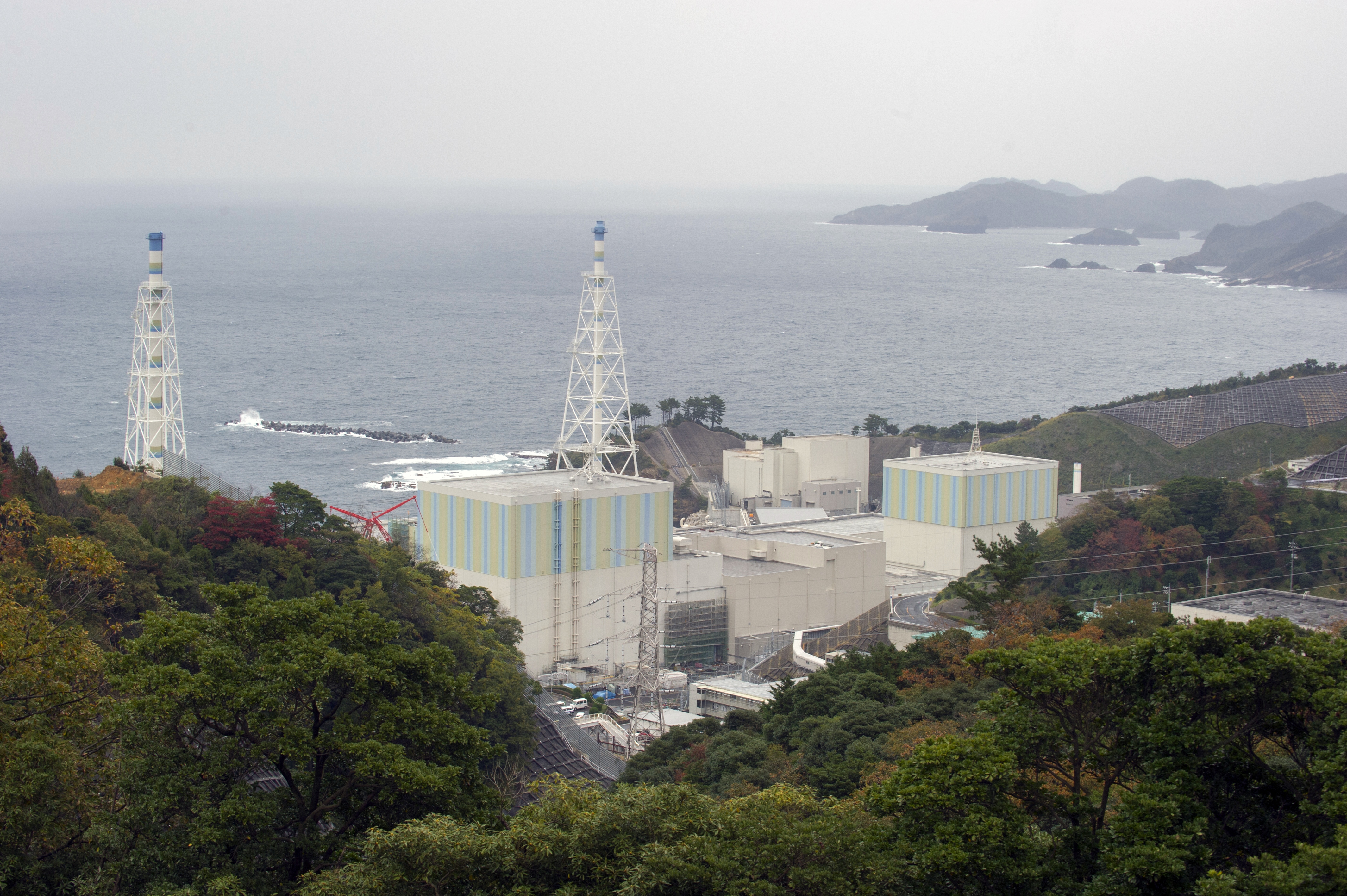
 The Shimane Nuclear Power Plant in Matsue city, Shimane prefecture, Japan, 19 November, 2017. The nuclear power plant operated by Chugoku Electric Power Company is presently out of service, but discussions are underway to restart the power plant in spring of 2018. EPA/EVERETT KENNEDY BROWN
 By Satoshi Sugiyama
The epicentre of the first earthquake was in eastern Shimane prefecture, the agency said, adding that there was no danger of a tsunami.
Chugoku Electric Power 9504.T, which runs the Shimane Nuclear Power Station about 32 km (20 miles) away, said operations were continuing as usual at its No.2 unit. Japan's Nuclear Regulation Authority said there were no irregularities following the quake.
The plant's No.2 unit restarted in December 2024 for the first time since all of Japan's nuclear power plants were shut down in the aftermath of the March 2011 disasters in Fukushima.
The earthquake had a seismic intensity of upper-5 on Japan's 1-7 scale, strong enough to make movement difficult without support.
Earthquakes are common in Japan, one of the world's most seismically active areas. Japan accounts for about one-fifth of the world's earthquakes of magnitude 6 or greater.
West Japan Railway 9021.T said it had suspended Shinkansen bullet-train operations between Shin-Osaka and Hakata following the quake.
(Reporting by Satoshi SugiyamaEditing by Chang-Ran Kim)