




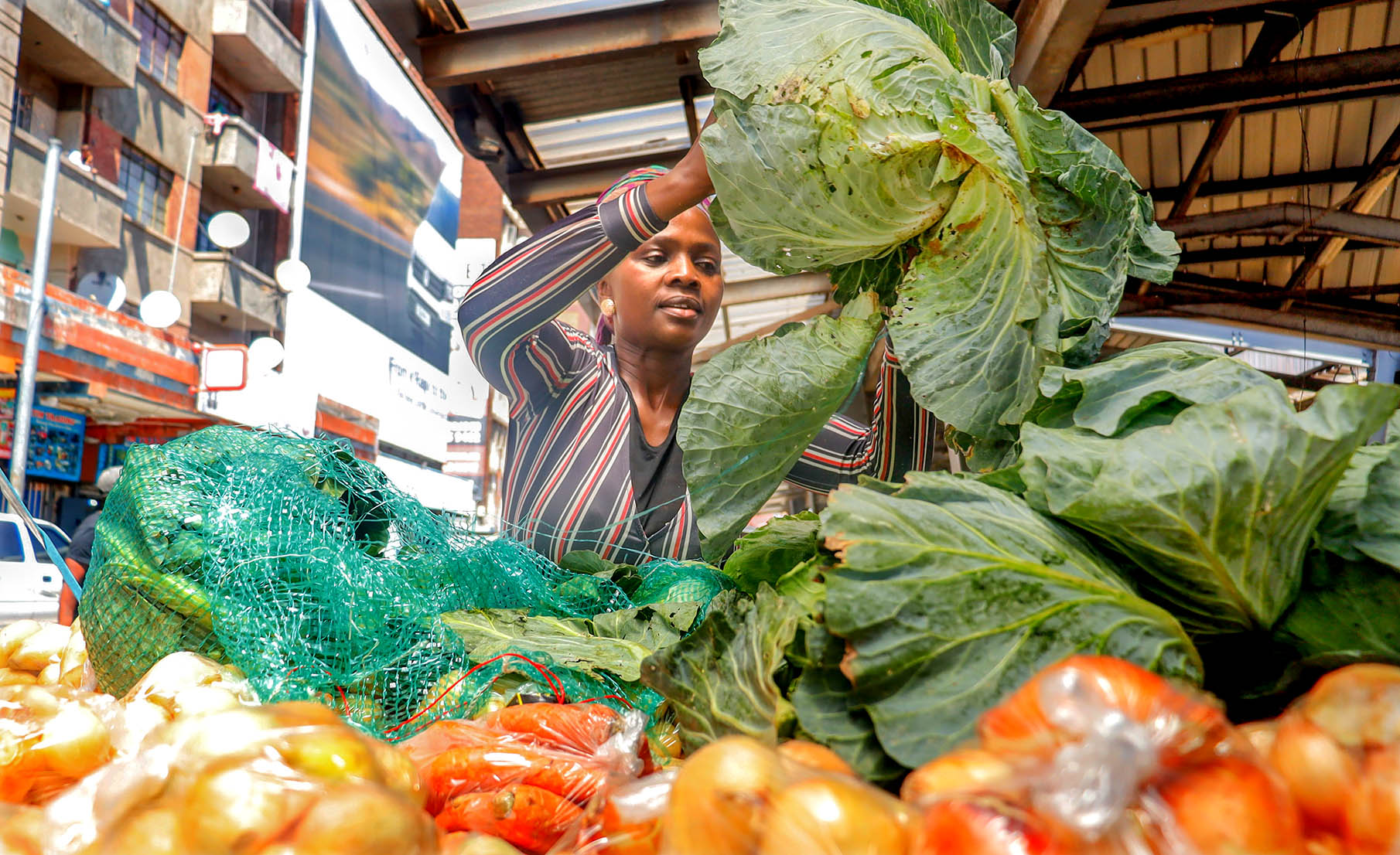
 Bheki/ Informal Traders/ City of Johannesburg
 Johannesburg’s inner city is a bustling hub of economic life – a dense, dynamic web of informal traders, adjacent businesses and other users. Informal trading remains an essential survival strategy for many households. It is also a key source of affordable goods and services.
Managing this activity, however, is not straightforward. The City authorities face legitimate pressures to maintain order, safety, hygiene and accessibility in highly contested urban spaces. At the same time, they have a mandate to support livelihoods and encourage inclusive economic participation.
Balancing these objectives is complex. But, as urban planners and researchers, we believe it’s possible and necessary. It needs to be done in a way that recognises the realities of both municipal constraints. These include budgets, conflicting political pressures and traders’ contributions. Traders generate local economic activity and provide convenient, affordable goods and services.
Johannesburg’s informal trading sector should not be viewed as a problem to eliminate. Rather, it should be managed effectively. The focus for the City should be on improving how this is done.
The City has a chequered history of managing informal traders. In October 2025, Johannesburg authorities removed informal traders from De Villiers Street in the heart of the city’s central business district. The City went on to expand the operation to other inner-city areas and townships to promote “order” and “cleanliness”.
This approach was reminiscent of the 2013 Operation Clean Sweep, which disrupted livelihoods and increased urban inequality and violence. After the events in 2025, the Gauteng High Court ruled in favour of traders who took the City to court. But the court’s ruling has not been implemented.
The City’s 2022 informal trading policy provides a roadmap for a different approach. It provides a structured framework that includes:
- Recognising informal traders as essential contributors to the urban economy; and
- Setting out clear procedures for registration, spatial planning, permit processes and trader support.
Its strength lies in offering a coherent, rights-based approach that can bring transparency and fairness to how trading spaces are allocated and managed. But its success hinges on implementation that is transparent, inclusive and responsive.
A durable solution
In our view, Johannesburg can turn contested spaces into engines of shared prosperity by:
- Investing in adequate infrastructure;
- Promoting collaboration among traders, property owners, municipal authorities and other affected stakeholders; and
- Enforcing regulations that protect livelihoods instead of punishing them.
A durable solution requires systematic reforms grounded in provisions of the City’s 2022 informal trading policy. This emphasises co-management by various stakeholders. Among them are officials from various relevant departments, municipal-owned entities and the informal traders.
But laws and regulations have to be updated.
By-laws passed in 2012 are still being used to regulate the sector. This is even though a new policy was adopted in 2022.
Updated by-laws would enable the City to reflect the policy’s developmental orientation. This includes its focus on supporting livelihoods and expanding access to jobs and entrepreneurial opportunities. It also includes creating a conducive regulatory and management environment for informal traders.
The policy adopted in 2022 contains several important provisions that support more effective management of informal trading. Key elements include:
1) Informal trading plans
A comprehensive, independently conducted census of all traders – registered and unregistered – will form the evidence base for this plan. This will enable the City to understand the full scale and distribution of informal trading.
The City must make enough suitable trading sites available. This expanded access would help accommodate more traders legally and reduce pressure on overcrowded locations. Throughout the process, the City must balance the need to demarcate trading sites with:
- The principle of minimal relocation to protect livelihoods; and
- Ensuring that pavements, transport routes and other public amenities remain accessible to all.
2) Appropriate infrastructure and services
Ensuring that informal traders have adequate services supports their livelihoods and also contributes to cleaner, safer and more attractive streets for all users. All informal trading environments in the inner city would benefit from access to better infrastructure. This includes water, electricity, street lighting, storage, improved pavements, trading shelters and ablution facilities.
3) Clear articulation of traders’ rights and responsibilities
The greatest responsibility rests with the City to transform informal trading management. But the policy also makes it clear that informal traders themselves have important responsibilities to ensure the system works effectively.
Once allocated trading sites, traders are expected to:
- Operate only within designated areas;
- Avoid restricted or prohibited spaces;
- Help to maintain order;
- Conduct their business in line with applicable regulations, policies and by-laws;
- Play an active role in maintaining the cleanliness and upkeep of their trading spaces; and
- Work collaboratively with the City, neighbouring businesses and other local stakeholders.
The plan also envisages the establishment of an independent informal trade forum, an informal trading task team and a dedicated informal trade unit. Urgent action is needed to constitute these structures.
Next steps
The City has an opportunity to shift from reactive, enforcement-driven approaches to a proactive, developmental model that values informal trading as a central part of Johannesburg’s economy and identity.
There are key next steps that need to be taken.
First, fully operationalising the commitments of the 2022 policy by updating by-laws.
Second, by completing a transparent and comprehensive census of all traders. This needs to include involving them meaningfully in decisions about management processes.
Alongside this, the City should prioritise investment in adequate infrastructure and strengthen communication and collaboration platforms. It also needs to establish the dedicated structures envisioned in the policy.
Together, these actions can build an enabling system that protects livelihoods, reduces conflict and supports a vibrant, inclusive and economically resilient inner city. DM
Mamokete Modiba is a senior researcher with the Gauteng City-Region Observatory. Claire Benit-Gbaffou is an associate professor at Aix-Marseille University, Aix-Marseille Université (AMU). Sarah Charlton
is an associate professor at the University of the Witwatersrand. Tanya Zack
Is a visiting senior lecturer at the University of the Witwatersrand.
First published in The Conversation.