




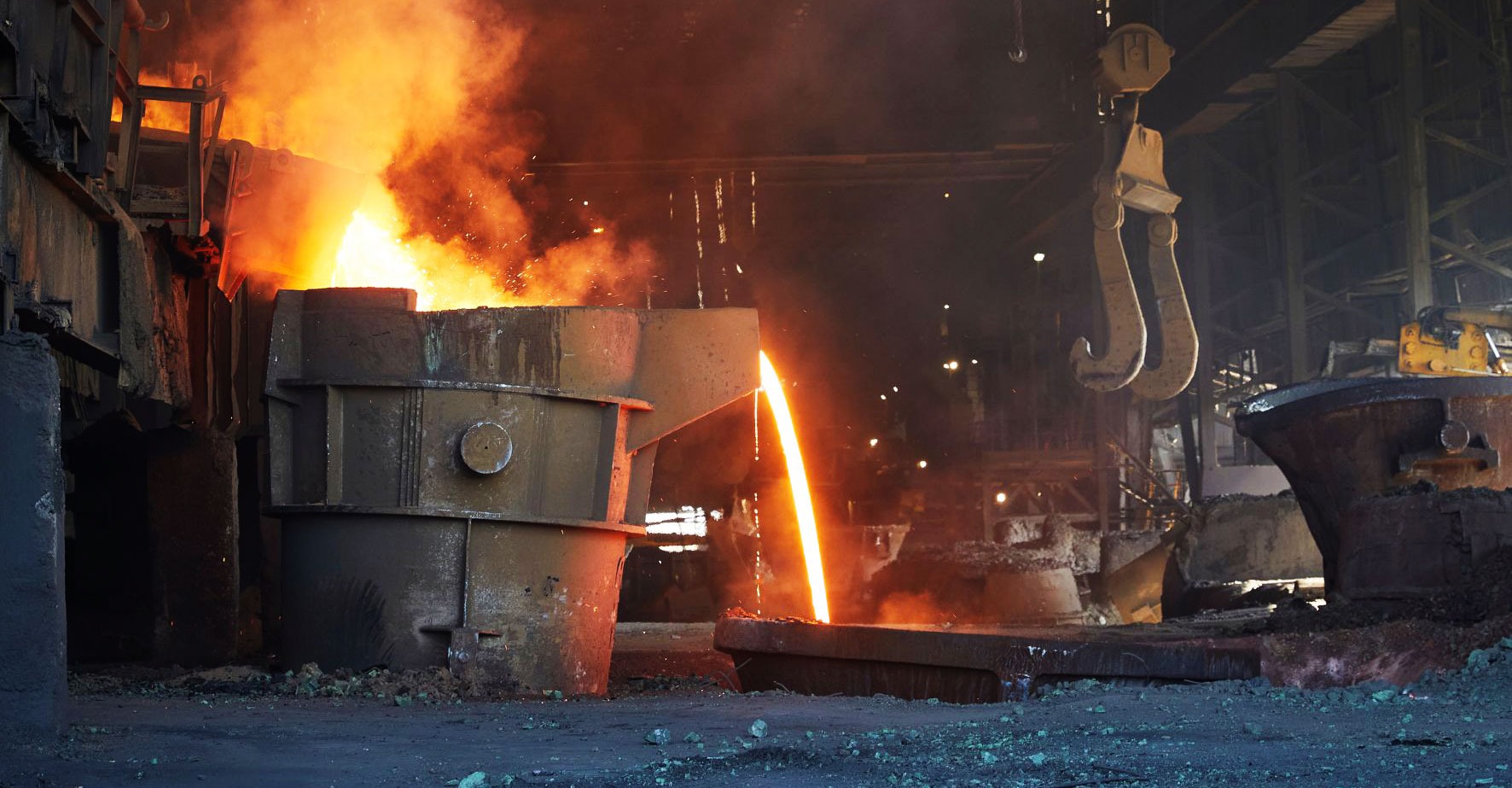
 Transalloys CEO Konstantin Sadovnik says the ferrochrome smelter cannot compete against Chinese operations that use subsidised electricity at half the cost. (Photo: Supplied)
 More than a third of all the manganese supply in 2025 was mined in South Africa. And even though production almost doubled that of the next biggest supplier, and the Kalahari Manganese Field is the largest land-based deposit of manganese ore on the planet, the local industry is in trouble.
Read more: The seemingly impossible task of competing with China
Transalloys, the country’s last remaining manganese smelter, is the poster child for the crisis and issued Section 189 notices over the festive period, placing around 600 direct jobs at risk. Company CEO Konstantin Sadovnik released a statement shared with Daily Maverick, describing the retrenchments as a financial necessity driven by energy tariffs that have rendered local beneficiation uncompetitive.
According to Sadovnik, the business can “no longer sustain operations under current conditions”, with this lack of clarity on input costs leaving them no other choice but to restructure.
The energy price trap
Electricity is the single biggest cost driver for smelting, and local producers are currently paying upwards of R2.06/kWh.
By comparison, their competitors in China and Malaysia – who are rapidly monopolising the value-added processing sector – pay between R0.50 and R0.73/kWh.
“We pay more than twice as much for electricity [as] our global competitors,” Sadovnik said, adding that at current pricing levels, competing internationally has “simply become impossible”.
/file/attachments/2986/Screenshot_30-12-2025_122821_wwwafdborg_635486_10dca43630e04b323415bf4254e65583.jpeg "Manganese production map of Africa produced in the African Development Bank intergovernmental forum sector report. https://www.afdb.org/sites/default/files/documents/publications/manganese_factsheet_copy_1.pdf")
The result is a collapse in capacity. Transalloys has been forced to run only two of its five furnaces, while Chinese processing capacity thrives on cheaper, consistent power.
A twist in the tale
There’s a bitterness in his words that seems compounded by a sense of policy exclusion. While manganese smelters face the abyss, the government and Eskom have actively intervened to throw a lifeline to the adjacent ferrochrome sector.
Earlier in December, Eskom finalised a memorandum of understanding with ferrochrome giants, including the Glencore-Merafe Chrome Venture.
This intervention includes waivers on crippling take-or-pay penalties and interim tariff adjustments currently being processed by the national energy regulator. In exchange, ferrochrome producers have paused their own retrenchments and committed to bringing furnace capacity back online.
No such deal exists for manganese. Sadovnik points out that “manganese smelting has been excluded from the broader energy discussion that ferrochrome smelters are having with the government”. Without a similar blueprint, the local manganese refining industry is effectively being allowed to die.
Mantashe’s warning
This local crisis is unfolding against a backdrop of a global market shift that South Africa is ill-equipped to navigate.
Gwede Mantashe has long critiqued the pit-to-port model, arguing that South Africa must resist being merely a quarry for the world. Yet, the numbers suggest that is exactly what we have become.
Read more: SA’s G20 drive for Africa to benefit from critical minerals must not try to compete with China
While South Africa dominates the geological extraction of the ore, China has secured a near-monopoly on the industrial conversion. China currently consumes 64% of global manganese resources (mostly for steel production) and holds between 90% and 96% of the global refining capacity for battery-grade manganese.
This leaves Mzansi in a dependency trap: we export low-value raw ore to China and import high-value finished goods, such as batteries and electric vehicles, in return.
A green ceiling
The tragedy is that the future demand for manganese is not in the traditional steel sector, where demand is projected to decline alongside Chinese steel production, but in the battery sector. Demand for high-purity manganese for EV batteries is projected to dramatically increase by 2030.
Read more: Nelson Mandela Bay vows to fast-track legal action against non-compliant manganese operators
However, capitalising on this boom requires more than just ore; it requires refining capacity that meets strict global green standards. To supply the Western EV market, smelters need low-carbon electricity.
The latest Integrated Resource Plan (IRP) 2025, which indicates a continued 58% reliance on coal, complicates this ambition. Processing manganese is highly emissive, and without a greener grid, South African green manganese will struggle to find a premium in European or US markets.
What this means for you
The retrenchment of 600 workers at Transalloys threatens roughly 7,000 economic dependents in an already struggling province.
Because South Africa exports raw ore and imports finished goods, the local economy loses out on the high-value wealth creation of the battery boom. This trade imbalance weakens the rand and keeps hi-tech goods (like EVs) expensive for local consumers.
The Transalloys case proves that high electricity tariffs are actively forcing factories to close. Until the grid is fixed and prices stabilise, South Africa will struggle to grow a manufacturing base that creates sustainable jobs.
A crisis of the commons
As global capital moves to reshore supply chains and bypass Chinese dominance, South Africa should be the logical alternative. But with logistics costs inflated by a 30%-50% road tax due to Transnet failures, and electricity costs double the global average, the window of opportunity is closing fast.
Read more: Creecy bets big on private trains to get rail freight back on track
For the 600 workers at Transalloys, the macroeconomic theory matters less than the immediate reality: unless the government expands its energy intervention beyond ferrochrome, the lights at South Africa’s last manganese smelter may soon go out for good. DM