




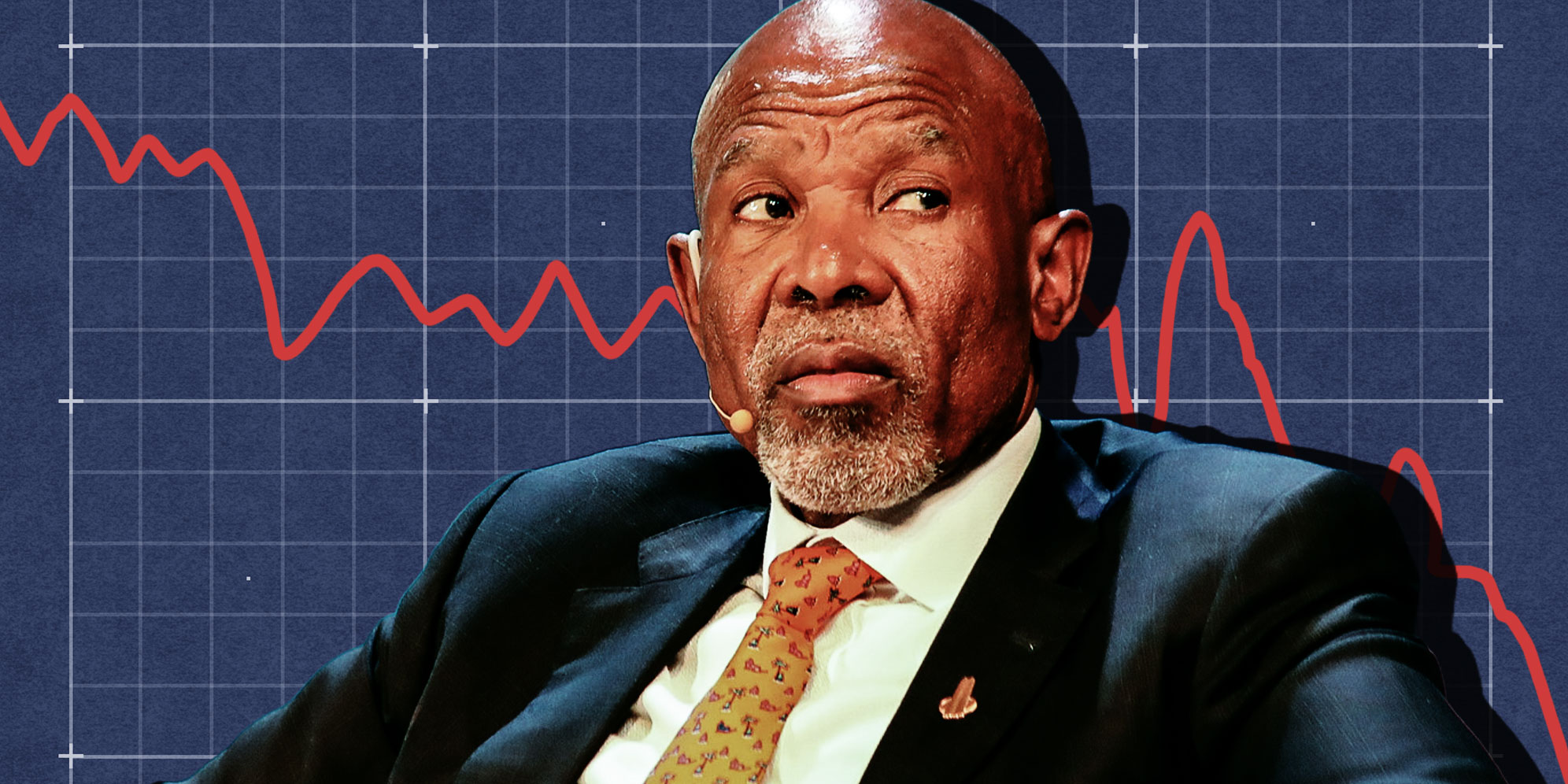
 Illustrative Image: Lesetja Kganyago (SA Reserve Bank Governor) during a conversation session with the South African Reserve Bank (SARB) at Soweto Theatre on July 04, 2023 in Soweto, South Africa. Attendees will get to understand the functions of the SARB. (Photo: Gallo Images / Fani Mahuntsi) | Graph. (Image: Freepik)
 In January, Eskom marked a turning point when we reached the first 300 days that had been consecutively free of “load shedding”. For a country traumatised by the sound of a kettle dying mid-boil, it was more than a milestone. It was a baseline reset that made so much more possible: longer, uninterrupted trading hours, significantly lower diesel bills, fewer “sorry for the delay” emails, and a tangible proof-point that reform can show up in your daily life, not just in policy PDFs.
Read more: Eskom marks 300 days without load shedding, for the first time since 2018
In a first for the country as we settled into GNU leadership, the National Budget turned out to be a rollicking fiasco. The Budget that wasn’t saw Business Maverick journalists traipsing to the Parliament lock-up for media not once, not twice but three times this year. After a failed attempt to push the Budget through in February, there was a second attempt in March and then Finance Minister Enoch Godongwana finally got it right in May.
The big sticking point was an announced 1% increase in VAT, to which all the political parties in the GNU had apparently not agreed.
Read more: Rand and bond markets have not melted down over the non-Budget fiasco — yet
Godongwana and National Treasury went back to the drawing board and came back with a second iteration a few weeks later in March. This year’s impasse added new layers of complexity; a suspended VAT hike, a looming R28-billion shortfall and a 30-day deadline to find consensus. The new proposal was a staggered VAT increase – 0.5% more this year and another 0.5% next year.
Read more: The Budget brouhaha and you — wallet pressure, service strain and the price of political paralysis
While we were still reeling from two Budget attempts, US President Donald Trump kicked everything into high gear in early April when he announced sweeping US tariffs for the rest of the globe at dizzying levels.
We happened to be up late that night and Daily Maverick was early off the mark with an article online outlining the newly announced tariffs.
Read more: Trump announces reciprocal tariffs – 30% for South Africa
Godongwana finally achieved lift-off when he successfully tabled the Budget in a third attempt in May, having abandoned the proposed VAT increase – it did mean that R68-billion in provisional spending was cut, and personal tax brackets were frozen to harvest R49.4-billion through fiscal drag.
Read more: ‘We tread water for another year’ — this fiscal offering is a stopgap, not a solution
In August, we brought you a sobering ground-level dashboard light: small, medium and micro enterprises (SMMEs), which could also be viewed as the economy’s shock absorbers, were taking body blows from costs, weak demand and tight credit.
Kara le Roux unpacked it all in the August article: Most of SA’s small businesses are in distress as economic pressures mount.
It was part of our SME focus series, where we took a closer look at the SME sector, bringing you articles that highlighted issues and more than a few inspiring good-news stories.
Read more: SMME Focus: Banks’ agripreneur programmes boost jobs from seed to shelf
Read more: SMME Focus: Why Shoprite is betting big on small business
Read more: SMME Focus: How SA banks are rethinking SMME finance in a cash-first economy
September brought with it the promise of 3% inflation and Ed Stoddard brought it home with his analysis that made monetary policy human: a lower target sounded like central bank jargon until he translated it into bond yields, mortgage pain, and whether households get breathing room.
Read more: The stars are lining up for a 3% inflation target — and lower interest rates
As if the year had not been eventful enough, South Africa went on to host the G20 in November. Against all attempts from the US to paint a negative picture of our country, including a tantrum by Trump and his refusal to attend, South Africa rose against the odds to successfully host the international series of meetings that was the Group of 20.
Read more: After the Bell: G20 highlights — how South Africa put its best foot forward
October heralded the moment we finally got off the Financial Action Task Force grey list in record time.
Read more: South Africa scrubs off FATF greylisting and reclaims financial compliance mojo
In November, we had an important adult-supervision-returned moment for the fiscus. Ed Stoddard explained how ratings upgrades matter because they change the price of money, and the price of money changes everything: debt-service costs, investor appetite, and how much room the state has to fix what’s broken. In 2025’s narrative arc, South Africa’s first credit ratings upgrade in two decades was a signal that the reform story is starting to compound.
Read more: Eskom lights the way to SA’s first credit ratings upgrade in 20 years
In a brilliant end to what was a roller coaster year in some of the best ways, Reserve Bank governor Lesetja Kganyago and Finance Minister Godongwana brought it all home with a reduction of the inflation target to 3%, with a tolerance band of one percentage point.
Read more: SA shifts inflation target in bold move towards economic stability and growth
It was the best of times, it was the worst of times. We look forward to bringing you more insightful business content in 2026. DM