




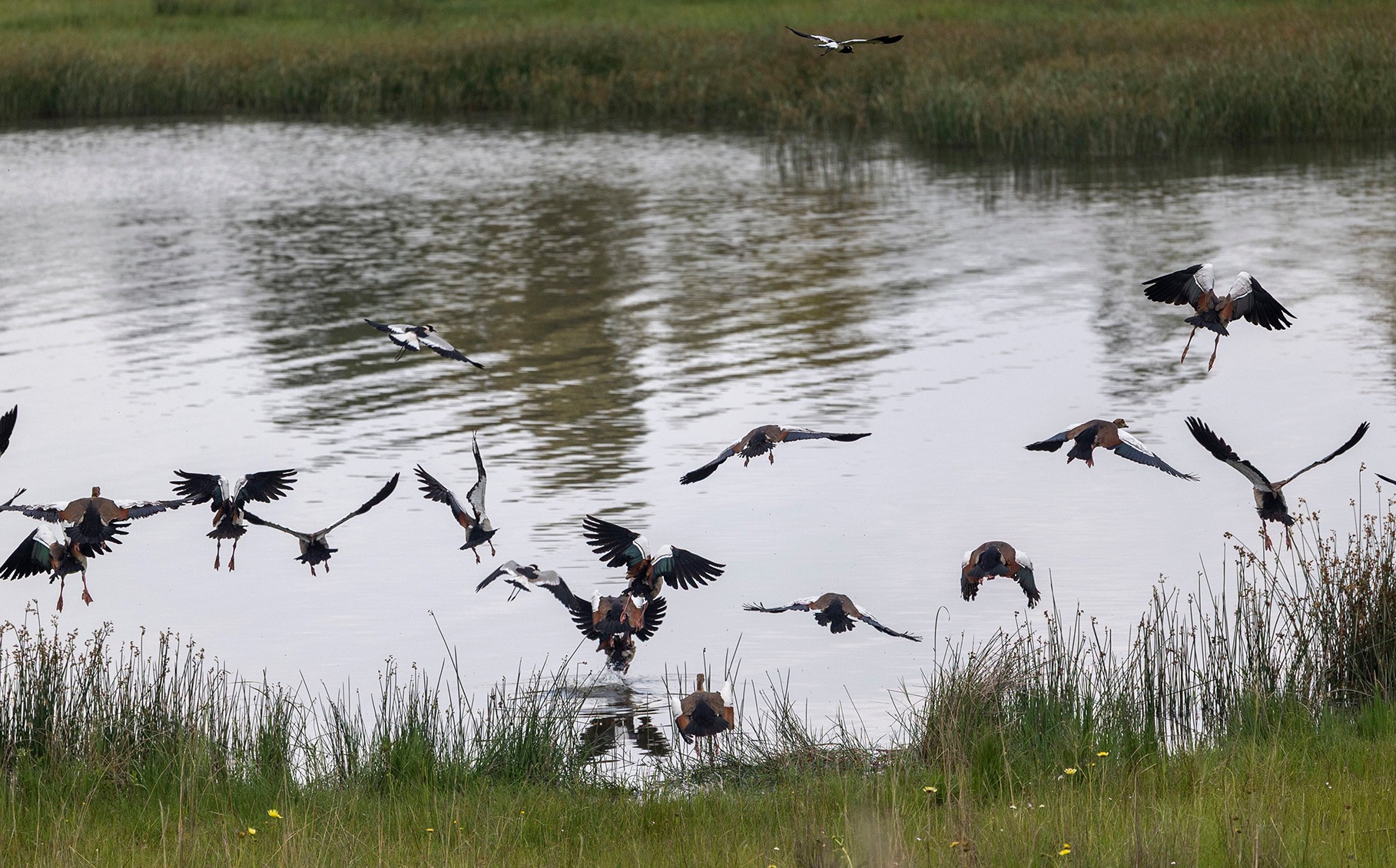
 The Olifantsfontein wetland next to Prime View Adventure & Leisure, where natural spring systems remain largely intact, on 16 December 2025. (Photo: Gallo Images / Alet Pretorius)
 The rapid expansion of informal housing around Kaalfontein, a vital natural spring on the Witwatersrand and a key source of the Hennops River, highlights a growing urban dilemma: how to provide safe, well-located low-cost housing close to places of work without destroying fragile natural systems.
/file/attachments/orphans/ED_591267_654172.jpg "Informal housing lines the banks of the Kaalspruit in Kaalfontein, where expanding settlement has encroached on the wetland and pushed homes into flood-prone areas. (Photo: Gallo Images / Alet Pretorius)")
As housing demand has intensified, construction rubble, waste and infilling have been used to raise wetland ground so homes can be built closer to the stream. This has reduced what was once an extensive peat wetland to a narrow, degraded channel, with settlements pushed into flood-prone areas where erosion and flooding risks are highest.
/file/attachments/orphans/ED_591285_287942.jpg "Building rubble and construction waste dumped into the Kaalfontein wetland are used to raise the ground level, allowing informal homes to be built closer to the Kaalspruit stream, further degrading the wetland system. (Photo: Gallo Images / Alet Pretorius)")
/file/attachments/orphans/ED_591273_887056.jpg "A boy crosses a small bridge over the Kaalspruit, where plastic, household rubbish and sewage accumulate due to a lack of formal waste and sanitation services in the surrounding informal settlement. (Photo: Gallo Images / Alet Pretorius)")
The Kaalspruit, fed by the spring, is now among the most polluted rivers in the country. Plastic, sewage and household waste flow downstream into the already stressed Hartbeespoort Dam. With little access to formal municipal services, wastewater often drains directly into the stream, exposing residents to serious health risks and accelerating environmental damage. Unmanaged runoff and erosion further degrade water quality and biodiversity.
/file/attachments/orphans/ED_591264_259833.jpg "Residents sort through waste for recycling near the Kaalspruit, as unmanaged dumping and informal waste recovery contribute to pollution entering the wetland and stream. (Photo: Gallo Images / Alet Pretorius)")
/file/attachments/orphans/ED_591266_822946.jpg "Polluted water flows through the Kaalspruit as household waste, plastic and sewage are carried downstream toward the Hennops River system and Hartbeespoort Dam. (Photo: Gallo Images / Alet Pretorius)")
Environmental groups, including Fresh.ngo (Fountain Rivers Earth Sanctuary Hennops) and Envirocare in Tembisa, have carried out clean-ups, tree planting, installing litter traps and reported illegal dumping for years. Despite directives issued since 2018, the Gauteng Department of Agriculture, Rural Development and Environment confirmed that illegal dumping and infilling have continued, leading to the City of Johannesburg being referred for criminal investigation in 2022.
/file/attachments/orphans/ED_591281_474106.jpg "The Olifantsfontein wetland next to Prime View Adventure & Leisure, where natural spring systems remain largely intact, on 16 December 2025. (Photo: Gallo Images / Alet Pretorius)")
Just a short distance away, a contrasting wetland at the source of the Olifantsfontein stream remains largely intact. Clean water, functioning reed beds and safe public use show what is possible when natural systems are protected.
/file/attachments/orphans/ED_591279_610167.jpg "The Olifantsfontein wetland next to Prime View Adventure & Leisure. (Photo: Gallo Images / Alet Pretorius)")
Kaalfontein’s decline underscores the urgent need for urban planning that delivers dignified, well-located housing while safeguarding wetlands that provide ecological, health and community benefits. DM