




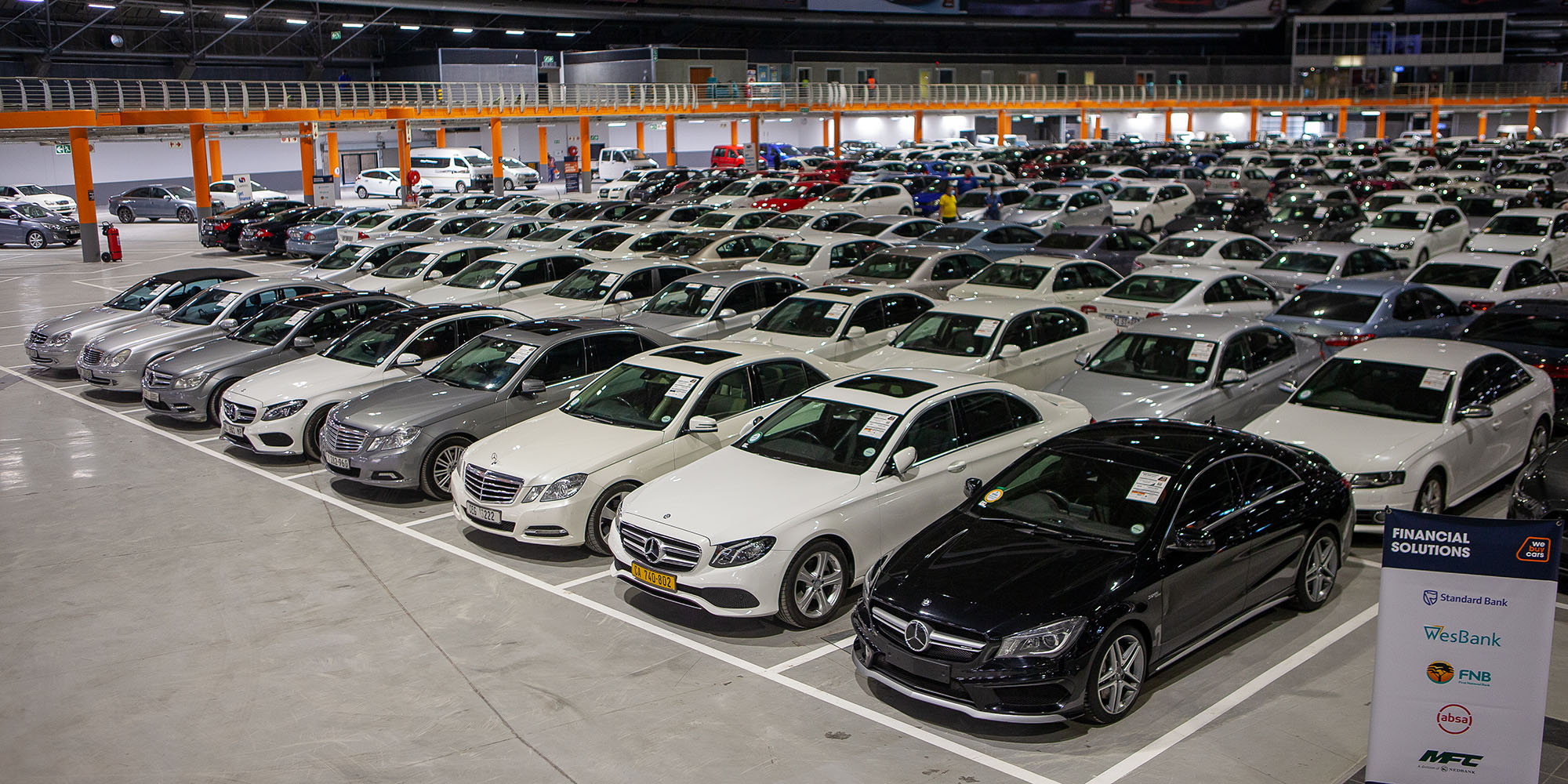
 WeBuyCars car lot on 15 December 2021 in Johannesburg, South Africa. (Photo: Gallo Images / Papi Morake)
 South Africa’s automotive sector is experiencing a resurgence, the likes of which has not been seen in over a decade.
Sales of new passenger car sales experienced notable growth in the third quarter of this year, according to the National Association of Automobile Manufacturers of South Africa (Naamsa). This is reflected in the third edition of TransUnion’s Mobility Insight Report, which paints a picture of a robust turnaround in the sector. Providing a quarterly perspective on South Africa’s automotive landscape, the credit reporting agency found that 111,697 passenger cars were sold in the quarter – the highest quarterly total in more than 11 years.
Year-on-year growth hit the accelerator: up from 14.3% in the last quarter of 2024 to 23.4% in the third quarter of this year. In volume terms, quarterly sales climbed from 94,412 in the second quarter to 111,697 in the third quarter. That’s 17,285 more cars sold in just three months.
This growth is owing to a range of factors. First, the economy showed signs of recovery this year, with GDP growth rising from 0.1% in the first quarter to 0.8% in Q2 – the strongest quarterly performance in two years. Second, the repo rate cut to 6.75% in November 2025 and record-low new-vehicle inflation lowered the entry barriers to buying a new car significantly.
/file/attachments/2986/Gemini_Generated_Image_x22a82x22a82x22a_185285_52a9b4c410c03a2b1d41c3947a291e7e.png)
South Africa’s car sales hit an 11-year peak in Q3 2025 with a total of 111,697 new passenger vehicles sold. (Source: TransUnion, graphic generated using Nano Banana Pro).
This supportive macroeconomic environment resulted in interesting activity across the automotive industry, according to Ayesha Hatea, director of research and consulting at TransUnion.
“As the interest rate eases we find that consumers feel more confident, especially when it comes to these big purchases such as vehicles,” Hatea said. “The other thing that we see is from a vehicle price inflation perspective, the price inflation for vehicles is sitting at 1.5%, which is the lowest inflation rate we’ve had in years.”
New vs used market
According to the report, new-vehicle demand rebounded with registrations up 13.7% YoY, while used-vehicle demand slipped 0.5%.
Hatea noted that consumers also receive better finance terms when purchasing new vehicles, adding to the affordability factor.
“If you’re financing a new vehicle versus a used vehicle, from a financing house perspective, they do see a new vehicle as lower risk so you are able to get a longer term,” Hatea said. “You’re also able to get a bigger balloon payment on a new car than on a used car.”
This is, however, at the discretion of each consumer, as total cost of ownership becomes more expensive with larger balloon payments, Hatea said.
But the ultimate telltale sign of a shift is the used-to-new vehicle ratio – 3.2, down from a peak 3.8 last year. This indicates that for many consumers the pendulum has swung back in favour of purchasing a new car.
A supportive macroeconomic environment has allowed more South Africans to buy new cars this year, data shows. (Graph: TransUnion)
This presents an interesting dynamic between new- and used-car sales, and is also a positive factor in terms of understanding what the entry points into the market are, Hatea said.
The third-quarter of this year saw the number of new-vehicle asset finance loans rise to 139,000, the highest levels seen over the past five years, according to the latest Eighty20 Credit Stress Report.
Chinese brands on the rise
What’s also driving this shift in the market is affordability, spearheaded largely by Chinese brands’ steady growth since 2021, taking more than 15% of the market share. Established brands, however, gained 1.6 percentage points in Q3 to 53.1%, halting a steady decline.
“They’re coming at very strong, affordable price points for our consumers, and that is contributing to the actual sales that we see in the market,” Hatea said of the Chinese brands.
Among the fastest climbers of the lot are individual brands such as JAC Motors (+67%), GWM (+54%) and Chery (+35%). These Chinese brands were three of the top five fastest-growing brands in Q3 2025.
 The figures show Chinese brands are gaining share, as they expanded at close to nine times the market average. (Graph: TransUnion)
Generational divide
While the market experiences overall growth, generational purchase intent is divided. The report reveals that Gen Z (21%) and millennials (19%) show the highest likelihood of purchasing a vehicle, outpacing more price-sensitive groups such as Gen X and Baby Boomers.
Also along the generational divide is vehicle preference. The report shows that internal combustion engine (ICE) vehicles remain the most popular overall; they are also the clear preference for the older folk. Hybrid electric vehicles (HEV) showed the largest jump in interest overall.
But the consideration for an electrified alternative is highest among Gen Z – further driving home the generational divide that might dictate a future direction for the industry.
Hatea noted, however, that it still comes down to demand, affordability and consumer preference, which is cyclical, at the end of the day. But adoption of electrical or hybrid alternatives in the country is still relatively slow.
“The other thing that might slow down electrical vehicle adoption is [what] we call range anxiety,” Hatea said. “When you jump into your car and you start driving, will you have a charging point at your end point? Or will you have a charging point on your way? How far would you actually be able to go before you have to worry?”
/file/attachments/2986/gencarpreferences_331765_eb2118f9c4205b2def05d7348b3581f6.jpg)
The report shows a divide in vehicle preference among different generations. (Source: TransUnion)
But the boom in car sales in the country is not necessarily temporary, Hatea said.
“I also think a lot of people almost took a break from the market in the last years post-Covid, and they were able to work from home, so the necessity of having a vehicle wasn’t that great,” Hatea said. “And now we see a lot more companies changing their work from home policies, going back into the office.”
This means that getting an affordable, value-based vehicle has become more important and easier for South Africans.
The next Mobility Insights Report is expected in February 2026, and the interplay between new and used vehicles will remain a point of interest. Whether the demand for new vehicles will continue into the new year, as well as how newer brands will continue to build themselves, remains to be seen. DM