




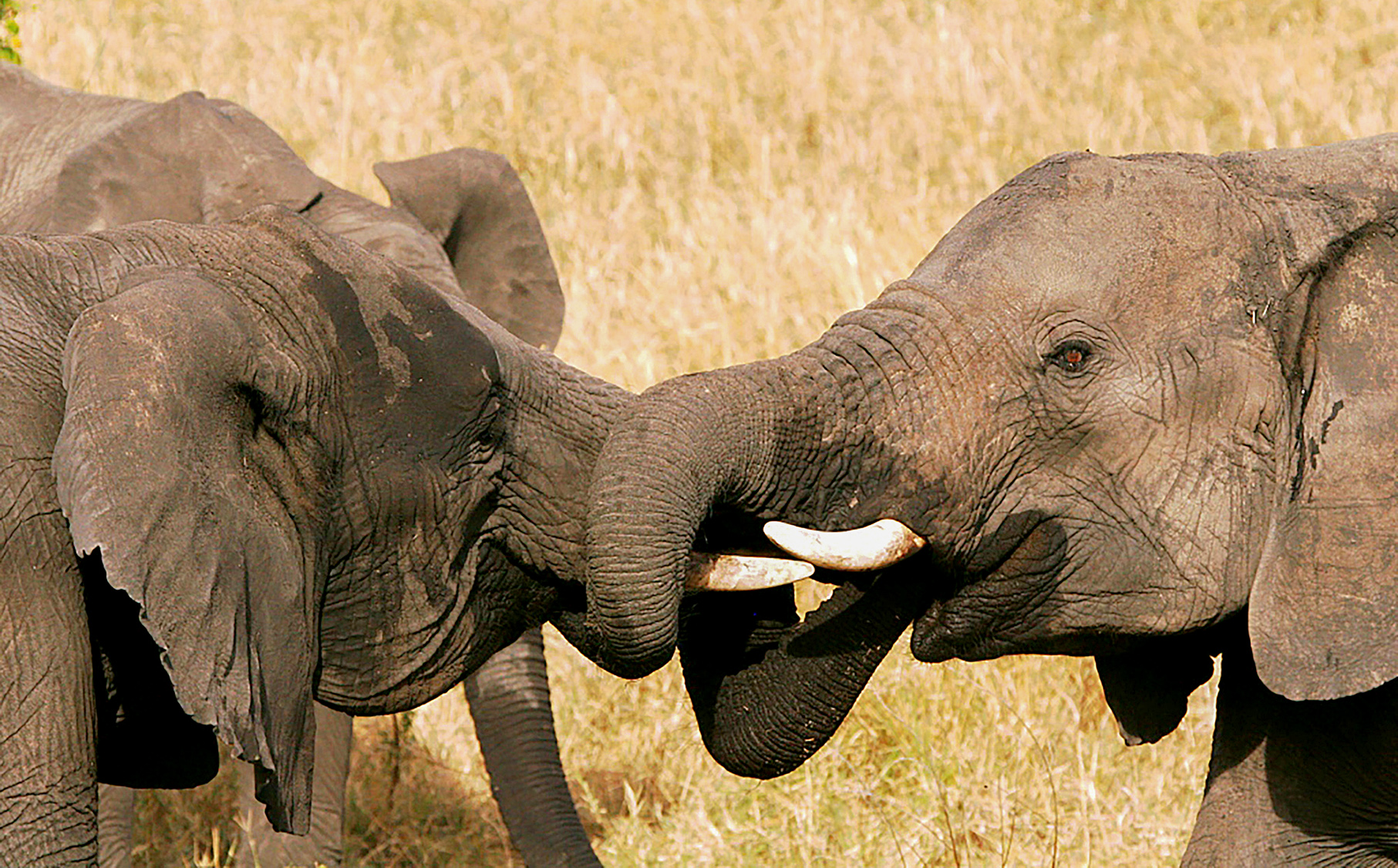
 (Photo: Conservation Action Trust)
 /file/dailymaverick/wp-content/uploads/2025/10/label-analysis-2.jpg)
If you wanted a masterclass in how to turn a conservation success story into a global controversy, Botswana has just written the syllabus. The government’s draft 2026 quota – authorising a record 430 elephant trophy hunts, the largest anywhere on Earth – has landed with the thud of a dropped tusk.
It’s bold, it’s defiant, and it’s being sold as practical management. But according to leading elephant scientists Dr Mike Chase and Dr Scott Schlossberg, it is also profoundly misguided – and more than a little self-sabotaging.
This is why: the fight over elephants isn’t really about numbers. It’s about which elephants are being killed, how that destabilises the survivors, who really benefits and what the cost will be to Botswana’s economy and reputation.
And when you zoom out – across the maps, the quotas, the economics, the behavioural science, the MoUs and the marketing spin – you begin to see the shape of a national strategy that isn’t just risky. It’s irrational.
The last big tuskers
For years, trophy-hunting advocates have leaned heavily on the “only 0.3%” argument: only a tiny portion of elephants are hunted each year, so what’s the fuss? Chase and Schlossberg flatten that idea with a single insight: the key issue isn’t how many elephants are killed, but which ones.
That 0.3% slice isn’t random. Trophy hunters target the same demographic poachers do – the last great big-tusked adult bulls. These “elders,” as the Chase-Schlossberg review calls them, make up less than 1% of the population, but they are disproportionately important.
- They carry the scarce genetics for large tusks;
- They stabilise the behaviour of younger males; and
- Female elephants choose them for breeding.
Remove the elders and you don’t just reduce numbers – you reshuffle the social logic of elephant society. Models presented in the review show that combined hunting and poaching pressures could halve the number of older bulls and reduce the population of middle-aged bulls by a quarter. That’s demographic collapse, not management.
It is also a recipe for a different, lesser future: a Botswana where the last iconic tuskers – the ones tourists travel across the world to admire – vanish quietly, cut out of the gene pool by economics disguised as ecology.
Hunting manufactures conflict
There’s a story told often in Gaborone: hunting reduces human-elephant conflict. Communities feel safer. Fields are spared. Tempers cool.
It’s neat, it’s comforting – and according to the science, it’s not true.
The Chase-Schlossberg review synthesises decades of behavioural research, including studies showing that elephants exposed to violence – culling, war, poaching, trophy hunting – become:
- more stressed;
- more unpredictable;
- more prone to crop-raiding; and
- more likely to attack people.
This isn’t sentimentality; it’s ethology. Elephants are deeply social, cognitively complex beings. Traumatise them and the effects ripple across generations. As the report puts it, a self-justifying cycle kicks in:
- Trophy hunters kill elephants;
- Survivors retaliate against communities;
- Governments declare them “problem animals”; and
- More hunts, more culls, more “problem elephant” killings follow.
Botswana’s 430-elephant quota isn’t a conflict solution – it’s conflict manufacturing. And communities end up holding the bill, both emotionally and physically.
/file/dailymaverick/wp-content/uploads/2024/12/Elephants-on-the-move-in-Botswana-Don-Pinnock-.jpg "Combined hunting and poaching pressures could halve the number of older bulls and reduce the population of middle-aged bulls by a quarter. Photo: Don Pinnock")
Follow the money
Botswana’s government likes to present trophy hunting as a win for rural communities. But the financials revealed in the report tell a more complicated story.
Since 2019, 2,641 trophy elephants have been allocated for hunting. With each hunt selling for between $70,000 and $100,000, the value of elephant hunts alone sits at roughly $184-million (P2.4 billion). Yet communities receive less than 7% of this total.
To put it plainly: foreign hunters and a handful of safari operators extract the bulk of the profits, while communities receive modest trust payments of P70,000–P150,000 per elephant.
/file/dailymaverick/wp-content/uploads/2024/04/5-Hunting-quota.jpg "A significant increase in elephant hunting quotas from 2022 to 2024 for Botswana, with up to 30 elephants offered for hunts in a single region in 2024. (Source: Elephants Without Borders)")
Meanwhile, the tourism sector built around living elephants – real, charismatic, majestic bulls with names and stories – generates US$30-billion annually across Africa. Trophy hunting contributes US$140-million. One is an economic engine. The other is pocket change dressed in camouflage.
Betting against your biggest long-term asset, in exchange for short-term payments to a politically connected industry is not strategy. It’s economic freefall performed with a straight face.
Policy capture
If the economics raise eyebrows, the governance should raise alarms.
In late 2025, Botswana’s Ministry of Environment and Tourism signed an MoU with Conservation Force, a US-based trophy-hunting lobby group led by John Jackson III. According to the ministry’s own statements, the group has already been involved in:
- drafting the National Elephant Management Plan;
- shaping the Non-Detriment Finding for elephants; and
- creating the Leopard Management Plan.
This is not advisory input, it is policy capture. It places a foreign hunting lobby at the centre of Botswana’s wildlife policy machinery, giving it influence over how many elephants, leopards and lions can be killed each year.
It also means those who profit from hunts are helping design the rules that govern them. The fox is not just in the henhouse – it is drafting the henhouse blueprint.
The all-year hunting season
There is one line hidden in the draft quota that almost feels like a punchline – if the stakes weren’t so severe. Botswana proposes abolishing the closed season on elephant hunting.
Traditionally, elephants had a reprieve from October to March: a sanctuary to migrate, breed, rest, and recover from six months of human pressure. Ending this refuge exposes them to year-round hunting across most of the country, including the largest bulls who have historically been spared during the wet season.
It’s hard to overstate how catastrophic this could be. Elephants “know” the rhythms of gunfire; they have adjusted their movements accordingly. Take away the quiet months and you warp ancient migration patterns, heighten stress, shrink breeding opportunities, and accelerate the disappearance of big tuskers.
Who benefits?
One of the most important questions raised in the Chase–Schlossberg-informed report is also one of the simplest: Who, exactly, is benefiting from trophy hunting?
Communities receive modest trust payments but little household benefit. Safari operators receive millions. The government earns political capital by posturing as defenders of rural interests.
But if the evidence shows hunting increases elephant aggression, if revenue distribution is inequitable, and if tourism stands to lose the most, then communities aren’t being empowered. They’re being used.
Botswana at a crossroads
None of this is to deny Botswana’s challenges. Living with elephants is hard. It demands land, patience and resources. Rural communities shoulder real risks.
But the current path is not easing that burden. It’s amplifying it – while placing Botswana’s global reputation, tourism industry and ecological legacy at risk.
The choice facing Botswana is not between hunting and chaos. It’s between a narrow, outdated model of wildlife exploitation and a modern, science-guided approach that protects both people and elephants.
Trophy hunting once promised easy answers. But as the data shows, the era of “shoot one to save many” belongs in the rear-view mirror – alongside the last great tuskers we are losing far too quickly.
If Botswana wants to stand as a global leader in conservation, it must listen to its own scientists. The world doesn’t need Botswana to have the biggest trophy-hunting quota on Earth. It needs Botswana to have the courage to choose a better story. DM
Dr Don Pinnock is a Daily Maverick journalist and the co-creator with Colin Bell of The Last Elephants (Penguin-Struik and Smithsonian) about the state of elephants in Africa.
All graphics courtesy of Action for Elephants UK.