




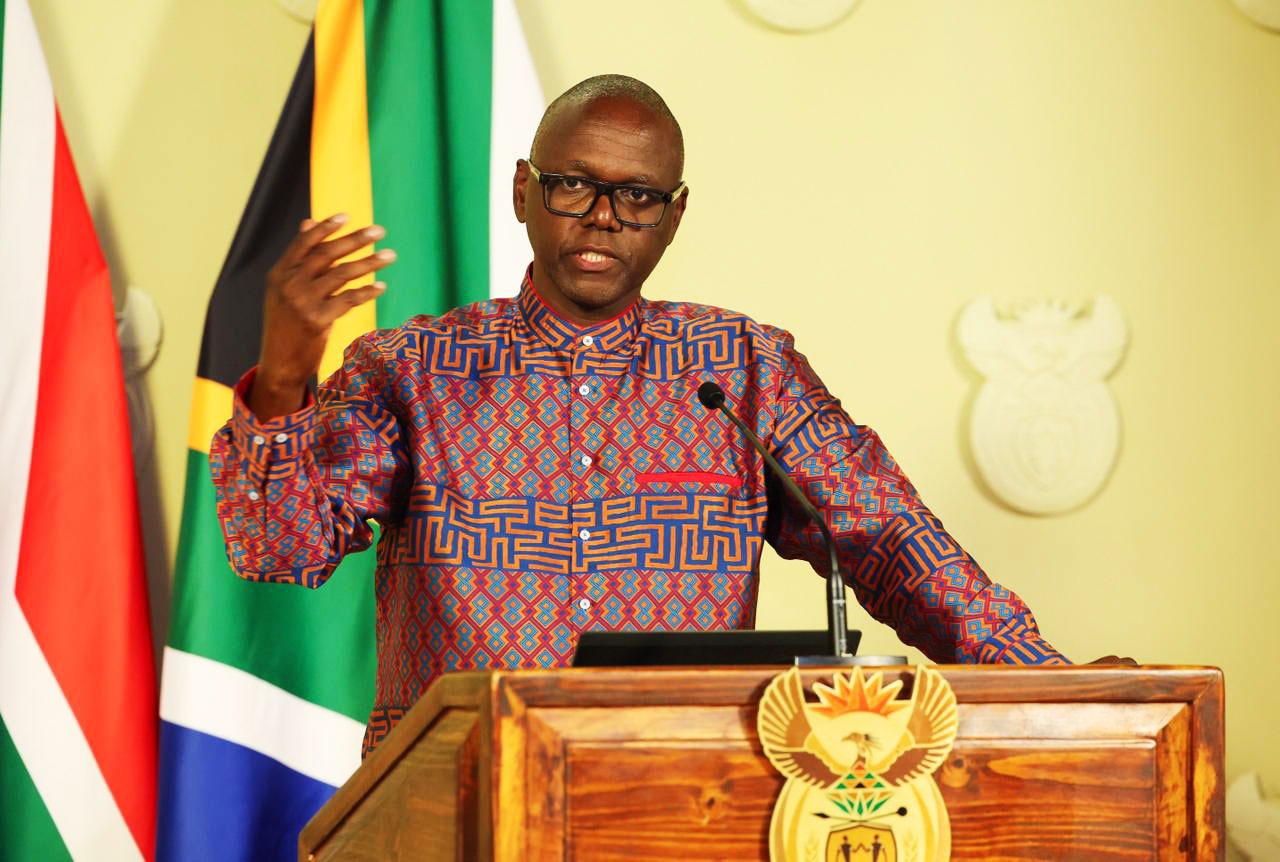
 President Cyril Ramaphosa’s spokesperson Vincent Magwenya says Ramaphosa is keen for the Madlanga Commission to pursue criminal charges against implicated persons almost immediately. (Photo: GCIS)
 President Cyril Ramaphosa did not have a legal obligation to release the widely anticipated Madlanga Commission interim report, which he was due to receive on Wednesday, 17 December 2025, the Presidency said on Monday.
He will, however, make the full and final report public.
Among other reasons, the Presidency said the decision to withhold the interim report was to afford Ramaphosa, who did not have the luxury of time to follow the daily proceedings, an opportunity to get up to speed.
Presidential spokesperson Vincent Magwenya insisted it would not be helpful to start “chewing and debating” something that was “half baked”.
“The reasoning is quite simple to understand. Some of the witnesses who have come before the commission are going to be called back to continue with their evidence, and some had evidence located in certain specific areas but not as broad as it was meant to be, so those witnesses are still going to be given a chance to return to the commission and give evidence,” said Magwenya during a media briefing on Monday.
The inquiry, which commenced its hearings in September, has been probing the “veracity, scope and extent” of the allegations made by KwaZulu-Natal police commissioner, Lieutenant-General Nhlanhla Mkhwanazi, about political interference in crime fighting and the infiltration of criminal syndicates in law enforcement.
The commission has heard from a number of witnesses, including Minister Senzo Mchunu who is on special leave, and who is alleged to have issued a directive to disband the Political Killings Task Team, set up in 2018, to shield politically connected members of a criminal syndicate from prosecution.
/file/attachments/orphans/ED_589739_542305.jpg "Suspended Police Minister Senzo Mchunu testifies at the Madlanga Commission in Pretoria on 4 December 2025 in Pretoria, South Africa. (Photo: Gallo Images / Frennie Shivambu)")
He disbanded the team without consulting national Police Commissioner Fannie Masemola. In December, he told the commission that as far back as 2019, a work study report had recommended integrating the Political Killings Task Team into the SAPS Murder and Robbery Unit.
Mchunu said that his 31 December 2024 directive to disband the unit was driven by his view that the unit had become “administratively untenable”. He claimed this assessment was reinforced by numerous complaints of human rights abuses submitted to him by civil society actors, whistleblowers, SAPS members, members of Parliament and members of the public.
Read more: Madlanga Commission
“The president has undertaken to release the final report publicly when the commission has concluded its work. The president will then follow the guidance of the commission with respect to areas that will be of national security sensitivity and how those areas are to be managed,” Magwenya said.
The commission, according to its terms of reference, has “all the powers necessary” to summon witnesses and compel the production of documents, and to conduct search-and-seizure operations, subject to applicable law.
It also has the “power to refer matters for immediate criminal investigation and urgent decisions on prosecution, taking into account the nature of the allegations and evidence the commission will uncover”.
Beyond Mchunu’s testimony, the commission also heard evidence alleging that some law enforcement officials colluded with drug cartels, including claims of interference in investigations, advance warnings to suspects before raids, and the protection of drug trafficking networks in exchange for bribes.
Witnesses described how these compromised relationships enabled organised crime syndicates involved in narcotics, extortion and contract killings to operate with relative impunity, eroding the integrity of the criminal justice system and public confidence in the police.
Magwenya said Ramaphosa was “quite keen” for the commission to pursue criminal charges almost immediately.
“The president does expect that the commission will also exercise its right or responsibility in terms of referring matters that are deemed to be of a criminal nature for criminal prosecution, and that, by the way, doesn’t have to wait for the interim or final report,” he said.
Madlanga extension and possible legal challenges
Asked if the Presidency was open to extending the commission, particularly as a number of witnesses had yet to appear before it, Magwenya said Justice Mbuyiseli Madlanga would have to make such a proposal.
Ramaphosa would then have to consider looking at the merits, as well as cost implications thereof.
“Without speculating, I would safely say that is something the president would be open to discussing and considering. There was a lot of sensitivity around the cost of commissions in general. And the government has been paying particular attention to the cost aspect of this exercise. The president will then have to be advised on both the merits for an extension as well as what the cost implications are,” Magwenya said.
On the possibility of the interim report being taken on review or legally challenged, Magwenya said that although Ramaphosa did not have a legal obligation to release it, any form of litigation in that regard would be “frivolous and unfortunate”, particularly given his undertaking that the final report would be made public.
“It is the final report that will by far be the most consequential, if you like, and so to litigate over an interim report while the entire exercise is still under way will really be frivolous and time wasting, to be honest, and so we will urge those parties to be honest.
“The final report will be released to the public. The commission will advise the president on areas that are of national security sensitivity and how those areas will need to be managed, but we will cross that bridge when we get to it,” said Magwenya. DM