




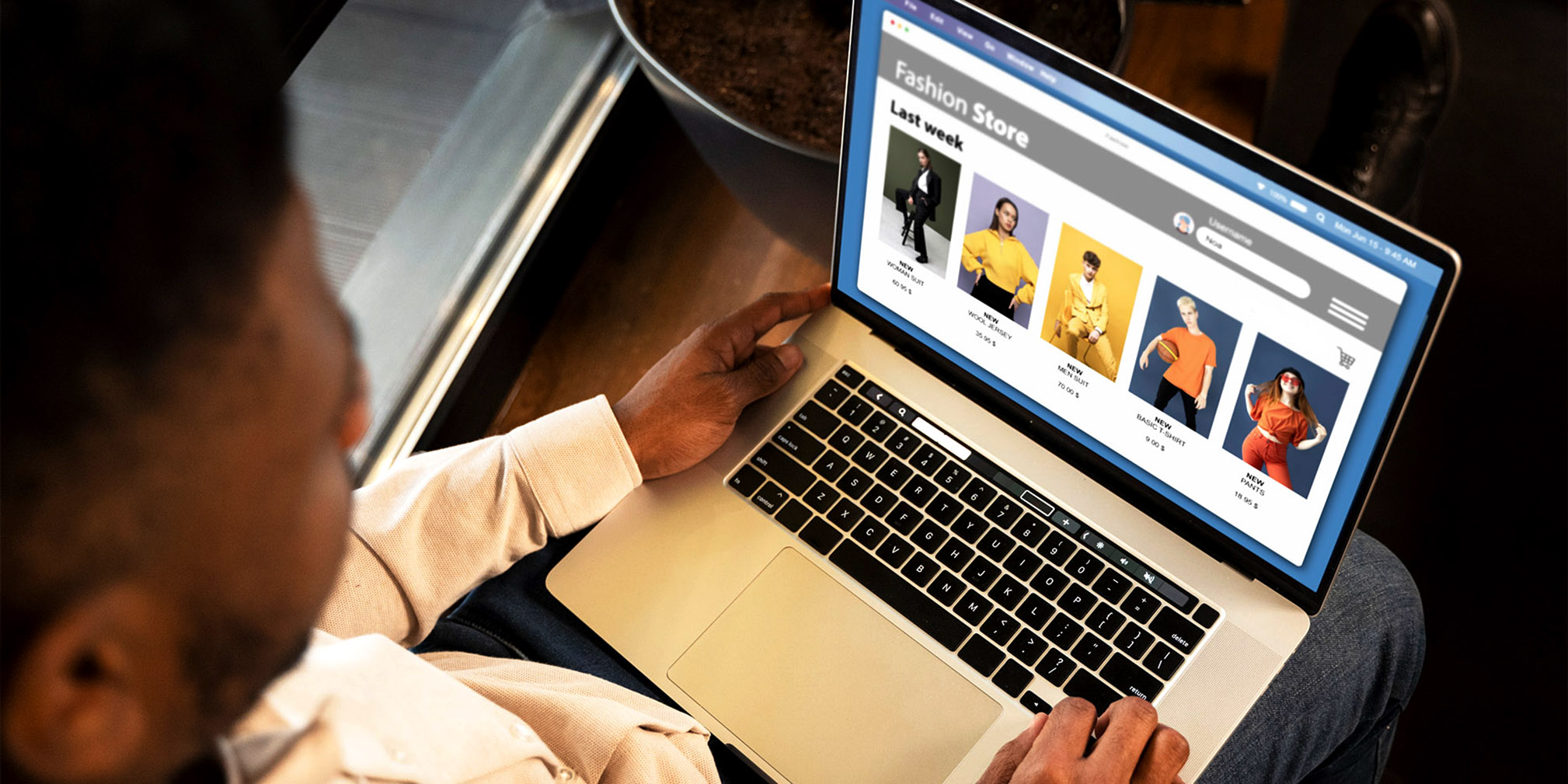
 Whether we like the language or not, AI is wrapped around every part of the South African retail machine. (Photo: Freepik)
 The first sign that the world has changed for good hit me in a parking lot. I had booked my car for a service online, expecting the usual black hole of silence. Instead, a real human phoned me to confirm my appointment.
If you are from a different generation, this is a normal occurrence. To me, it felt like a glitch in the matrix. My bank, my network provider, my workflows… almost everything in my life is automated.
Meanwhile, the prophets of progress are getting louder. Every pitch deck promises the same miracles, and I swear if I hear one more time how machine learning will unlock my business potential, I may just scream.
Whether we like the language or not, AI is wrapped around every part of the South African retail machine. It influences the price of your groceries, the products you see when you scroll, the route your delivery driver takes through peak hour traffic.
“My view is that if you’re not busy adopting or looking to adopt AI, you are going backwards.” That’s the opinion of Sean Ellis, head of shared learning at Benchmarking and Manufacturing Analysts.
The numbers back him up. Research and consulting firm Credence Research expects the value of South Africa’s AI in the retail market to jump from R530-million in 2023 to R4.7-billion by 2032.
Clicks = clues
You can feel it everywhere in the customer journey. Takealot has built a system that analyses (and basically converts) every single click.
A case study by marketing company Bandzishe Group shows how Takelot’s systems analyses the most granular customer data, such as dwell times on specific product pages, to deliver personalised recommendations.
Driven by machine learning, natural language processing and predictive analytics, these models depend on the sheer volume and quality of Takealot’s transactional and real-time behavioural data.
Read more: From bots to big bucks: Naspers’ AI army powers a Takealot turnaround
Amazon South Africa told Daily Maverick that its machine learning models are built to “learn and adapt to local market conditions” and will grow “increasingly attuned to local needs, delivery windows and shopping patterns” as the newcomer settles into its first years in the country.
The company said that its AI capabilities span the entire customer experience, from search and demand forecasting to fraud detection and quality control.
Traditional retailers have also realised that there are goldmines sitting in their own databases. Clicks leverages the extensive data from its loyalty programme, which has 12.6 million active members, to personalise its digital interfaces.
Pick n Pay has shifted its focus to making the digital journey quicker and more intuitive. “Our AI helps customers find what they need faster or discover products they’ll love,” Pick n Pay’s omnichannel executive, Enrico Ferigolli, said of the company’s recently launched app combining on-demand delivery with its loyalty programme.
Read more: Rebooting Pick n Pay — Data, loyalty and the road to digital redemption
Similarly, luxury retail king Woolworths states that it uses its data and loyalty programmes for differentiation, embedding “advanced data analytics to drive personalised customer engagement”. Honestly, no notes on that “AI-powered” wording.
Smarter backstage
That is the visible part of the machine. The real gains happen behind the scenes with better forecasting for warehouses and distribution fleets running with fewer mistakes.
Retailers want the holy grail of smooth, predictable operations, something Dr Kruschen Govender, head of future manufacturing at the Toyota Wessels Institute for Manufacturing Studies, sums up with the bigger ambition of shifting towards intelligent manufacturing.
A study by Bermont on tailored logistics AI shows that dynamic routing models now help South African fleets dodge traffic to shave roughly 20% off delivery times. Warehouse robotics and AI inventory systems can improve operational efficiency by around 40%.
Even food delivery is guided by algorithms. Mr D’s model predicts pickup times from orders and driver availability, and blocks new orders if wait times get too long, a blog post by Takealot’s engineering manager of machine learning, Axel Tidemann reveals.
This sounds like the part where the humans get cut out. Except retail leaders, who are supposed to understand the stakes, should see the opportunity in combining the two. Govender calls this model “hybrid intelligence”, which he defines as “marrying human intelligence, the individual and the collective, with the power of artificial intelligence, the processing power, the scalability, the adaptability of [a] particular stack of AI”.
Should we rage against the machines?
But as expected, there is a trust problem, especially when it comes to the marketing and branding side of things. Customers are quick to notice the sloppy fingerprints of bad automation.
Kurt Schröder, founder of communications agency Double Shift, warns brands about the fallout “when brands try and do good work cheaply using AI” – you know, the 12 fingers, weird eyes and gibberish text AI image generation usually produces.
/file/attachments/2986/Gemini_Generated_Image_mkq9mhmkq9mhmkq9_441117_84c772702f7f5bd178ce84b9c97f267c.png "We’ve all played around with image generation. Here is what Gemini’s Nano Banana came up with when I gave it the following prompt: “Generate an image of a Daily Maverick business reporter reporting about AI adoption in South African retail. It should be hyper-realistic and applicable to a South African context.” Note the six fingers, a camera not even pointing at her face, and a heavy weird tillpoint setup. (Image: Generated by Gemini)")
His rule for surviving this era is honesty. “When people are transparent about the fact this is what it is, then it’s endearing, because people appreciate the context that it’s served in.”
Some retailers, such as Woolworths, are focused on putting guardrails in place to protect their credibility. They introduced a Generative AI Governance and Usage Policy that “ensures that [they] develop and utilise AI applications in ways that are ethical, fair, and free from bias”.
Read more: Integrating AI in your business can be a double-edged sword
Companies need to protect trust and brand identity when the lines between human content and generated gibberish are thinning. “You have to consider what part of that [business] journey AI is responsible for [when it comes to] closing the gap,” Schröder said.
The winners who might be taking it (after) all
Surprisingly enough, AI might be doing the most for the little guys. Small businesses, who’ve never had huge creative teams or budgets, now have access to tools that level the field.
“We deal with a lot of SMMEs,” Othelo Vieira, technical product manager at Cloud on Demand said. “They want to go up against [what] I call [...] the ‘big boys’. [SMMEs] don’t have 20 people working on creative. So they’re using AI to generate really cool images so when they go and present, the guys go ‘Okay, this does look really good’.”
James Freemantle, founder of e-commerce agency FMG Digital, called AI a “super tool” that changed the structure and function of his company. This is possible, he said, because AI allows the agency to perform preparatory work much faster, particularly for research and conceptualisation.
Read more: SA must scramble to reskill the workforce, align education with AI, automation and climate change
Amazon also told Daily Maverick that its AI-powered listing builder and automated product description generator helps sellers to create better product listings. “Sellers provide basic product information, and our generative AI produces compelling titles, detailed description, and feature highlights that improve discoverability and conversion,” it said.
This gives small businesses another real leg up, cutting through time and skill barriers so they can compete, scale, and reach more customers.
Heads up, retail
People who use AI regularly also tend to prefer online shopping over traditional retail, a survey by brand planning company Bateleur found. It just goes to show that the more digital life becomes, the more retail must follow.
“We live in this bizarre integrated life. AI absolutely has an imperative within that,” Schröder said, likening companies that ignore it to an “ostrich with its head in the sand”.
AI in South African retail influences how businesses plan, how shelves stay stocked, how brands speak to us and how we move through a checkout page.
We cannot escape it. What we can do is understand it. And maybe demand that in the middle of all this “intelligence”, someone still answers the phone once in a while. DM