




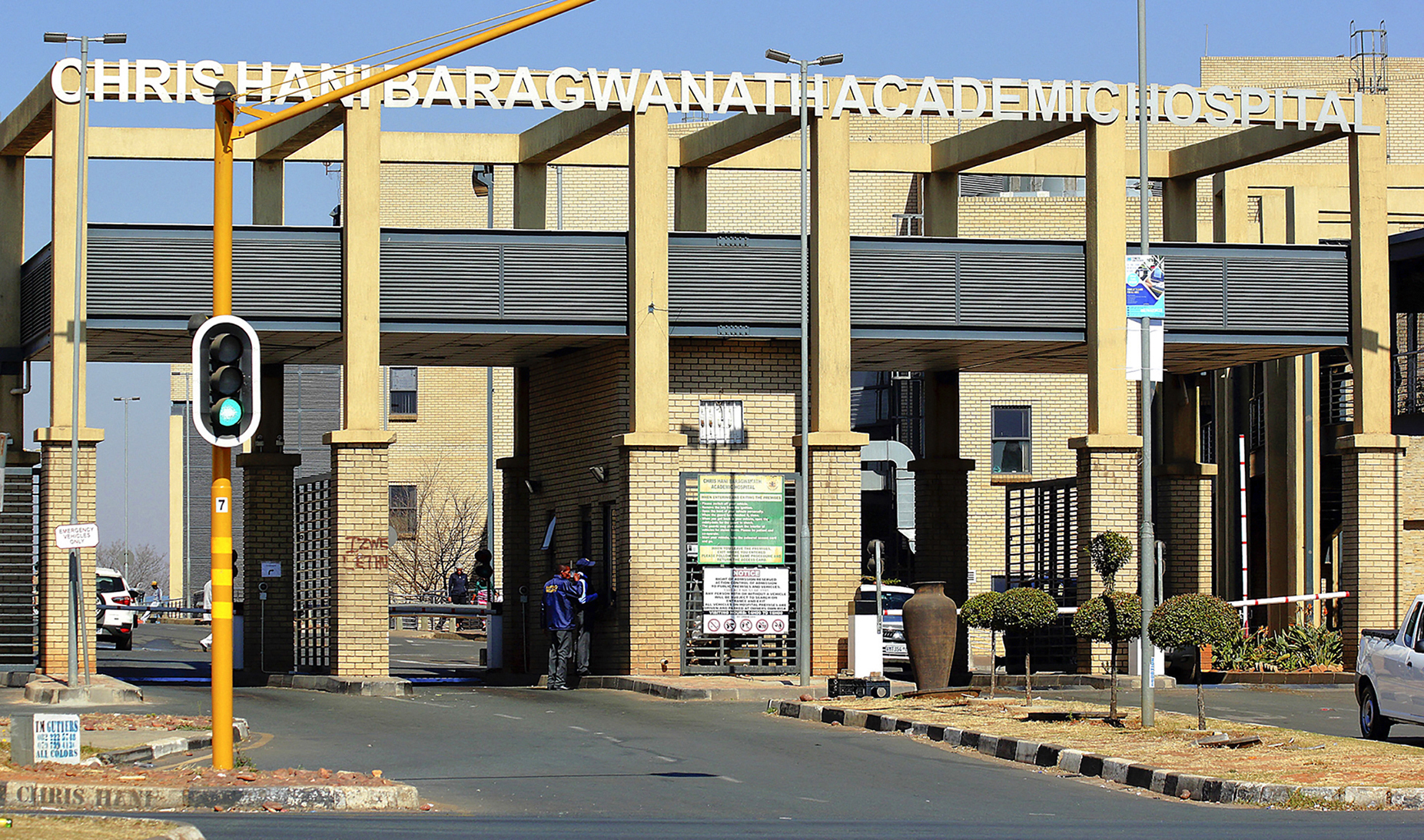
 Chris Hani Baragwanath Acedemic Hospital in Diepkloof, Soweto. (Photo: Gallo Images / Fani Mahuntsi)
 A spate of resignations in recent months has seen three cardiologists call it a day at Chris Hani Baragwanath Hospital, the largest hospital in the southern hemisphere.
In addition to losing all its cardiologists by the end of December, the hospital has also seen the exodus of three of the ear, nose and throat (ENT) specialists of the four in the department.
The Gauteng Department of Health insists that the resignations will not cause a disruption of service in cardiology or the ENT department, and that the positions are being filled.
“The hospital has already initiated a full recruitment and selection process to ensure that the vacant specialist posts are filled by 2 January 2026. This ensures smooth transition and no disruption in the delivery of quality healthcare services,” the department said to Daily Maverick.
A hospital insider speaking to Daily Maverick is unconvinced that this will be the case come 2 January. He said: “Where is the evidence the posts were actually advertised? They’ve also talked about filling some of these posts on six-month contracts, but it’s unlikely this will materialise.”
The crisis of a shedding of specialists is ripping through departments and through hospitals in the province. Concerns remain that as posts become vacant they will not be filled timeously, or be funded. There are questions about the lack of a proper human resources strategy and management for the long-term retention of specialists in the public sector.
Specialists at the province’s academic hospitals have a dual role of teaching and supervising registrars undergoing specialist training. Without being able to offer trainees supervision and training, the accreditation status of medical schools is in jeopardy.
Accreditation requirements
Professor Shabir Madhi, Dean of the Faculty of Health Sciences at Wits University, says functioning specialist units at academic training hospitals should have a specialists staff complement that was compliant with HPCSA (Health Professions Council of South Africa) accreditation requirements.
“You need continuity of care that comes with full-time staff and integrated, efficient services to manage patients,” he said.
Madhi acknowledged that Wits’ training programme for specialists and undergraduate training stood to be affected by the resignations.
“The university will not be able to register new registrars or fellows for specialists training in disciplines that do not meet the HPCSA requirements for adequate supervisory capacity. For the training of specialists the university requires one consultant for every four people who are in training,” he said.
Madhi added that the knock-on effects were that there wouldn’t be enough specialists coming into the healthcare system in the next few years.
The rash of resignations is being attributed to worsening working conditions in the public sector, and that the employer – the Gauteng Department of Health – is failing to address doctors’ dire concerns.
Key among the problems are rumblings of changes to commuted overtime pay for doctors. Commuted overtime is a fixed amount paid to doctors according to their contract agreements. It is a predicable supplemental income and can make up a third of a doctor’s take-home pay.
In April this year, doctors’ overtime pay was delayed. But even when this matter was resolved there remained ongoing threats of contracts being revised to introduce new caps, cuts and conditions, including doctors having to be physically present at hospitals, not just on call, during overtime hours. This has added to growing frustration and dissatisfaction among doctors. There has also been talk of revising RWOPS (Remunerative Work Outside the Public Service). RWOPS is an agreement that allows doctors employed by the state to work a certain number of hours in private practice to bolster their state salaries.
There are also ongoing concerns across facilities over neglected infrastructure and lack of maintenance adding to worsening working conditions. This means doctors often work without functioning critical equipment and machinery, and a shortage of consumables and medical supplies.
A doctor based at Charlotte Maxeke Johannesburg Academic Hospital told Daily Maverick there was a shortage of ICU beds at the hospital; also that scheduled operations were routinely cancelled at the last minute because things in the theatre broke or something that was needed for a procedure suddenly became unavailable.
He asked not to be named, saying the relationship between doctors and management was one marked by “confrontation, a lack of trust and frustration”. He said posts remained frozen and budgets for sessional consultants were not available.
“We don’t have enough consultants on call covering registrars – there’s just a blank on the roster. We are having entire teaching blocks cancelled because of no staff,” he said.
The Department of Health did not answer specific questions on the status of commuted overtime time and Remunerative Work Outside the Public Service, nor the impact of resignations and unfilled posts on having enough consultants to ensure the training of the next generation of specialists at the province’s academic hospitals.
Crisis looming
Dr Phuti Ratshabedi is the Gauteng chairperson of Samatu (the South African Medical Association Trade Union) and is based at the Obstetrics and Gynaecology Department at Chris Hani Baragwanath. He said doctors had been warning that there was a crisis looming as more specialists left the public sector. But he said doctors were simply not valued by the Gauteng Department of Health.
“Doctors’ salaries are not being prioritised. The government is also not protecting specialists that they have invested millions and years in to train, and are not doing enough to keep them in the public sector, or even in the country,” said Ratshabedi.
He had personal experience this year of not being paid by the department for three months, he said.
He had worked at Bara for seven years and said being part of a teaching hospital and being involved in training had always been a personally rewarding and enriching part of his career. However, he said he was now ready to walk away. He would be tendering his resignation in February next year.
“It does make me sad to do this. But it makes me more sad that the department is not taking doctors seriously. We are being abused in how we are treated. But no one can go every six months not getting paid for three of those months; doctors also need assurances that we will get paid, and that we can develop our careers in a properly functioning and supportive hospital,” he said. DM