




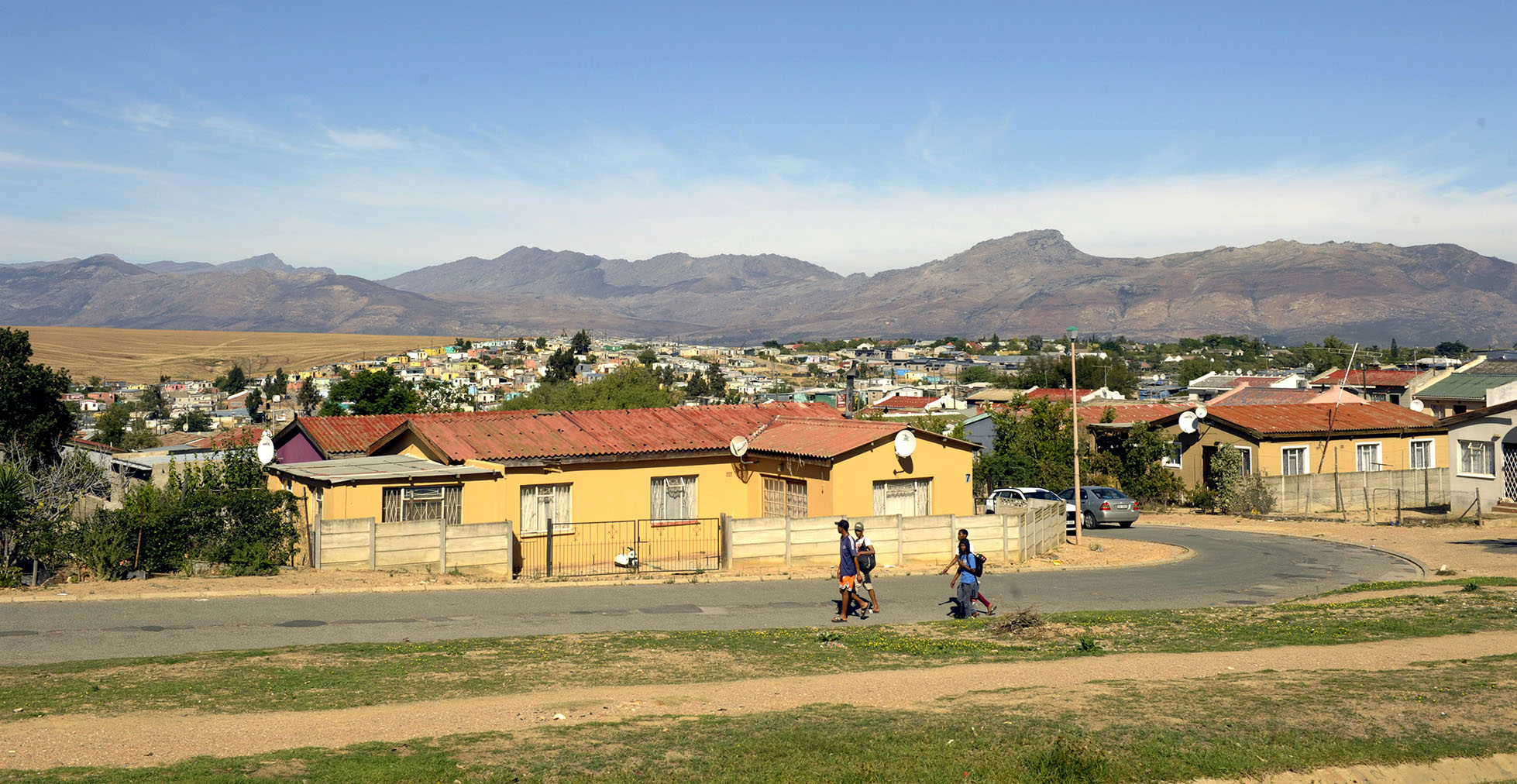
 Tests conducted by WaterCAN found that the water in Tulbagh, Western Cape, was contaminated with total coliform bacteria. (Photo: Joyrene Kramer)
 Every day for the past three weeks, 52-year-old Mina Jankies has begun her day queuing at one of the communal taps in the informal settlement where she lives. Every time Jankies opens the taps, what flows out is water that “stinks”, water she cannot drink, cook with, or give to her family.
“If you come, you will smell,” she said. “The water in the tap, it smells so bad, we can’t even give the water to the kids to drink.”
For weeks now, Jankies and other residents of Tulbagh, a small tourist town in the Western Cape, have been faced with tap water so brown, slimy and foul-smelling that some describe it as resembling sewage. Children, Jankies said, had fallen ill, and so had her father. Yet the municipality insists the water is clean.
“We are residents of Tulbagh. They must give us water. They are playing with our lives here,” she said.
/file/dailymaverick/wp-content/uploads/2024/04/Informal-settlement-in-Tulbagh.jpg "The informal settlement in Tulbagh, Western Cape. (Photo: Joyrene Kramer)")
WaterCAN raises the alarm
On Monday, 8 December, WaterCAN said that residents had contacted the organisation after “noticing changes in water quality and experiencing health concerns”.
The civil society initiative, which addresses water quality challenges by equipping communities with tools to test their water and hold local authorities accountable, assisted with community-led sampling and conducted preliminary water quality tests using iLab kits. Three samples tested positive for total coliform bacteria, a sign of contamination and a clear indicator that the water is unsafe to drink without being treated.
“When test results show the presence of coliform bacteria, it is a clear red flag,” said WaterCAN’s executive manager, Dr Ferrial Adam. “Safe drinking water is a constitutional right, and immediate precautionary measures are necessary to protect public health.”
The organisation urgently called on the Witzenberg Local Municipality to:
- Issue a boil-water notice;
- Conduct accredited laboratory testing;
- Investigate and address the source of contamination;
- Make test results public; and
- Provide water tankers until the problem is resolved.
While the municipality has conducted some testing, residents confirmed that nothing else on the list had happened.
Read more: Hout Bay mussels contaminated with hidden toxins and sewage – study
Brown, smelly water
WaterCAN’s Adam said five community samples were collected from residents’ homes. “Of the five tests, three were really clear that there was bacteria. People are saying the water comes out brown and yellow and smells of shit,” she explained.
“Even if you boil the water, the colour doesn’t change. It still smells of [excrement]. I would not drink that water.”
/file/attachments/orphans/1000125361_739217.jpg "Tulbagh residents have been advised to boil their tap water before use, but say this does not improve the quality. (Photo: WaterCAN)")
Adam said total coliform bacteria are a broad indicator of contamination that may come from human or animal waste, decaying matter or compromised infrastructure. Any presence of coliform renders tap water unsafe for consumption.
Short-term health consequences include diarrhoea, vomiting, rashes, nausea and urinary tract infections, symptoms that some Tulbagh residents have reported.
Jankies said, “Some of the kids are getting sick. I was at the clinic last week, and six children were there because of diarrhoea. My father is also sick, and yesterday my sister’s daughter got sick.”
Despite mounting complaints, the Witzenberg Local Municipality insists its tests show that Tulbagh’s water is “clean and drinkable”. But these assurances are at odds with what residents experience in their homes and at communal taps.
Daily Maverick asked the municipality:
• Whether accredited laboratory tests were conducted;
• Whether the municipality had investigated reports of brown, foul-smelling water in specific neighbourhoods;
• Why no boil-water notice had been issued;
• Whether water tankers will be provided; and
• What immediate corrective actions are being taken to address the contamination?
The following response was received:
“Kindly note that our technical team continues to closely monitor the water quality in Tulbagh. Water samples collected throughout last week were tested, and all results came back clear. However, as an added precaution, further independent water quality testing will commence again from today [Monday].”
Jankies said this was unacceptable: “They say it’s drinkable, but the municipal officers don’t stay here. They stay in town where the water is clean. They didn’t even taste the water here.”
Adam said residents reported that the municipality conducted selective testing concentrated in the CBD, wholly avoiding testing for contamination in the areas surrounding the centre of the town. She said contamination issues may be present in the network and pipes on the outskirts of town.
/file/attachments/orphans/Frame37_616605.png "Witzenberg Local Municipality water quality test sites. (Graphic: Daniella Lee Ming Yecsa)")
“They need to go and listen to what people are saying, where people live. People are not going to make it up that the water is brown just for the heck of it,” said Adam.
/file/attachments/orphans/1000125379_496978.jpg "Tulbagh residents say the water from their taps has been dirty and smelly for more than three weeks. (Photo: WaterCAN)")
A long-running crisis
Tulbagh community leader Winston Pietersen said this crisis was simply the latest chapter in a yearslong struggle.
“What I have experienced in this town, in terms of water, has been going on for a long time. In 2006, 2007, we had problems with water. Even last year, around this time, was also the same.”
Pietersen, a member of the Witzenberg Justice Coalition, the Tulbagh Neighbourhood Watch and the Tulbagh Policing Forum, said the contamination was now worse than ever.
“No, this water is not drinkable. It’s smelling, and people are having to buy water now. For many people who don’t have a lot of money, this costs a lot,” he said.
Jankies, who lives in an impoverished informal settlement, said, “The rich people can buy water, but we from the informal settlement, we are the poor people here. We can’t afford that. How can we be forced to buy water every day?”
Communal taps are the only water source for many households in her area, and no water tankers have been provided despite residents’ pleas.
“We have no choice but to boil the water and use it,” said Jankies.
Pietersen said residents reported that boiling the water resulted in a slimy barrier forming on the surface, further corroborating Adam’s assessment of possible bacterial growth.
Read more: Desperation fuels unity as Claremont residents rally in 12-year fight for water
Community mobilises to take action
Residents plan to escalate the matter.
Pietersen said that a meeting would be held next week, following which the community would march to the municipal offices to deliver a memorandum. “We must take action. It must stop,” he said.
Jankies said, “We were going on protests. We have had meetings on meetings, but nothing happened. Now we will take action. They will be very, very sorry for what will come.”
She said the community would not allow municipal officials to go on holiday while residents had to drink water that could make them sick. “They will come back and do the right thing for the residents of Tulbagh,” said Jankies. DM