




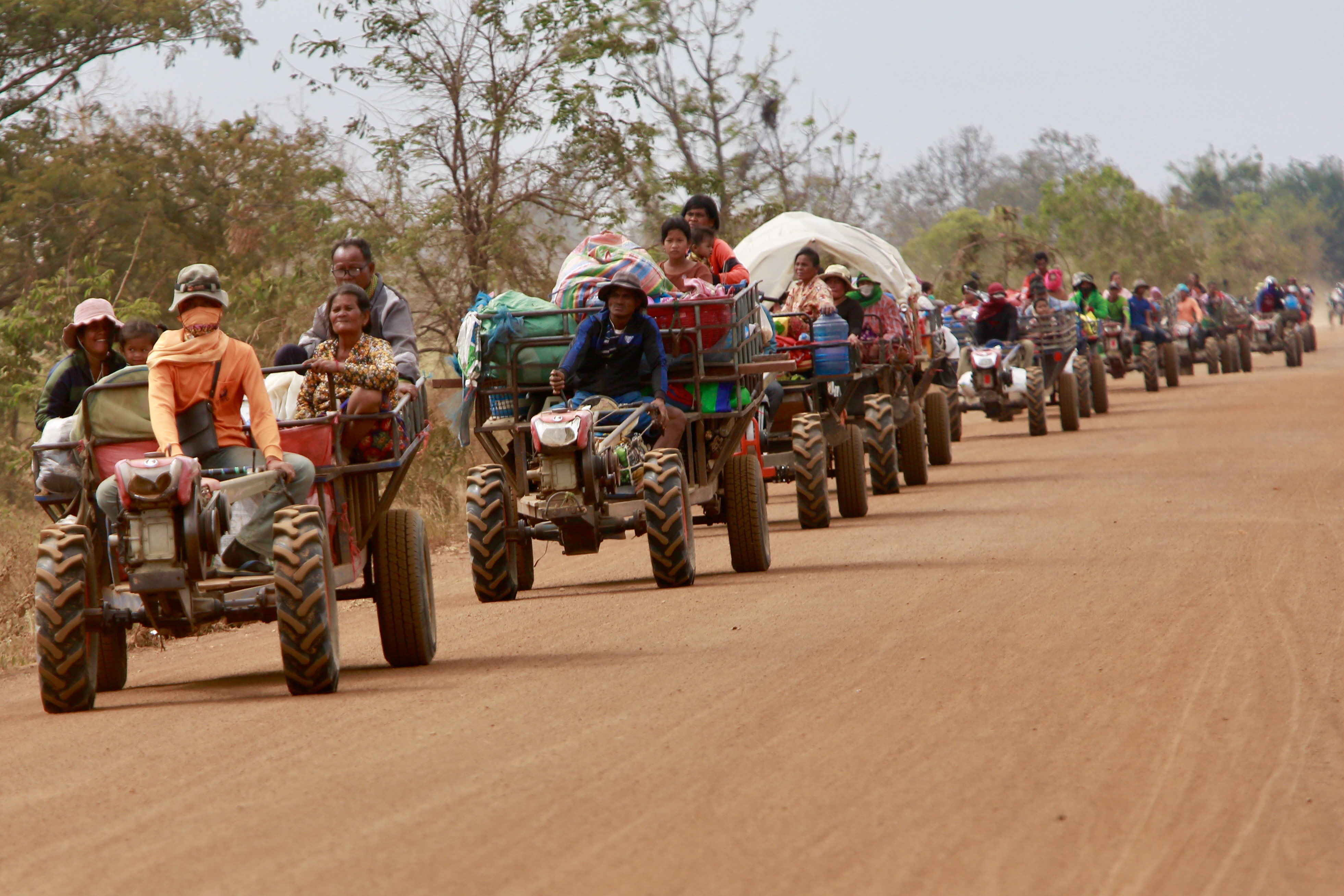
 Over 127,000 displaced as Thai military offensive intensifies
 On Wednesday, clashes at more than a dozen locations along the 817-km (508-mile) Thai-Cambodian border saw some of the most intense fighting since a five-day battle in July, which was the worst conflict in recent history.
In July, Trump stopped the fighting with calls to both leaders in which he threatened to halt trade talks unless they ended the conflict. Trump says he expects to speak with the countries' leaders on Thursday.
"I think I can get them to stop fighting," Trump told reporters on Wednesday. "I think I'm scheduled to speak to them tomorrow."
However, Thailand has reacted more warily this time to overtures from Trump and Malaysian Prime Minister Anwar Ibrahim, who helped broker the July deal, which resulted in an extended ceasefire signed in October. Thailand insists the matter is for the two countries to resolve.
Ibrahim said he had spoken with leaders of Thailand and Cambodia on Tuesday and, though no definitive resolution was reached, he appreciated "the openness and willingness of both leaders to continue negotiations in order to ease tensions".
Thailand and Cambodia have blamed each other for the latest clashes that started this week, and traded accusations of targeting civilians in artillery and rocket attacks.
In a Wednesday evening update, Cambodia's Interior Ministry said homes, schools, roads, pagodas and ancient temples had been damaged by "Thailand's intensified shelling and F-16 air strikes targeting villages and civilian population centres up to 30 km inside Cambodian territory".
The clashes have taken a heavy toll on civilians, with 10 people killed in Cambodia, including an infant, and 60 people wounded, according to its government. Eight Thai soldiers have been killed in the fighting and 80 were wounded, the Thai army said. Hundreds of thousands of people have been evacuated from border areas in both countries.